not to be missed
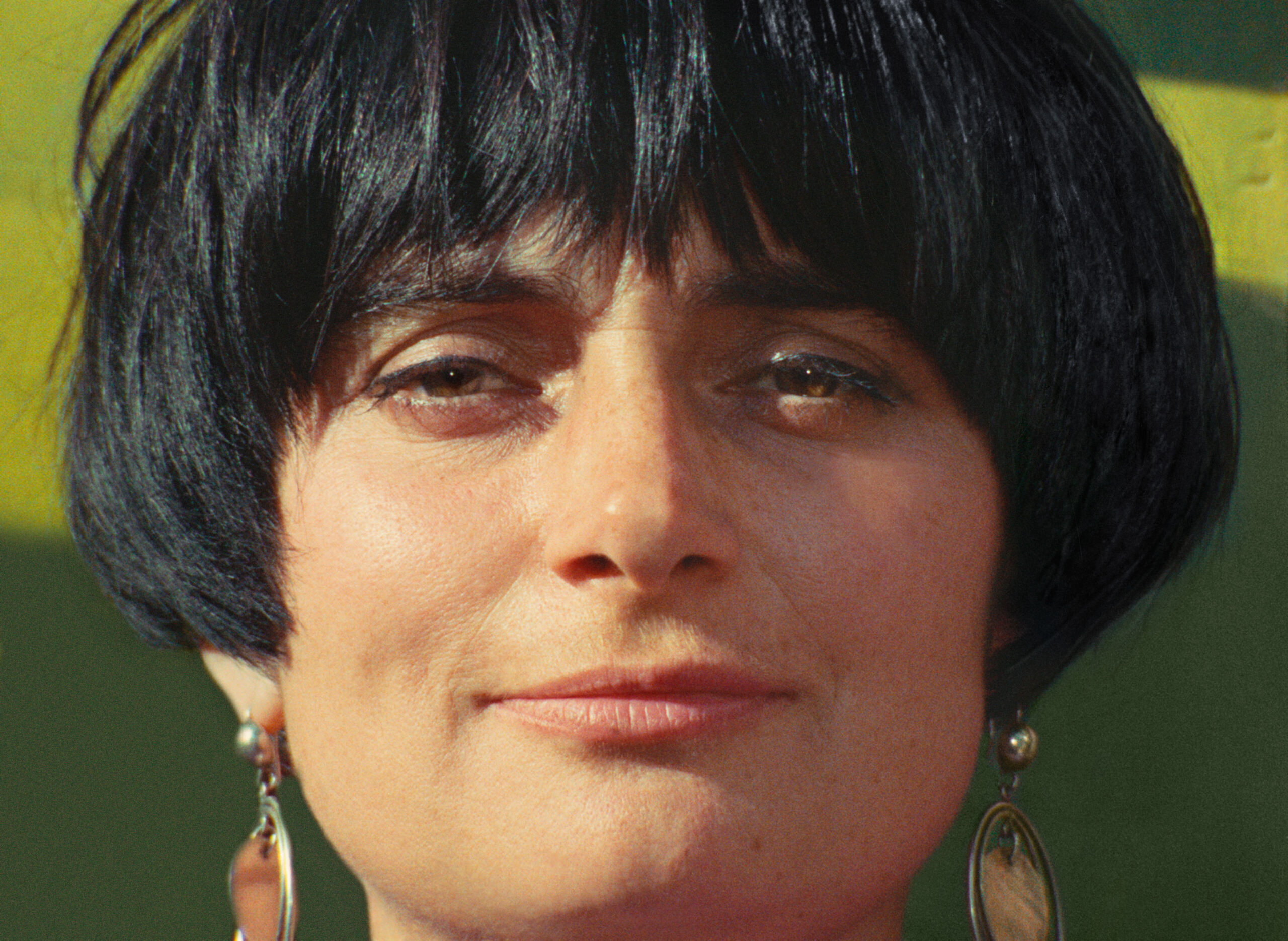
A 1,200m2 journey exploring a unique figure in the history of cinema, art, photography, and political and cultural activism in both the 20th and 21st centuries. Films, photographs, installations, objects, and costumes: the Viva Varda! exhibition – curated by Florence Tissot, under the artistic direction of Rosalie Varda, and produced by the Cineteca di Bologna and La Cinémathèque française – bears witness to a multi-faceted, personal creative oeuvre encompassing painting, the Nouvelle Vague, Jacque Demy, theatre and cats, Fidel Castro, Jim Morrison, Jane Birkin, Catherine Deneuve, Marcello Mastroianni, Madonna, and Jean-Luc Godard.
A globe-trotting artist, Varda’s career brought her international fame culminating with an honorary Oscar – the first ever awarded to a woman director. The exhibition is divided into sections dedicated to the relationship between Agnès and images (self-portraits, photography, painting, as well as her delight in unexpected juxtaposition), writing for the cinema (in particular her creation of profound and surprising female characters), the social and nomadic aspect of her films (her pleasure in documenting the world, political upheavals, and her cultural shifts), as well as her relationship with Italy.
Festival pass holders are entitled to a reduced ticket price
This exhibition presents a selection of images from Antonio Masotti’s celebrated series – which comprised over 5,500 photographs in the form of both negative and prints of various sizes – some of which were included in the 1963 book named after the photographer edited by Nuova Abes and with essays by Riccardo Bacchelli and Massimo Dursi, which is still remembered today as one of the most significant photography books.
We envisaged this little exhibition as a stroll through Bologna in the late 1950s and early 60s, entering into dialogue with the Paris of the period that the viewer encounters when they turn the corner into the Viva Varda! Cinema is Woman exhibition. Antonio Masotti’s Le Bolognesi is a declaration of love for his city. Women are the main protagonists of these images, mistresses of their city, and Antonio Masotti’s gaze records faces and bodies with a poetic but direct sincerity, always open and respectful whether in posed portraits or stolen snapshots.
Festival pass holders are entitled to a reduced ticket price
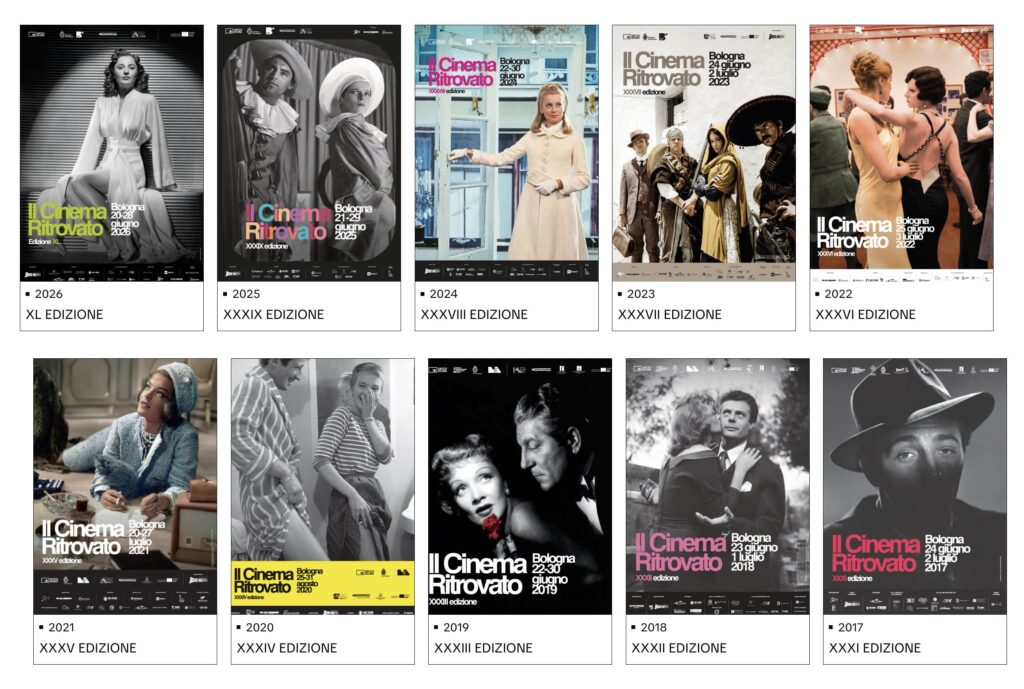
Returning to the heart of the city, this exhibition is dedicated to the posters that have made cinema history and brought fame to generations of great poster artists. This year’s selection pays tribute to some of the protagonists of Il Cinema Ritrovato 2026: Barbara Stanwyck, Luchino Visconti, Martin Scorsese, Roger Corman, Mel Brooks and Richard Brooks. The posters on display, designed by artists including Anselmo Ballester, Rinaldo Geleng, Silvano Campeggi, Renato Casaro and Enzo Nistri, come largely from the collection of Maurizio Baroni, a passionate scholar of the great Italian cinema painters, and from SacWebphoto, with whom the Cineteca di Bologna has developed a fruitful partnership over recent years.
Free admission
Made possible by the extraordinary private collection of Vasco Bruno Tarallo, this exhibition offers a window on to the life and career of Joséphine Baker through a selection of portraits, some previously unseen. The exhibition reveals Baker’s life from her birth in St. Louis to her triumphant rise in the avant-garde Paris, where she became an icon like no other; from her engagement in the French Resistance and the struggle for civil rights to her many theatrical tours and frequent visits to Italy. Timed to coincide with the retrospective at Il Cinema Ritrovato 2026, this is an opportunity to discover a revolutionary artist and a courageous woman who helped redefine the boundaries of gender, race and national identity.
Free admission
Barbara Stanwyck’s ability to establish an immediate connection with audiences begins with her voice. It could be metallic, almost masculine and cutting, or soft as a feather pillow – qualities ideally suited to an actress at home in every genre, from the woman’s film to the western, by way of noir and screwball comedy. More iconoclast than icon, a character actress rather than a great beauty or a glossy star, she was often undervalued in her own day. Yet her art of understatement – the fluidity of movement, stillness in repose, restrained intensity – seems surprisingly modern today. At the Cafè Marinetti: a selection of magnificent photographs from the most important international archives.
Free admission