[MOVIE]
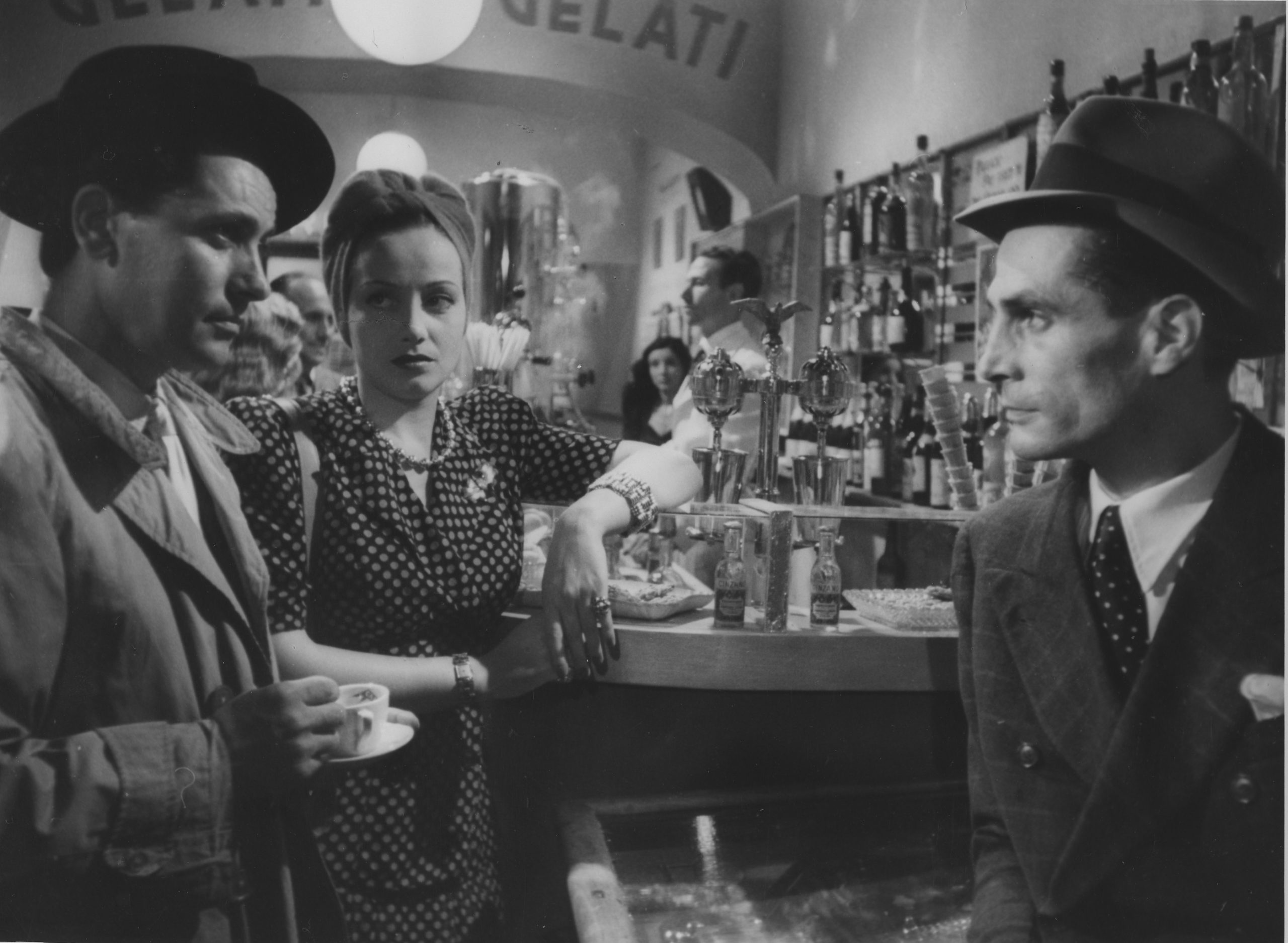
S.: Ennio Flaiano. Sc.: E. Flaiano, Luigi Filippo d’Amico, Suso Cecchi d’Amico, Marcello Marchesi, Cesare Zavattini, M. Pagliero. F.: Aldo Tonti. Scgf.: Gastone Medin. Mu.: Nino Rota, diretta da Fernando Previtali. M.: Giuliana Attenni. Ass.R.: L. F. d’Amico. In.: Andrea Checchi (il giovane), Valentina Cortese (la ragazza), Nando Bruno (il ladro), Vittorio De Sica (il signore distinto), Marisa Merlini (Mara), Gar Moore (l’americano), Manlio Busoni, Fedele Gentile, Francesco Grand Jacquet, Rossano Licari, Ave Ninchi. P.: Marcello d’Amico per Pao Film. 35mm. D.: 81′ a 24 f/s.
Edition History
You especially must not think – based on a more or less grounded literary parallel – that the expression “ film maudit” applies only to dry, pessimistic, sophisticated films: La notte porta consiglio is a playful film, often full of humor and optimism! Other people can tell you about what its relative “curse” is related to…
(…) The film seems to really be about Rome and the different aspects of life there at night. Undoubtedly it is due to the preference for myriad details – every single one excellent – over a more solid spine that this film seems a little confused and ultimately not as satisfying as its qualities would deserve. The influence of René Clair is clear. In these characters that meet, leave one another and meet up again, a necklace that is passed from hand to hand, we can glimpse a Million in the background. And the distinct political, slightly crazy man cannot but remind us of certain characters of A nous la liberté and Le dernier milliardaire.
All this did not stop Marcello Pagliero from making an original film. The actor of Roma città aperta, making his film several months later, placed the action in a decidedly realist setting, and this imaginative trip – in which the characters are not mere puppets – explores the streets, places, clandestine clubs and dancing spots, the authenticity of which is brimming with everyday details of life.
To be noted in the credits are Cesare Zavattini, who from Quattro passi fra le nuvole to Ladri di biciclette, with Sciuscià in tow, was associated as screenplay writer with the most representative Italian films, Aldo Tonti, one of the best cameraman on the peninsula, and Vittorio De Sica, who gives us an extraordinary performance as the amnesic minister.
Jean-Pierre Barrot, La nuit porte conseil: Un peu decousu mais plein de qualité, “L’Ecran français”, n. 220, 19 September 1949

After liberation Pagliero was one of the collaborators on the montage film Giorni di gloria, alongside Mario Serandrei, Giuseppe De Santis and Luchino Visconti. The images of the Fosse Ardeatine ditches, where 335 hostages were massacred in March of 1944, are his (the sequence, shot in August of 1944, shows the delicate job of identifying the slaughtered bodies). Around that same time, the screenplay for Roma città aperta, which was initially supposed to focus on a priest who took part in the Resistance, was integrated with the part of a militant communist. The part was given to Pagliero, a friend of Rossellini. (…) In 1946, Pagliero made his first film that was completely his responsibility, called La notte porta consiglio, but also known by the title Roma città libera, in clear reference to the film by Rossellini. (…) The film is a comedy about the disappointments that hit Rome right after the war. In a mixture of irony and bitterness, Pagliero puts two youth onscreen who, in the face of misery, take refuge in either suicide or prostitution.
Jean A. Gili, in 1895, n. 10, October 1991