[MOVIE]
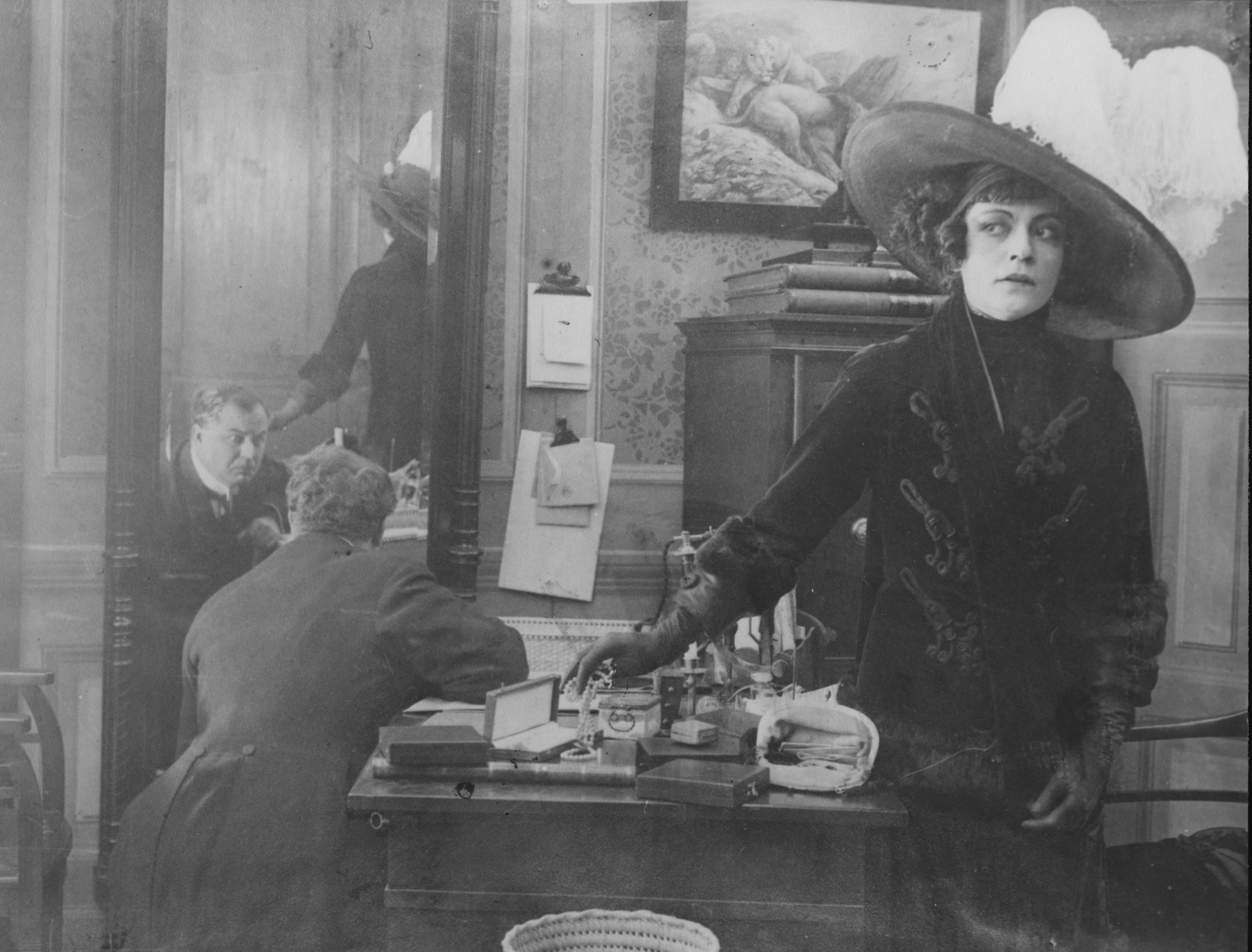
35mm. L.: 439m. D.: 58’ a 16 f/s. Didascalie tedesche / German intertitles. R., Sc.: Urban Gad . F.: Adam Johansen. In.: Asta Nielsen (Stella, la cavallerizza), Valdemar Psilander (Conte Johann von Waldberg), Gunnar Helsengreen (Adolf Hirsch, gioielliere), Ellen Gottschalch, Peter Fjelstrup. P.: Fotorama, Aarhus.
Edition History
Asta Nielsen and Psilander starred together in two films in 1911 at the very beginning of their careers: Den sorte Drøm at Fotorama and Balletdanserinden (The Ballet Dancer) at Nordisk Films – both romantic “eternal triangle” melodramas. The director Urban Gad – who was to become Asta’s husband the following year – wrote the script for Den sorte Drøm, and the story of the young artist who suffers so much pain to save her lover is heartbreaking. Asta Nielsen’s acting is brilliant and gripping and almost makes up for the poor technical quality of the film.

Print Made In 1999 From Duplicate Negative Made In 1953 From The Original Nitrate Print
“The phenomenon of the artist and, above all, the actor as star is neither an invention of cinema, nor was it unknown in the era of the short film – one only has to think of the popularity of Otto Reutter or Max Linder. But when it came to establishing the full-length feature film, in the interests of ‘Monopol Film Distribution’, cinema’s treatment of the star changed. In 1911 a film star was ‘built up’ in Germany by the ‘Monopol Film Distribution’, i.e., a career was promoted with the help of publicity for the first time in the history of German (even European) cinema. The intensive advertising for Monopol films offered an excellent basis to do this on. Thus the character of the film star changed. For the very first time, an actor or actress’s name was used to deliberately and strategically promote sales. In Germany not even Pathé Frères had cashed in on the popularity of their stars Max Linder or Charles Prince in this way until then.
Because star publicity and the notion that the actors in a film – not the plot – should be the main focus of attention were foreign to German cinema, the female protagonist in the first attempts to popularise a star had a greater task to complete than almost all her successors, although as a pioneer she also met with no competition in the field and therefore conducive preconditions for establishing herself. And Asta Nielsen became what she actually was, the most powerful myth in the history of early German cinema”. (Corinna Müller, Frühe deutsche Kinematographie. Formale, wirtschaftliche und kulturelle Entwicklungen,1994)
New positive print made in 1999 from a 35mm dupe negative.