[MOVIE]
Edition History
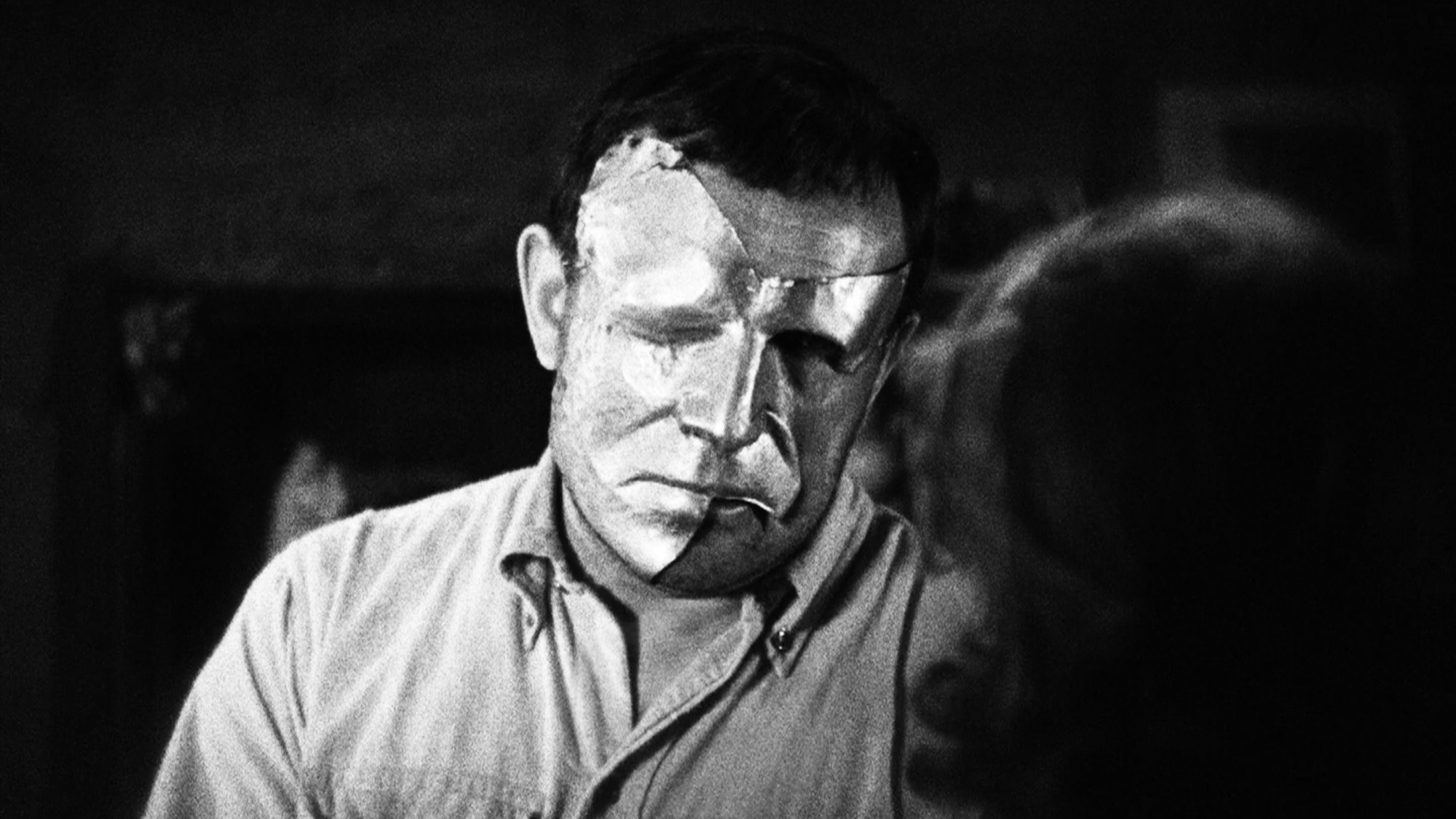
After marrying his beloved (Sandra Milowanoff) and embarking on a life of conjugal bliss, a labourer is injured by an explosion in the quarry where he is working. Now disfigured, he is forced to wear a mask. Charles Vanel acted in about 100 films (including Edmond T Gréville’s extraordinary Woman of Evil and Henri-Georges Clouzot’s acclaimed TheWagesofFear, to name just two) and stepped behind the camera when he was at the peak of his fame as an actor in silent cinema. It was 1929. He directed just one feature-length film. However, Dans la nuit is a disturbing, surprising film in which he demonstrates an incredible sense of framing and editing and a wild demented modernity, while reprising his double act with Sandra Milowanoff, with whom he had already starred in La Flambée des rêves, Pêcheur d’Islande (both by Jacques de Baroncelli, 1924) and La Proie du vent (René Clair, 1927). “A drama in a working-class setting”: this is how he liked to define the story, which paid homage to his father. On the film’s release, it was praised by the critics: “Vanel immediately achieves the intensity of great drama. The images are imbued with crazy sincerity. A painful and convincing cruelty. Finally, something powerful. The director Vanel criticises life” (Michel Gorel, “La Revue du cinéma”, 1930). However, the silent era was over. When Danslanuitarrived on cinema screens in May 1930, sound film had already prevailed and the film was withdrawn. Thus, it is perhaps France’s last silent film. Having fallen into obscurity, Dans la nuit is now returned to its original splendour, thanks to a sublime restoration initiated by the Institut Lumière, to whom Charles and Arlette Vanel bequeathed the film in 1998, and undertaken by Éclair Classics.

Restoration credits
Restored in 4K in 2022 by Institut Lumière with the support of CNC – Centre national du cinéma et de l’image animée, Hollywood Foreign Press Association, Laurent Gerra and Michel Merkt, at Éclair Classics laboratory, from the original negative nitrate preserved at La Cinémathèque française
Dans la nuit by Charles Vanel is an exceptional film for more than one reason. It was directed by an actor at a time in which the coming and going in front of and behind the camera was less frequent than it is today. It was also filmed during the period when sound film was exploding, thus it is one of the last French silent films. Since the story takes place in Jujurieux en Bugey, near Lyons, thirty-five years after the launch of the Cinematographe, we can say that the history of the French silent film starts with Lumière and ends with Vanel. The coincidence is not just geographical, and the comparison is not undeserved: Dans la nuit is a wonderful film, unjustly forgotten and extraordinarily contemporary. When Arte asked the Institut Lumière to reflect upon the idea of silent film, Thierry Frémaux, Jacques Deray (for whom Vanel had acted in Symphonie pour un massacre) and I immediately thought of Dans la Nuit. […] From the very first shots, the film shows incredible visual inventiveness in the description of the mine, freedom of tone in dealing with both terror and happiness, a richness of intentions, great attention to the imagery, a demanding attitude, rhythm: in short, cinematic poetry. Vanel is a truly modern filmmaker, and Dans la nuit is a film d’auteur. Unfortunately it is practically his only work. In 1930, the talkies began wiping out sound film, and the public did not welcome Dans la nuit. Despite a second attempt, he would never get over the failure. It is hard not to think of the failure of The Night of the Hunter which forced Charles Laughton to give up a promising career as a director.
Bertrand Tavernier
Right before my eyes was the rugged and pure Pêcheur d’Islande, heroic officer of Feu, adventurous pilot of La Proie du vent, as well as the bad boy of Paname; but that wasn’t enough for me. In the midst of all these different personalities, I was seeking another, well hidden one. That of the creator of a work that flowed from the heart, and differently from what might be expected of an actor with a long career behind him, a work where the business always left room for sincerity. The personality of the actor in these hard, simple and beautiful images which serve a terrible, painful and even brutal story with a strength that has been rarely surpassed in all of French cinema.
Marcel Carné, Cinémagazine, 7, 1930

Restoration credits
Print made in 1983 with remade intertitles.