[MOVIE]
Edition History
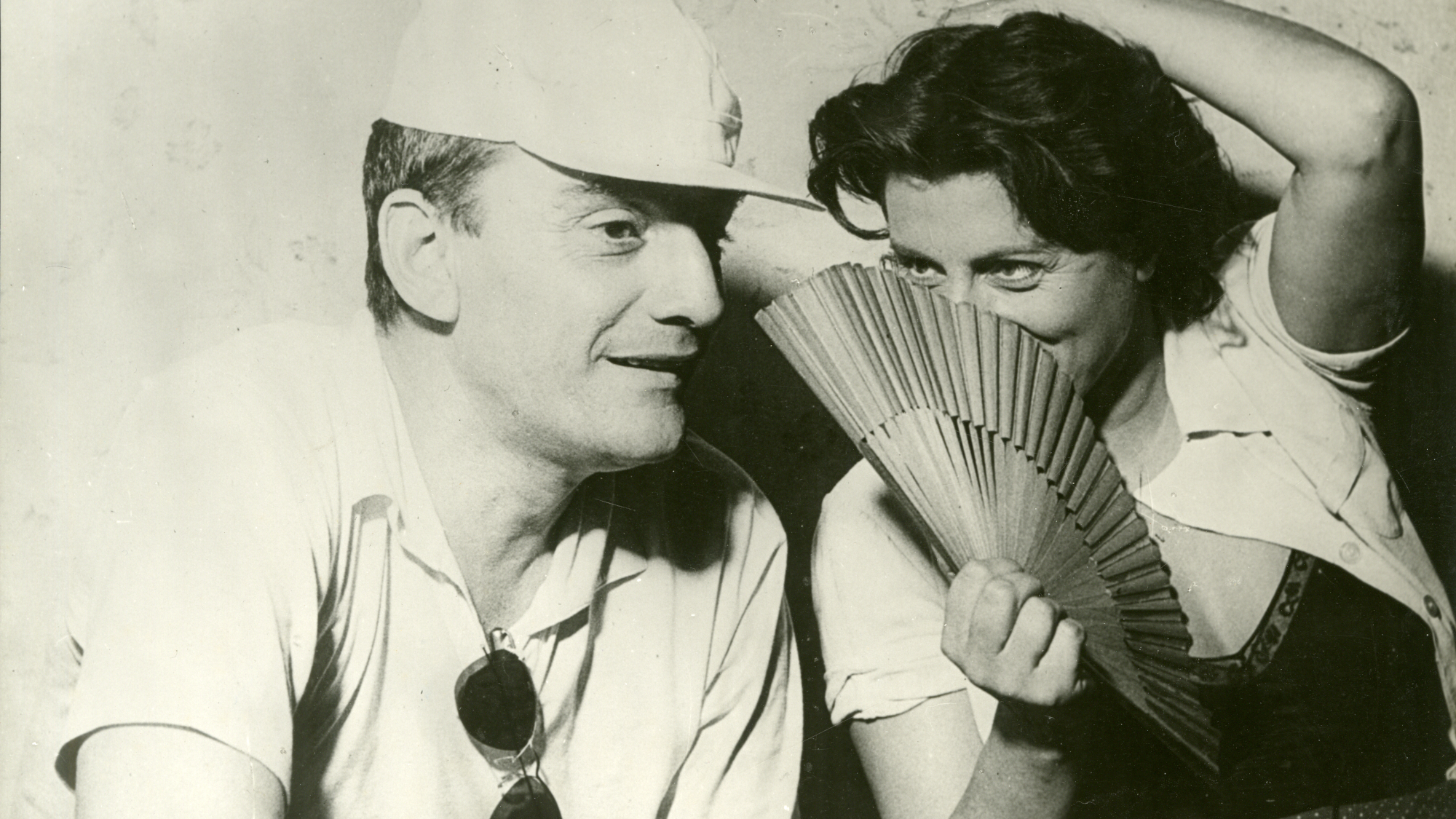
Bellissima is a film full of powerful poetic and stylistic insights. The creative force of the entire piece is so strong as to overcome the odd forced element I thought I spotted here and there. I am delighted to join all those who are already lavishing heartfelt praise on this, your latest work, which is the equal of those that preceded it. Cesare Zavattini, in Luchino Visconti. Epistolario 1920-1961, edited by Caterina d’Amico de Carvalho and Alessandra Favino, Edizioni Cineteca di Bologna, Bologna 2024 The principle of Bellissima rests on a wager: its starting point is the ugly and grotesque, and its destination is beauty and the sublime. This wager is about style. Visconti’s intention is already clear from the opening theme: we hear a Donizetti tune gloriously sung by a soloist and a choir of women, each uglier than the others. We find that the aesthetic principle is in keeping with the storyline. In the seedy, downmarket environs of Rome, a mother wants her 6-year-old daughter to be the star of a film in preparation. We see a series of sketches, not a million miles from the spirit of the Commedia dell Arte. We are spared none of the efforts and sacrifices of this mother hen, consumed by ambition and love for her child, who finally passes the screen tests. The mother manages to attend the screening, which takes place amid taunts and laughter, so ugly and grotesque do they find the little girl. Deeply affected, the mother rebels, refusing to sign the contract that her daughter finally managed to land. The film consists of a kind of metamorphosis in order to discover beneath the ugliness – and God knows, the characters are patently ridiculous, their actions mean, and the sets flea-ridden – a beauty, which is the very beauty of life and humanity, mark of a sensibility that no amount of degradation would ever be able to stifle. It is a sight to behold how, little by little throughout the entire film, Anna Magnani moves from coarseness to grandeur, and the final tracking shot of the sleeping girl becomes all at once Bellissima, sheer beauty. It would be pointless to try to highlight the many masterpieces, popular tales of a kind that make up all the skits in the film. These are the best ones: the fat lady’s insect bite; the visit by the ageing failed comedian; the dance class; the false love scene at the riverside, etc. It is hugely enjoyable and I believe there is no one to rival Visconti’s success in all these genre scenes, in which we see a triumphant Anna Magnani on tip-top form.
Jean Douchet, “Arts”, n. 818, April 1961, now in L’Art d’aimer, Cahiers du cinéma, Paris 2003

For many years, Bellissima was discussed almost exclusively in terms of its most obvious and immediately visible element: its depiction of a perfectly defined character in the context of a story that fit her like a glove. It was as if it was written to bring out her contrasting qualities: cantankerous yet soft, unruly yet sweet. This film marks a “return to character”, not only on the part of a filmmaker who made his debut [Ossessione] with a realist melodrama featuring multiple characters and whose second film [La terra trema] emphasised a strongly choral dimension, but also in terms of what seemed to be (and, in many ways, was) the guiding principle of a cinema which focused on the group and the representation of a particular setting or social situation. This seemed to constitute the principal way in which Visconti deviated from the dominant tendency of neorealism […]. Furthermore, Visconti’s own statements appeared to confirm this impression, emphasising both his interest in the character, and the work he conducted with (and on) those elements which typically underpin a character-driven film: the actor, the actress – or rather the star, as the director himself tended to define Magnani […].
The hypothesis was that […] the setting of the world of the cinema in Bellissima is not really a “fake target”; rather, the thing that drew Visconti towards this subject (who can say whether consciously and deliberately or not!) was a desire to filter a context with a quite different historical significance through a carefully constructed character. In other words, that postwar Italian cinema was no longer the bearer and interpreter of the national-popular mood and that the relationship between “the people” and “the cinema” had become both an impossible illusion and an unstoppable machine. To use Visconti’s own words, in relation to Bellissima, that Italian cinema had “once again entered a period of involution” […]. It seems clear that Visconti’s third feature film already represents the transcending of neorealism which the subsequent Senso would accomplish to a greater and more immediately obvious extent […]. Bellissima is one of the first and most self-aware instances of the death throes of the neorealist utopia.
Lino Miccichè, Visconti e il neorealismo: Ossessione, La terra trema, Bellissima, Marsilio, Venice 1998