
Film notes
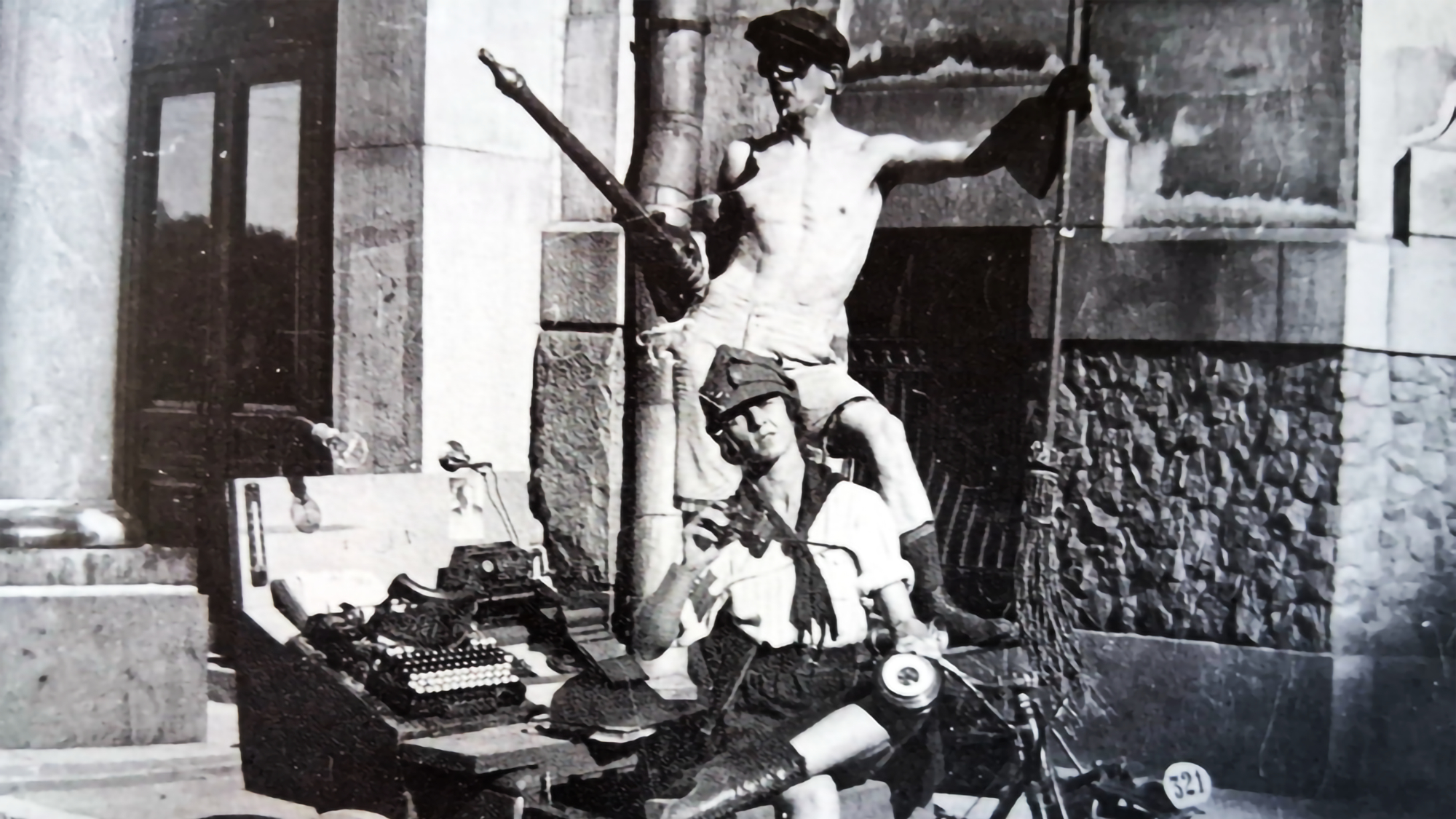
In 1941, Grigori Kozintsev and Leonid Trauberg were feted with first-class Stalin Prizes for their hugely popular Maxim trilogy. Eight years later, Trauberg was denounced as a “bourgeois cosmopolitan who had brought nothing but harm to Soviet cinema” and kicked out of the Leningrad studio he had helped create. This is the story of how he rose from the Jewish ghetto of Odesa to launch the Factory of the Eccentric Actor in revolutionary Petrograd with fellow-Ukrainian Kozintsev, how he and Sergei Eisenstein shared their love of cliff-hanger serials and detective stories, and how they both survived Stalin’s terror. Ian Christie got to know Trauberg in the 1980s, having reunited his New Babylon with its original ironic Shostakovich score for screenings in London and New York, and was able to film him on a visit to London. Only later did he learn what Trauberg had suffered and how he had rebuilt his life and career after the trauma of 1949. This essay film reveals the unlikely backstory of the Soviet avant-garde, inspired by Gogol certainly, but also by Hollywood slapstick and Griffith’s melodramas, P.G. Wodehouse’s bumbling aristocrats and Chesterton’s Father Brown. Stalin, bizarrely, knew Chesterton too…
Russia and its artists have suffered many dark times, but its culture belongs to the world, whoever occupies the Kremlin. Our title echoes Alexandr Blok’s poem, ‘A Voice from the Chorus’, evoked by Trauberg in his final memoir: “Be happy with your life… if only you knew the cold and darkness of the days to come”.