
Film notes
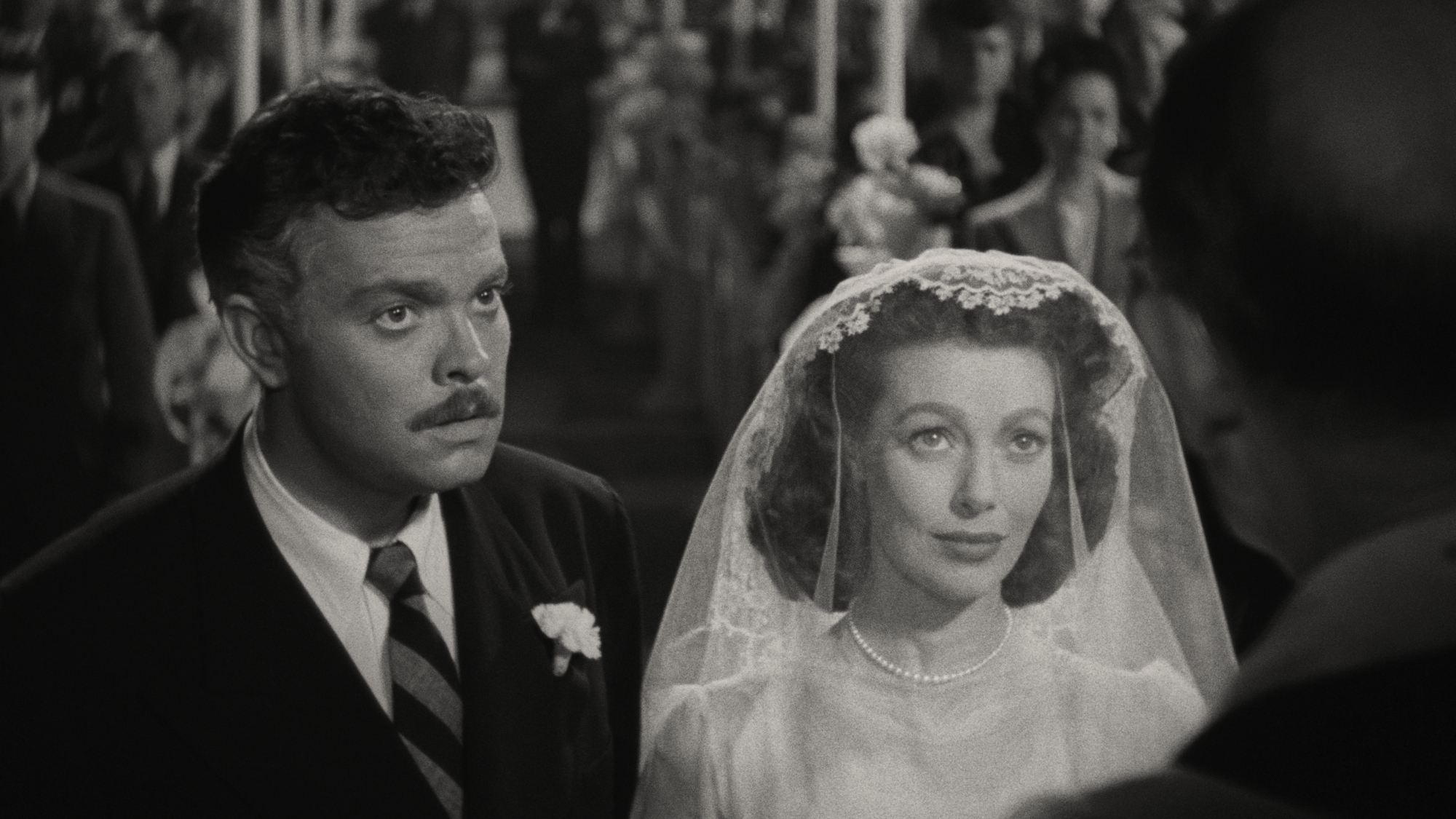
Orson Welles is one of the grand magicians of the seventh art: actor, director, producer, a man of radio and theatre, he incessantly reinvents the language of cinema. Already a celebrity thanks to Citizen Kane and The Magnificent Ambersons, at the age of 30 he agrees to helm a commissioned film in order to reconcile with Hollywood. Working from the story by Victor Trivas and the screenplay by Anthony Veiller, Welles transforms the mandated project into a personal and ambitious undertaking. The pace, camera movements, contrasted lighting and innovative sequence shots give the film its singular power, distinguishing it from post-war Hollywood productions. Despite respecting the budget and the film’s success, Welles remains unsatisfied with the experience, which he deems too artistically limited. The film centres on the complex relationship between Edward G. Robinson, Loretta Young and Welles himself. The plot involves the filmmaker’s trademark themes of false identity, manipulation and violence. The story follows investigator Wilson, tasked with finding Franz Kindler, a former Nazi criminal hiding in a small American town under false pretences. Kindler’s spouse, Mary, refuses to accept the truth, despite the danger. Shot just after WWII, The Stranger tackles the hunt for Nazi criminals, and even integrates documentary images of the Holocaust, a first for a fiction film. With his director of photography Russell Metty, Welles turns the classic film noir into a complex and demanding creation. The Cinematheque francaise undertook the 4K restoration of the film to restore the work, which had long been poorly preserved, to its former glory. The restoration paid particular attention to the black-and-white imagery, to Russell Metty’s cinematography and to the sound quality of the film, notably the iconic voices of Welles and Robinson as well as the music by Bronisław Kaper.
Herve Pichard