Film notes
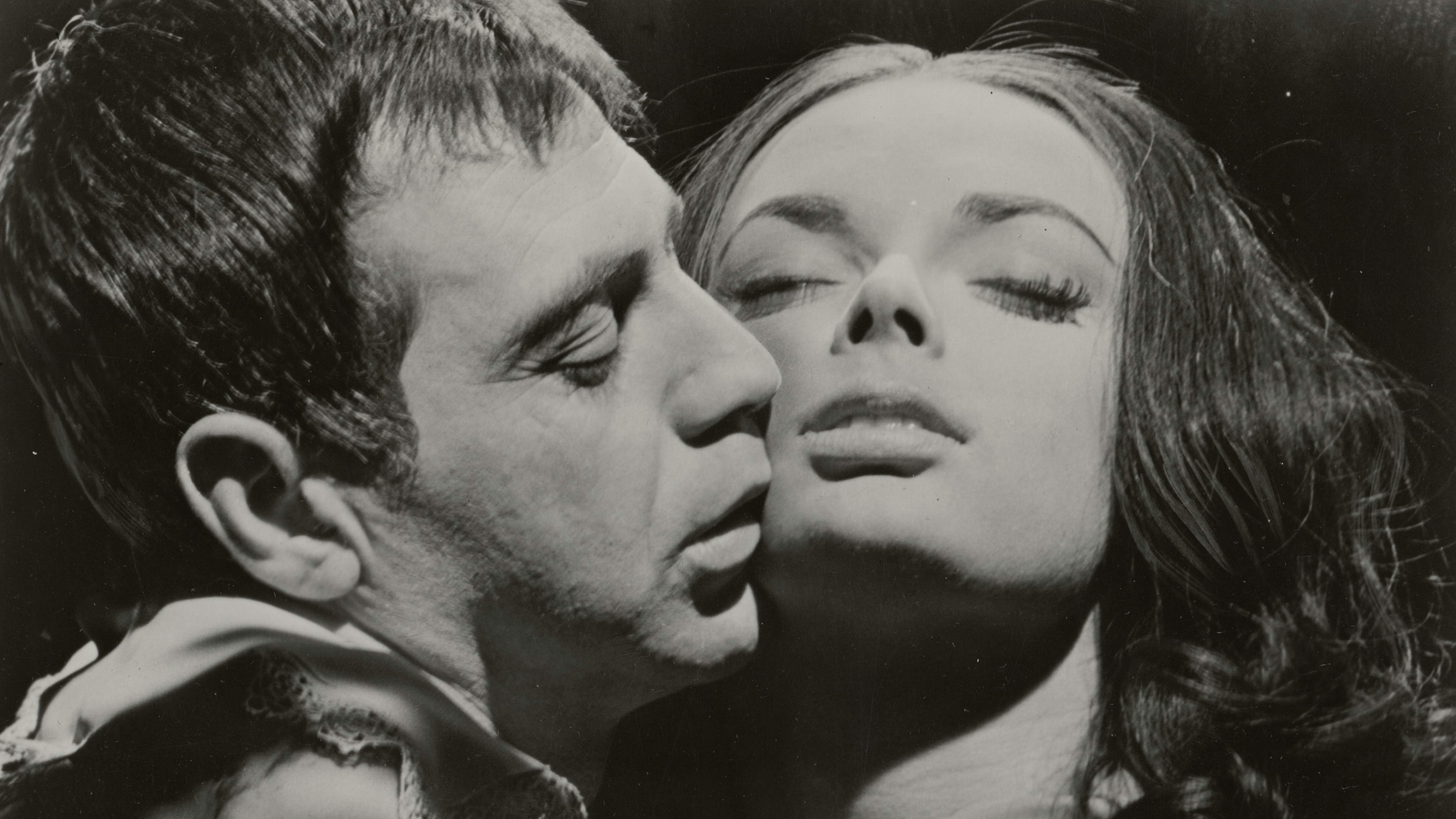
The Pit and the Pendulum is widely considered one of the strongest entries in Roger Corman’s Poe Cycle. Once again collaborating with cinematographer Floyd Crosby, writer Richard Matheson, and production designer Daniel Haller, Corman delivers a visually striking film centered on the recurring theme that past horrors inevitably repeat themselves. The story follows Francis Barnard (John Kerr), as he investigates his sister Elizabeth’s (Barbara Steele) mysterious death at the castle of Nicholas Medina (Vincent Price). Haunted by his family’s ties to the Spanish Inquisition, Nicholas gradually unravels as buried secrets surface, culminating in violent madness and an attempt to murder Francis beneath a giant swinging pendulum. Set almost entirely within the oppressive confines of a Spanish castle, the film reflects Corman’s psychological reading of Poe, turning space into a projection of the mind. Influenced by psychoanalytic ideas, Corman structures Nicholas’s breakdown through disturbing flashbacks. Responding to then-current theories that dreams might be experienced in black and white, these sequences are shot in monochrome and processed with blue tinting and red toning, contrasting sharply with the main color footage. Crosby’s wide-angle lenses and fluid, disorienting camera movement intensify the sense of mental collapse. Corman was known to maximize production value through economical ingenuity such as his use of layered compositions, expressive angles, and strategic fog placement, all contributing to a visual depth. In The Pit and the Pendulum, Haller’s multi-level set allows long tracking shots through interconnected rooms, with characters dwarfed by vast architecture. Built partly from salvaged Universal sets, it delivers scale far beyond its budget. The pendulum set itself filled an entire soundstage, stretching from the floor to the rafters. Often cited as a landmark in horror cinema, the film influenced later Italian thrillers such as Mario Bava’s The Whip and the Body and Dario Argento’s Deep Red. Stephen King has called The Pit and the Pendulum’s climactic sequence one of the most significant moments in 1960s horror cinema.
Mary Corman