
Film notes
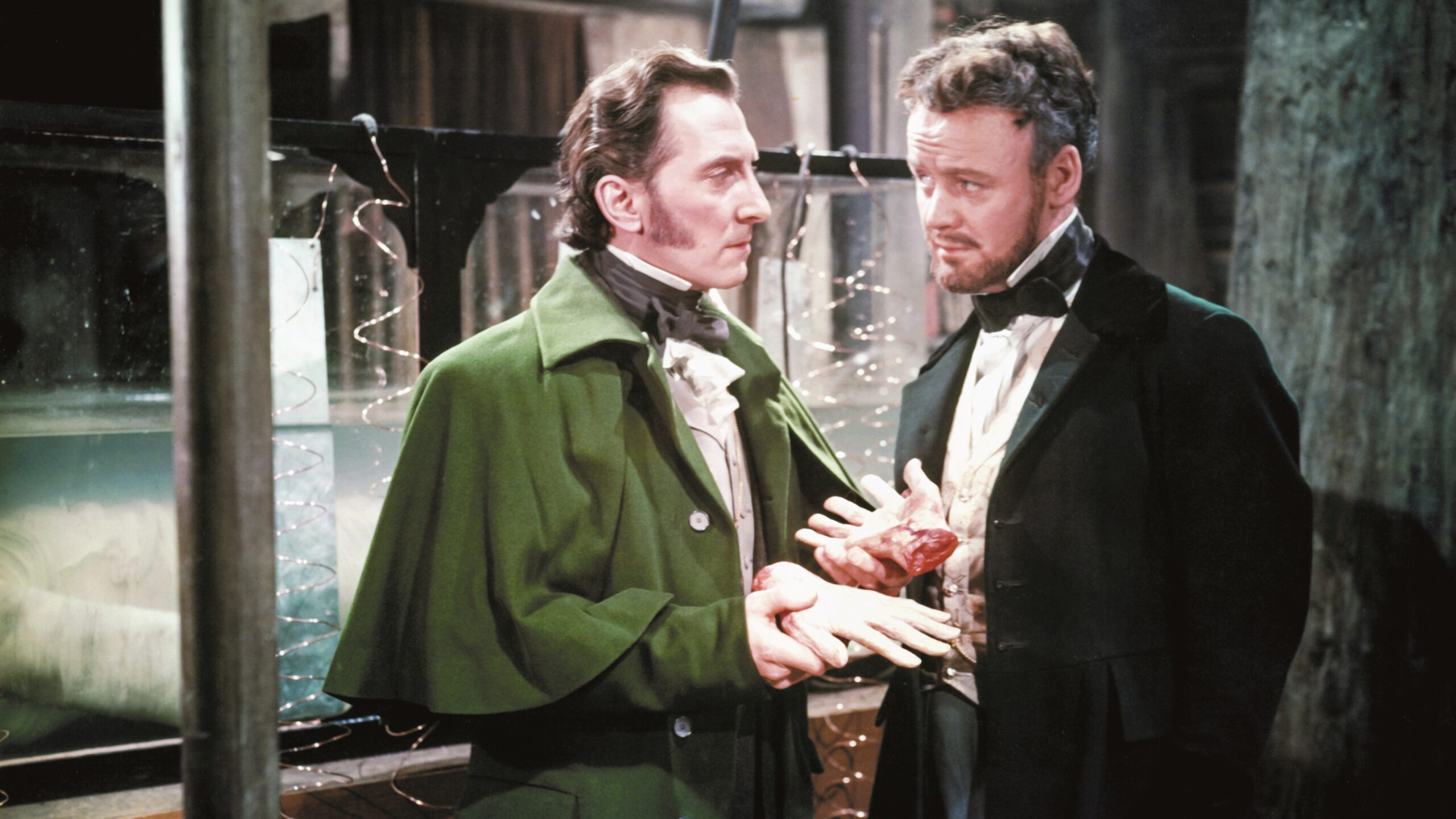
In 1955, the challenge facing Hammer Films was clear: to build on the international success of sci-fi productions like The Quatermass Xperiment and finally breathe new life into the horror genre as well. And who better than Terence Fisher? A self-described “emotional director”, he embodied everything Hammer’s new direction stood for: turning limitations into strengths and drawing out the most dramatic elements of a story. Dismissed by many as a mere craftsman, Fisher nonetheless used The Curse of Frankenstein to pave the way for a bold new horror aesthetic, as vivid as Kensington Gore – the legendary fake-blood mixture made all the more striking by Eastmancolor, here used for the first time in a gothic horror film. Shadowy European villages, dusty castles, cobwebs and alembics all pulse with new contrasts and chiaroscuro, an approach that would go on to influence even Roger Corman, the patron saint of American low-budget cinema. This was never a remake of James Whale’s Frankenstein, nor an adaptation of Shelley’s novel, which Fisher refused to read so as not to be influenced by it. The aim was to take the archetype into uncharted territory. True horror lies not in the Creature, but in the heart of his creator. Peter Cushing’s Baron Victor Frankenstein is cold-blooded and calculating, a cynical genius who wears idealism as a mask, a king of death who believes himself the master of life. Cast primarily for his imposing height and given virtually no dialogue, Christopher Lee as the Creature chose to embody suffering rather than terror. Less robotic and more human than his predecessors, his monster’s face trades the iconic Universal look for something entirely new – a remarkable creation by the talented makeup artist Phil Leakey. It is by nurturing the magic of collaboration – on set and behind the scenes – and by placing incurable humanism at the heart of the entire production that Terence Fisher pulled off his quiet, remarkable revolution.
Alessandro Criscitiello