

Film notes
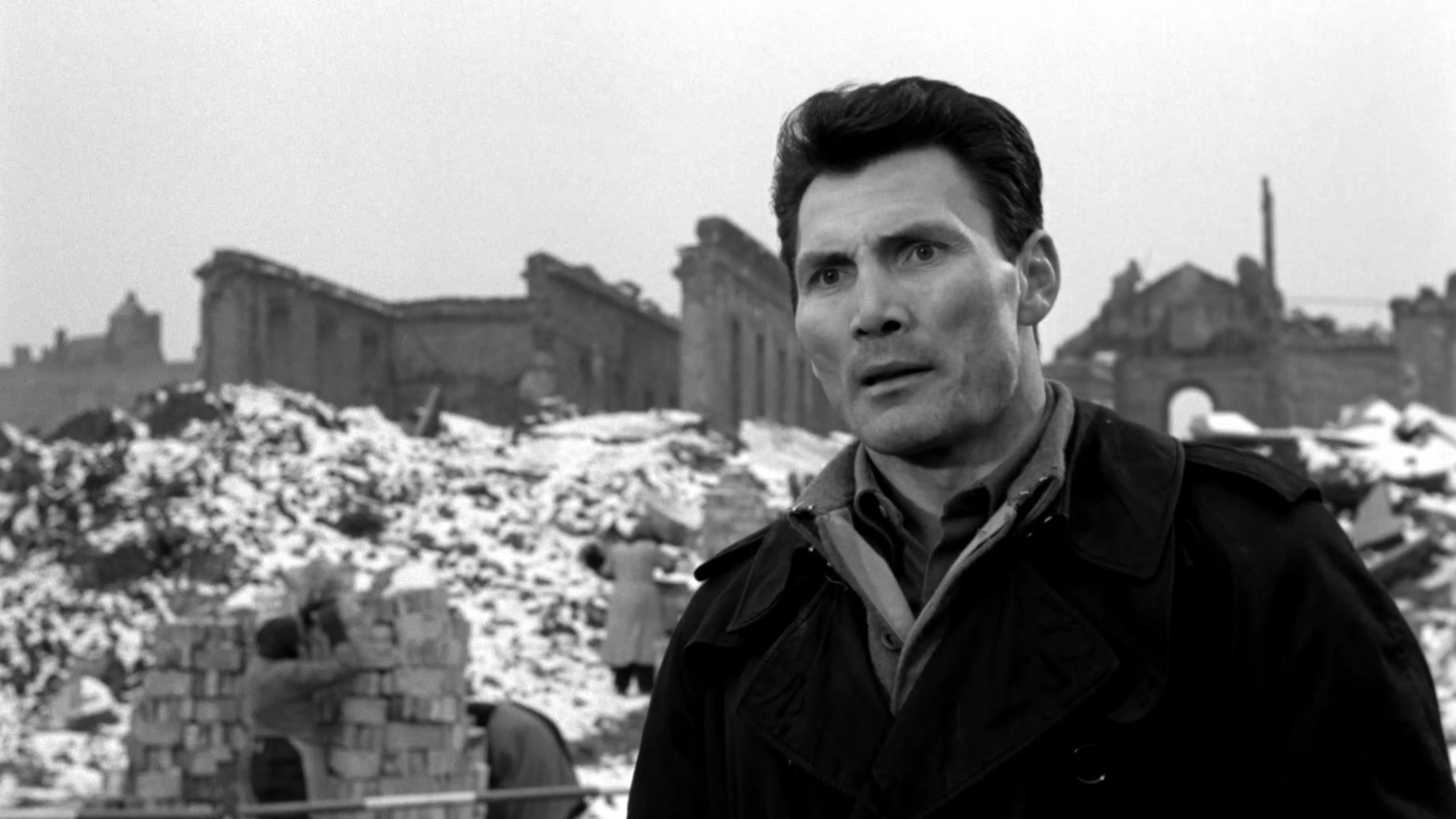
Give Robert Aldrich a ruin and a handful of wired, volatile men and he will give you a one-act Beckettian drama of the highest cinematic calibre. Here, that nerve-shredding act involves a group of German military men in the ruins of postwar Berlin – shot on location in the Soviet-controlled eastern sector – assigned the task of defusing unexploded bombs left behind by Allied bombardments. They walk willingly into danger and form a distinctly Hawksian fraternity, with one crucial element missing: the pleasure of the work itself. For Aldrich’s men, unlike Howard Hawks’s, action alone cannot furnish a reason to go on living. Then what can? Almost nothing. That is the Beckettian core of Ten Seconds to Hell. Between the two leading characters, played by Jack Palance and Jeff Chandler, unfolds a rivalry at once professional (two former soldiers), romantic (over Martine Carol), and philosophical, articulated through two opposing responses to a single question: save yourself first, or your fellow man? Pessimistic to the marrow, Aldrich posits a theory of perpetual suicide in the aftermath of the Second World War: a world metaphorically littered with unexploded bombs, each one permanently on the verge of detonation. One by one, nearly every member of the group falls victim to the invisible war still raging through the ruins. The war is over, but death persists. For Aldrich, these bombs stand for shattered desires, repressed emotions, and a fatal acclimatisation to violence and destruction – something that also chimes perfectly with the recurrent motifs of the film’s production studio, Hammer Films. Viewed today, the film resembles a landscape painting of the desolation row of all the cities ruined by the wars of the past four years. Essential cinema.
Ehsan Khoshbakht