Film notes
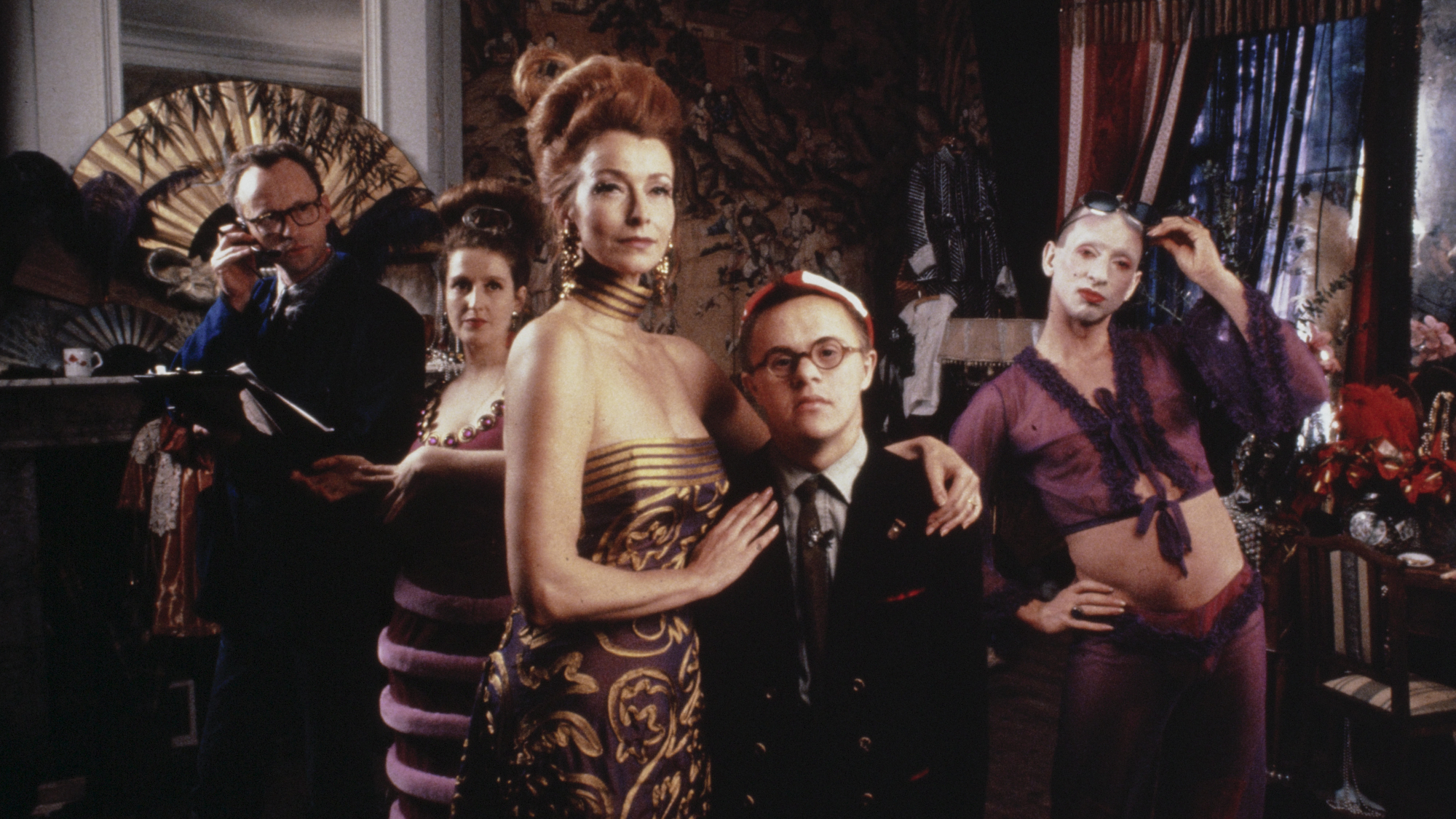
Overstimulated by flamboyant props and distracted by extravagant queens pacing up and down the rooms and corridors, one easily forgets the 18th-century country house serving as the backdrop in Tadzio. Yet this imposing bourgeois mansion was the starting point of it all, as well as the only constraint the directing duo of the short film had to consider. An eminent Dutch cultural critic, Els Hoek, challenged several artists to feature this particular place in an audiovisual artwork. She provided them with a generous budget and left them to do the rest. Three films emerged from her idea – Tadzio among them. Hoek turned to Erwin Olaf, a young, ambitious but still unknown photographer. Knowing he needed a sparring partner, Olaf invited his friend and studio mate, the artist Frans Franciscus, to collaborate on the project. For two weeks on location, they wrestled with ideas, structuring on paper what would become a marvellous queer doll’s house. Olaf ’s luxurious, glossy and slightly unsettling photographic aesthetic paired perfectly with Franciscus’s melancholic, colourful and nature-bound artistic practice. The sketched storyline about a mysterious ongoing film production and the diva’s son meandering through the house serves as a pretext for Reinier van Brummelen’s audacious camerawork. Each room unfolds like a drawer being pulled open, revealing a self-contained world. With every door that creaks ajar, we feel like intruders in a child’s secret garden, lured to explore further.
Lou Burkart