
Film notes
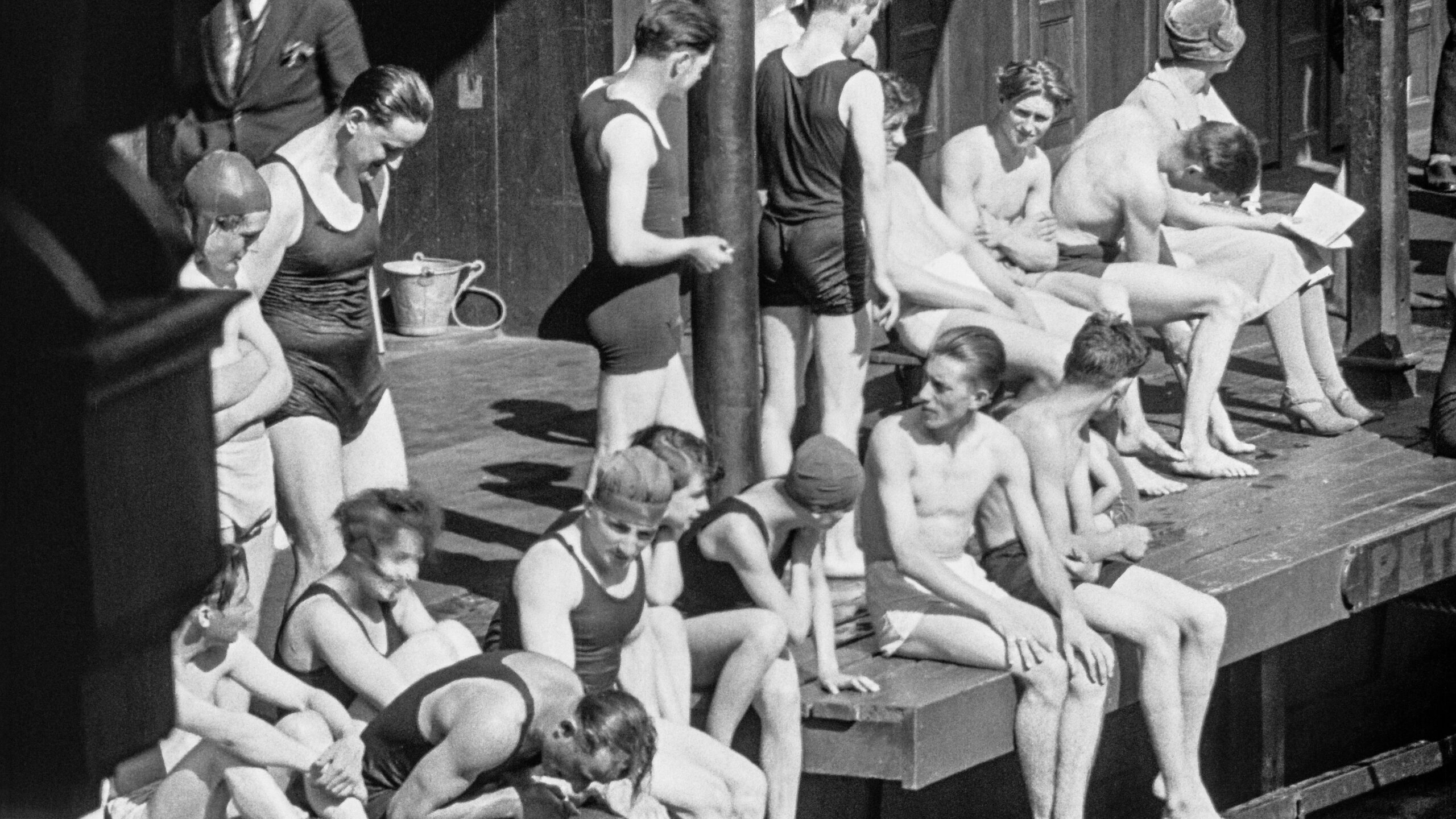
From the very beginning of his career, Brazilian-born Alberto Cavalcanti (1897-1982) recognised cinema’s potential to engage with the other arts, while at the same time possessing a powerful social voice. In this way, he forged a complete convergence between the social, the technical and the poetic – a triadic concept that guided his filmmaking. In his unpublished autobiography, the section devoted to the time he spent in France in the 1920s and his directorial debut Rien que les heures was titled Youth. An apt title when associated with a film that exudes freshness, a desire to reinvent the world, to expose its inner workings, its social abysses, the complexity of its contradictions, and the dialectic of the social and moral decay of a society marked by inequality and indifference, in a Paris ravaged by crisis in the aftermath of World War I. The social discourse adopted by Cavalcanti anticipates the conceptual foundations of Italian neorealist cinema, which would choose the ruins of devastated cities as a backdrop to illustrate the human degradation caused by war – a cinema in which, just as in Rien que les heures, the subject matter would be as compelling as the form. The grasp of reality in Cavalcanti’s cinema traverses spectral representation, bringing to the screen a work that united fiction and documentary in its authorial construction of the real, from the moment he took cinema to the streets and depicted a marginal and contradictory Paris in Rien que les heures. Shedding light on this film a century after its release represents a rediscovery of an artist who saw the moving image as a tool for transforming the world, revealing its shadows, imperfections and humanity. This is fundamental to understanding Cavalcanti’s work: his profound sensitivity to what it means to be human. A deep understanding of cinema as a political voice and a beacon to illuminate collective paths, imbuing the fortuitous movement of the ordinary man’s daily life with poetry.
Roberta Ellen Canuto