

Film notes
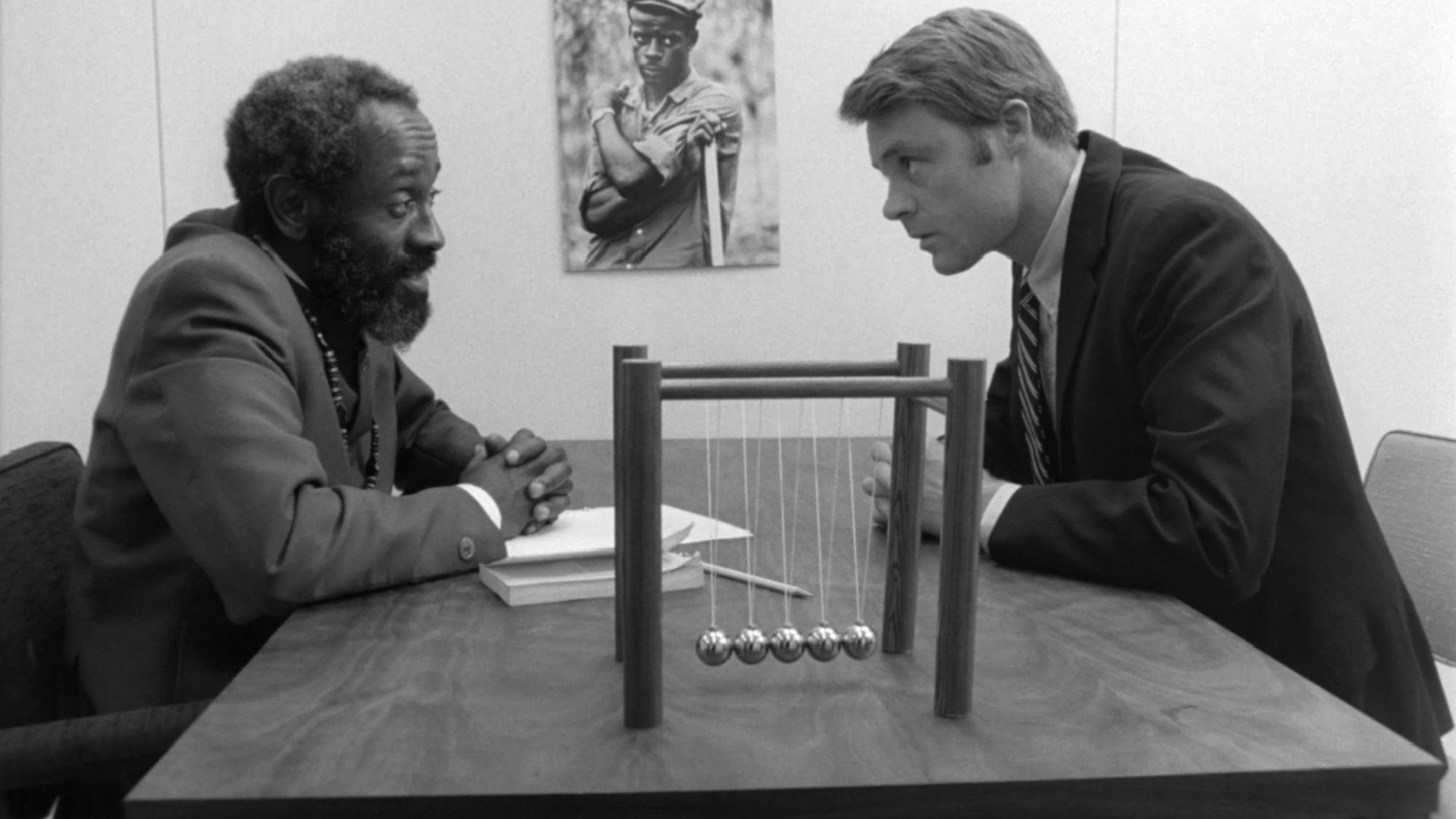
the director’s earlier underground cinematic output. Downey’s 1960s avant-garde lifeforce was equal parts his contemporaries Jean- Luc Godard, Andy Warhol and Robert Frank fused with the comic sensibility of Lenny Bruce. Nearly a decade before Putney Swope, Downey wrote and directed four visionary films that were ribald and politically engaged, each aggressively mocking sacred American ideals and institutions, their frantic satire set to a foot-tapping jazz beat. Putney Swope is grounded in the advertising world Downey knew all too well. The conceit is genius. When a commercial firm’s CEO drops dead, an underpaid Black board member (Arnold Johnson as the titular Putney) is elected after the other white members vote for him, believing no one else would. Once in power, Putney renames the company the revolutionary Truth and Soul, Inc. Putney cynically exploits the consumer’s basest urges, creating offensive yet immensely profitable commercials. These TV spots, including a hilarious send-up of pimple cream, transcend parody, becoming Downey’s deft, radical swipe at corporate culture. Eventually the weary Putney finds himself caught between big-business blackmail and the righteous rage of his Black comrades. “What do you really want to do? Do what’s right or advertise garbage?” asks one furious employee. “Both,” replies Putney. Putney Swope was released at the right time. Black and white audiences lined up at cinemas to see the dark comedy. For Downey, larger movie budgets and chemical excess awaited (chronicled in Chris Smith’s emotional documentary Sr., 2022). Home video rescued Putney Swope from obscurity. The uncensored cassette cover art, Putney’s original poster of a defiant middle finger held high, aroused the curiosity of Los Angeles teenage cineaste Paul Thomas Anderson. The Oscar-winning Anderson has cited the sociopolitical cult classic Putney Swope as the foundation for his own unique movie sensibility.
Thomas Logoreci