
Film notes
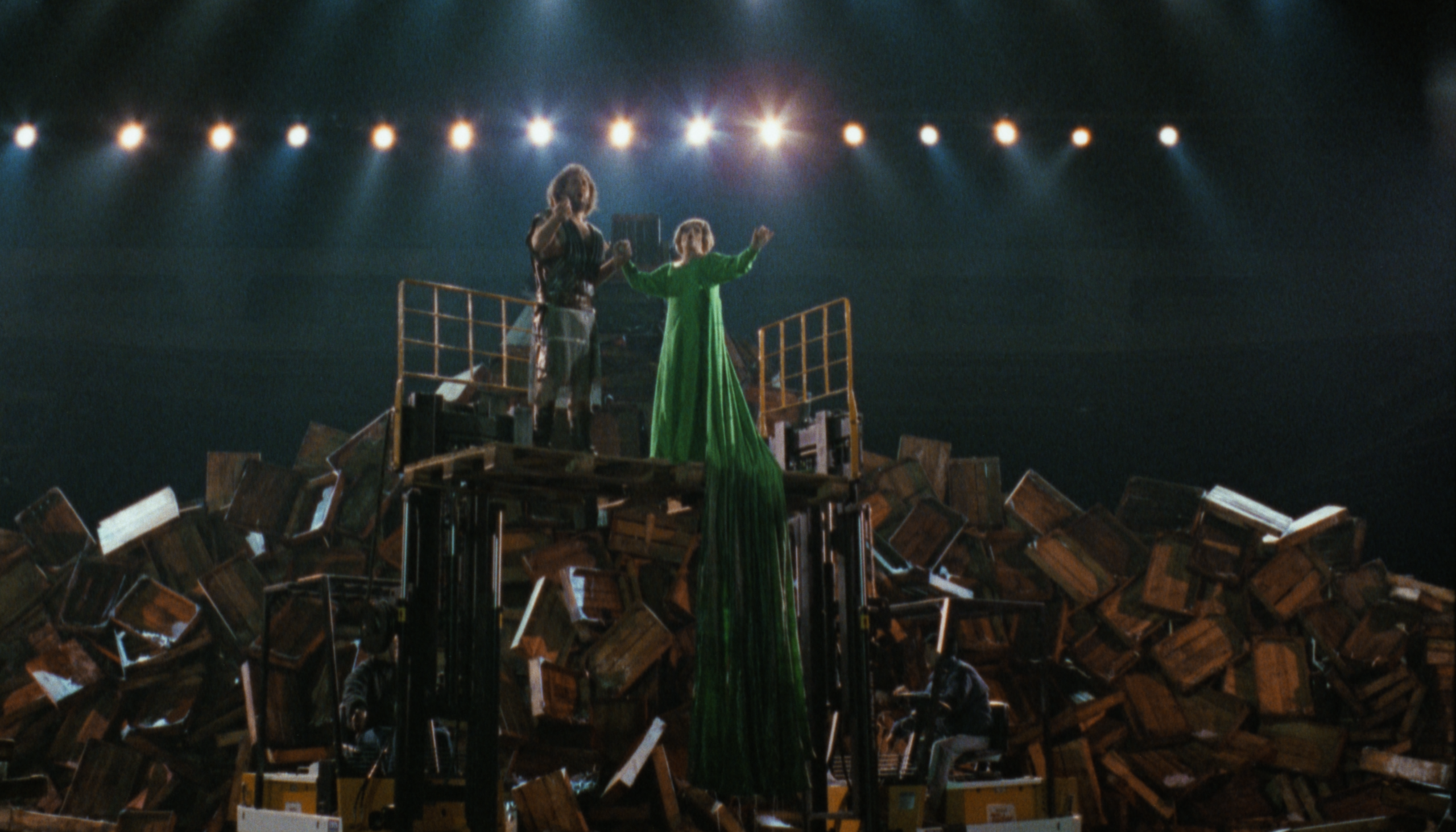
Pont de Varsòvia marks Pere Portabella’s return to filmmaking after a 13- year hiatus, during which he served as an elected representative in the first democratic institutions following the Franco regime. In the filmography of a director and producer formerly forced to navigate the shadows of the dictatorship through oblique and clandestine strategies, Pont de Varsòvia stands out as a dazzling display of cinematic virtuosity, driven by Tomàs Pladevall’s masterful cinematography. For the first time, Portabella could freely access new public funding to finance a large-scale production, filmed with the meticulousness of contemporary commercial cinema – though, true to his unruly critical spirit, he would turn those very resources against themselves. At a time when public-funded productions in Catalonia and Spain favoured highly conventional literary adaptations, Portabella persisted in his intention to transgress “the habit of making films with excessively strict narrative criteria, inherited from literature”. Pont de Varsòvia thus unfolds a mosaic of meta-cinematic tableaux that dissolve classical narrative conventions, reflect on the specificity of the medium, and establish fascinating dialogues between film genres and artistic languages. An invitation, in the filmmaker’s own words, to “accept that there are other possible ways of seeing and experiencing cinema”. In keeping with Portabella’s commitment to never divorcing formal innovation from political critique, the characters in Pont de Varsòvia, co-written with Octavi Pellissa – a communist militant returned from exile – deliver a scathing critique of a mediocre, self-satisfied intellectual class that drifts between cocktail parties and endless discussions, paralysed by an impotent and amnesiac discourse against the backdrop of the fall of the Berlin Wall and the political scars of the century. A film of disturbing and intriguing beauty, Pont de Varsòvia was made from a premise of radical freedom that still challenges the contemporary gaze. At least, Portabella’s statement accompanying the film’s premiere in 1989 still stands: “We let ourselves be carried away by the pleasure of adventure. Ultimately, that is what the film, once finished, should convey to the viewer.”
Pablo La Parra Pérez and Jordi Vidal