
Film notes
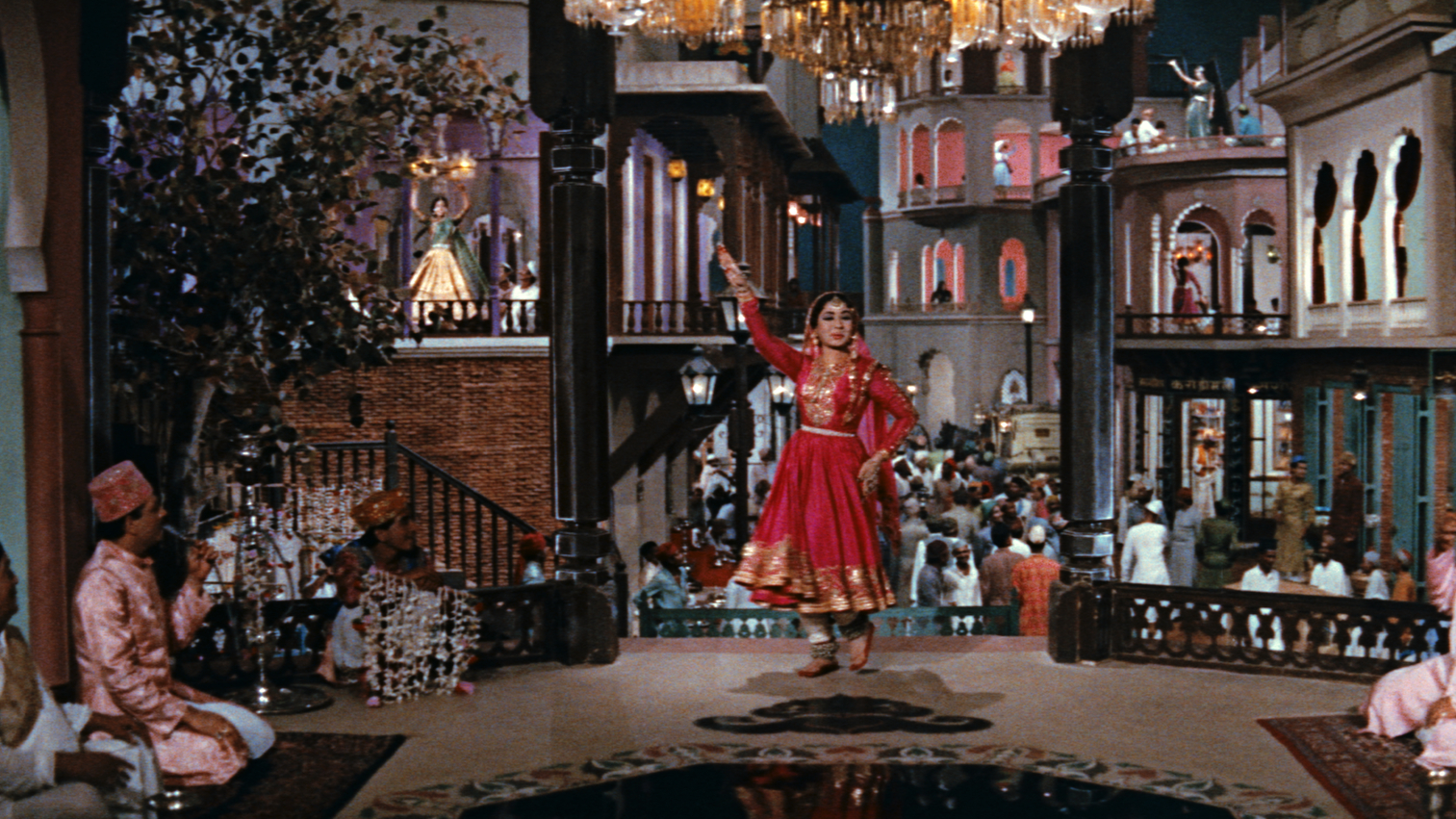
Pakeezah has been etched in my memory since childhood, when I first saw it with my grandmother in a darkened cinema in Dumraon, Bihar. I still remember the wonder I felt before the luminous Meena Kumari, the painterly, colour-saturated frames, Ghulam Mohammed’s music, the immortal songs sung by Lata Mangeshkar, and Kamal Amrohi’s Urdu dialogue, which immersed us in the courtly world of the nawabs of Lucknow. Kamal Amrohi was among the filmmakers who shaped Indian cinema through spectacular visual imagery and the lyrical force of Urdu. Pakeezah remains one of the most celebrated films of the tawaif genre, centred on cultured courtesans trained in music, dance, poetry and etiquette. Here the courtesan is not merely an object of desire, but a tragic figure caught between artistic refinement and social exclusion, yearning for respectability and acceptance. The making of Pakeezah is one of Indian cinema’s most mythologised production stories, inseparable from Kumari’s decline. Amrohi conceived the film around his wife, then a rising star, and began work in the mid-1950s. By 1964, however, little progress had been made, delayed by his perfectionism, the elaborate and costly sets, and the shift to colour film. In the meantime, Kumari had become a major leading lady. That same year the couple separated, and over the next five years her health deteriorated. She returned to the set only in 1969, weak and visibly marked by illness and alcoholism, yet determined to complete the film. After nearly 15 years in production, Pakeezah was finally released in 1972, when Indian cinema was moving away from the refined, Urdu-inflected literary style and studio aesthetic of the 1950s and 1960s toward more modern,
urban, action-oriented storytelling. Kumari died on 31 March 1972, only weeks after the film’s release, and Pakeezah became a box-office sensation. It now stands as one of the last great classical musicals of Indian cinema: visually opulent, emotionally tragic, and poised between cinema and biography, as the actress’s real decline seems to echo the fate of the character she plays.
Shivendra Singh Dungarpur