Film notes
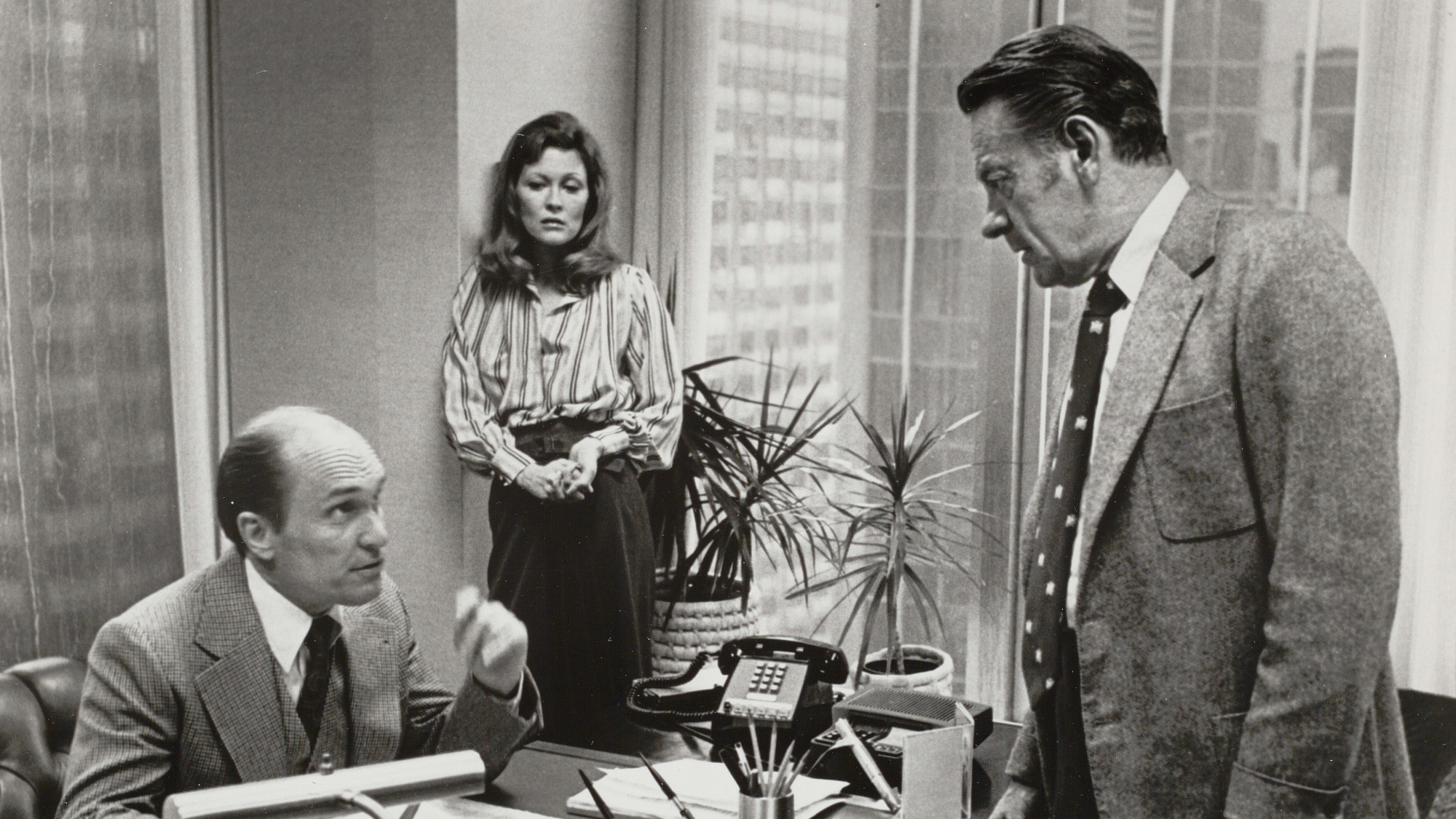
In the same year that Alan J. Pakula’s All the President’s Men reconstructed the most glorious (or at least the most celebrated) episode in American journalism, Paddy Chayefsky and Sidney Lumet plunged the profession into a decadent, grotesque and hysterical abyss. Not exactly the same profession, since here we are speaking about television, and television – despite Murrow and Cronkite – never quite succeeded in becoming mythological material. Thus Chayefsky could argue, in 1976, that if the free press makes people free, television makes them idiots. (Fifty years later, we may reflect on how little faith we place in our own human intelligence, if the mere spectre of a cathode-ray tube or of a complex artificial language is enough to hurl us into panic.) A news anchor, alcoholic, depressed and just fired, announces his own suicide live on air; ratings suddenly soar; everyone loses their mind. Everyone – idiots and cynics alike – is corruptible: ordinary people, revolutionaries, feminists, Black activists. The chief corrupter among them is a hypercharged and frigid – well, almost – news executive, a woman who only enjoys herself in bed if shares are being discussed at the same time. Populism, the distortion of information, the media’s hands over the city – it’s all in there, but it is Faye Dunaway’s performance that gives the film its obsessive tempo and its inescapable bitterness. The role earned her an Oscar, and somewhat burned her career. From Bonnie onwards – from The Thomas Crown Affair to Chinatown, passing through Three Days of the Condor and The Towering Inferno – Dunaway had built a screen persona of low-voiced, allusive sensuality, set ablaze by her extraordinary photogenie. It was as if the neurotic paroxysm of Diana Christensen pulled her smile too tight, exposed her teeth too much, while her delicate thinness suddenly appeared more cutting than supple. For Faye Dunaway, a run of wicked ladies was beginning: look away for a moment, and you’re already Mommie Dearest. Paroxysmal too is the ending, in the very 1970s key of conspiracy and blood. American journalism, meanwhile? And journalism itself? Good night, and good luck.
Paola Cristalli