

Film notes
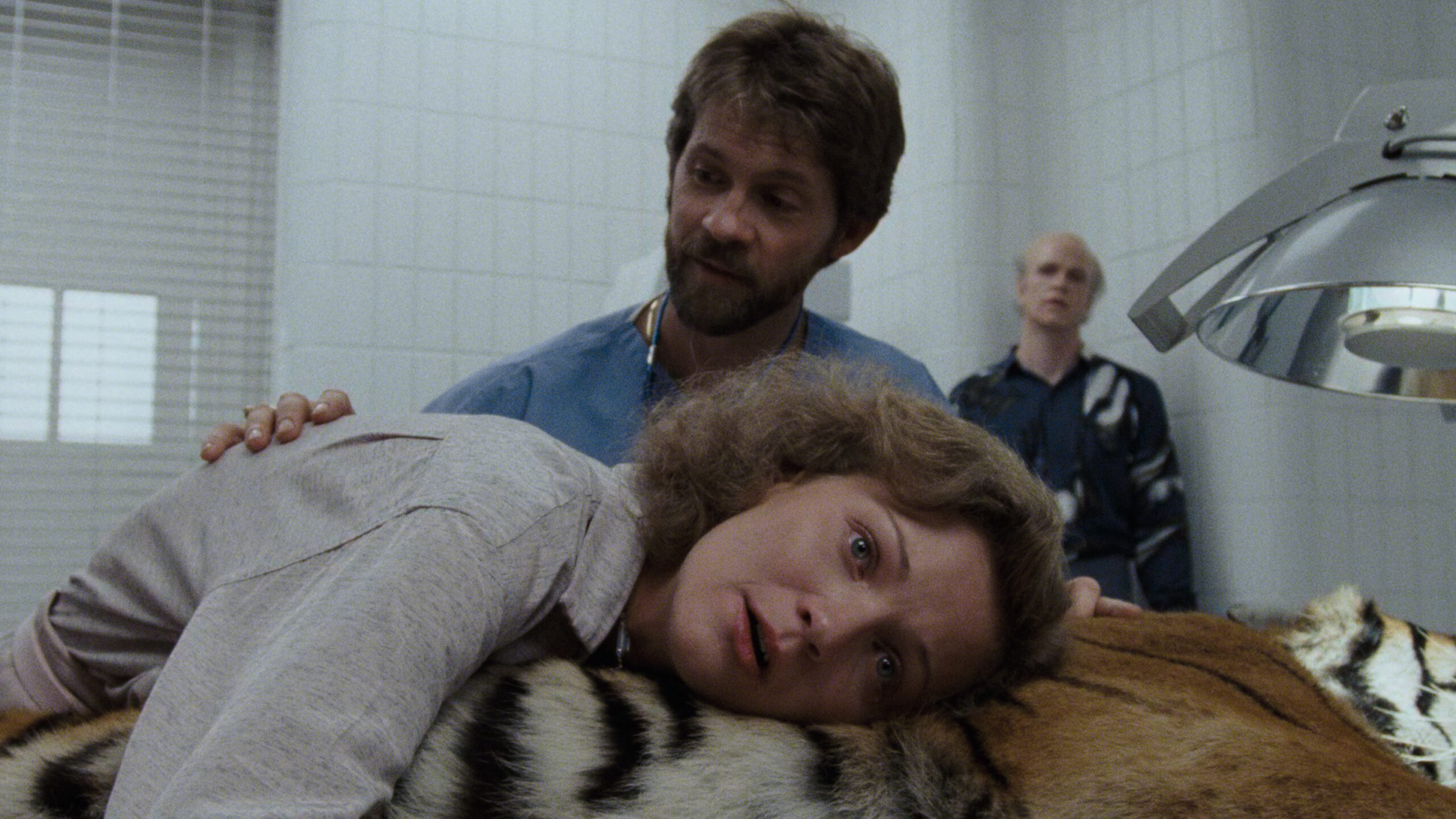
Will Graham is not yet the profiler as 1990s cinema will come to know him, nor the hero played by the same William Petersen in the TV procedural C.S.I.: he is a vulnerable and feverish detective who seems to understand all too well his nemesis, the serial killer Francis Dollarhyde, a.k.a. “Red Dragon”. Manhunter is cinema’s first encounter with Hannibal Lecter – here played by Brian Cox – and the film with which Michael Mann transformed the thriller genre into a psychological labyrinth, and the hunt for a killer into a disturbing, metaphysical journey. Based on Thomas Harris’s Red Dragon, the film came out in 1986, between Thief and The Last of the Mohicans, and it already contains various touchstones of Mann’s poetics in their purest form: men defined by their work to the point of self-destruction; professionals bound by an inflexible moral code; neon-lit, night-time cityscapes; and male solitude. Mann films this nightmare pushing his chromatic signature further than ever: the interiors are framed like aquariums, immersed in blue, green and white. Manhunter remains an anomalous work among films about serial killers. Before the success of The Silence of the Lambs, and before Lecter became a pop icon, Mann shifted his focus onto the fragility of those who must confront psychosis. Here, the monster is a terrifying but tortured figure. In him, Mann recognises the dark side of his heroes; he even dares to suggest that the killer has a fundamentally melancholic emptiness inside. The film’s greatness resides, perhaps, in the danger of this sense of distance: to overcome evil, you have to get close enough to recognise its humanity, but you must stop before you get sucked in, as if in quicksand. When Graham reconstructs the voyeuristic gaze of the killer watching home movies – in a sequence almost as famous as the one featuring Iron Butterfly’s In-a-Gadda-Da-Vida – cinema itself becomes part of this equation.
Roy Menarini