Film notes
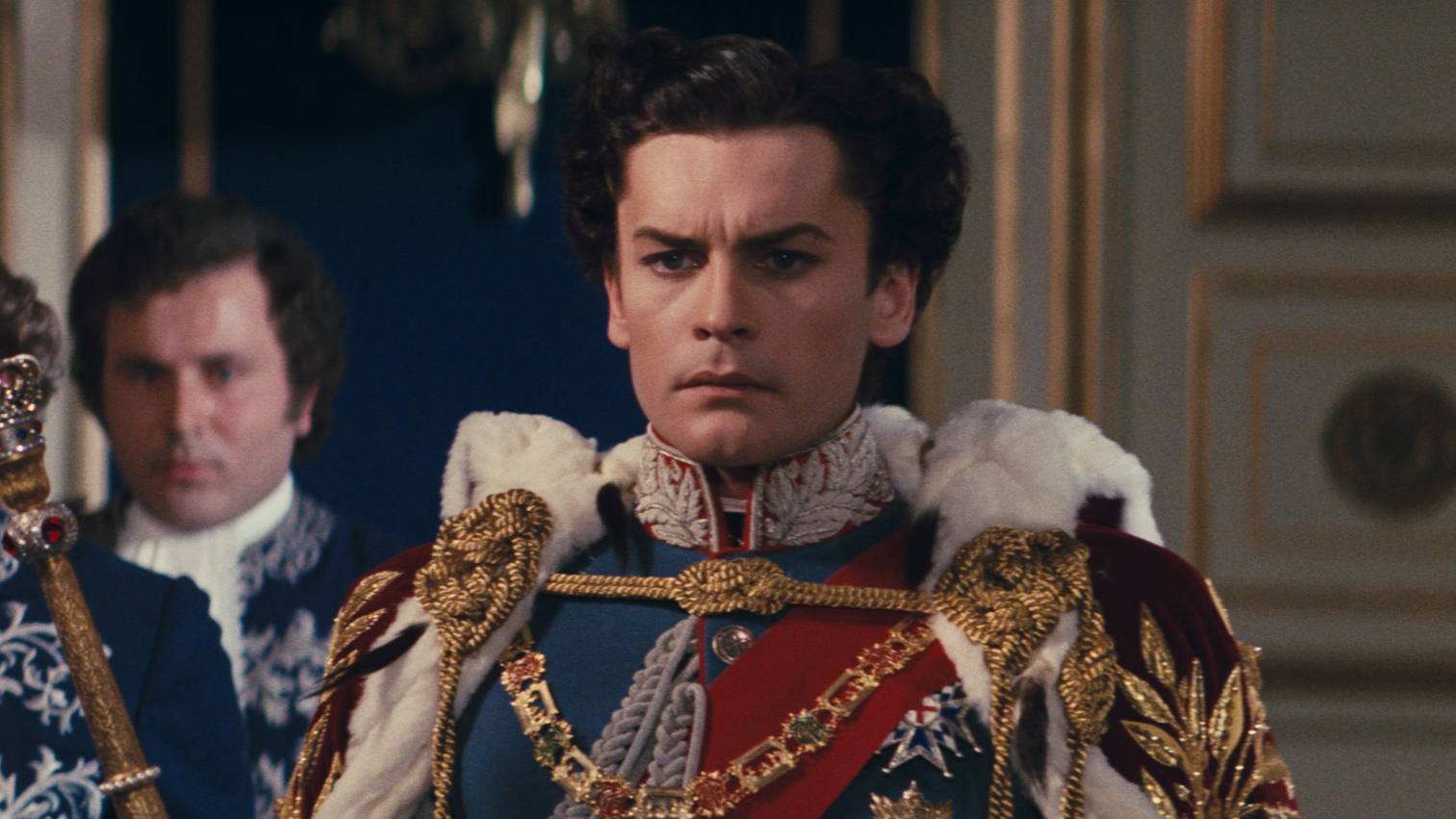
After La caduta degli dei and Morte a Venezia, Luchino Visconti’s German trilogy ended with Ludwig. Here Visconti found new, personal ways to express a loving yet critical vision of Germany as a promised land of deep spirit and insight in the arts. The focus again is on a person who is only barely anchored in reality. Ludwig is both an artistic soul – a patron of the arts and a kindred soul brother from whom the ageing Richard Wagner receives support for his vision – and a ruler. He is a critique incarnate of what will follow his own “unviable” administration. The film critic Sakari Toiviainen puts it well: “Ludwig wastes his youth, power and reason while pursuing with self-destructive zeal pleasure and beauty that he is never able to catch because it is only an illusion. He reaches for the illusion of love with his cousin Elisabeth (the very Sissi whom Romy Schneider portrayed already in a cycle of popular film in the 1950s) and with innumerable young men among whom he carries out his homosexual preferences; the illusion of creation with Wagner; the illusion of power; the illusion of his fairytale castles.” Almost invariably, Visconti’s films focus on compact periods of time; only Rocco and La caduta degli dei cover a few years. Ludwig is the mirage of an entire life. It begins from the unlimited promise of the young ruler. The spur in the recent past is the fictitious idyll generated by the victory of the counter-revolution and reaction in 1848 – that is, the period that concludes Lola Montès. At the end Ludwig is an ordinary beer-guzzling philistine, a toothless sissy among young men in Lederhosen playing blind man’s bluff. By the late 1870s, Germany has united. Ludwig’s participation in this momentous event is almost parodic; with a swipe he signs Bismarck’s paper that reduces him to a marionette. Ludwig is a series of ceremonies in which we witness how a way of life transforms into theatre. Corporal beings turn into role models. Glorious milieu, of which Ludwig’s underwater grotto is the apex, glide into the past, and in the background of the scenery-changes Wagner’s music plays quietly. Having given an account of capitalism’s transition into fascism and the great European crisis that preceded it, Visconti descends into ‘a twilight of the Gods’. This is total cinema, both very original and at the same time a dignified and inspired continuation of a great tradition.
Peter von Bagh, Taikayö [A Night of Magic], Love Kirjat, Helsinki 1981 (translated by Antti Alanen)