Film notes
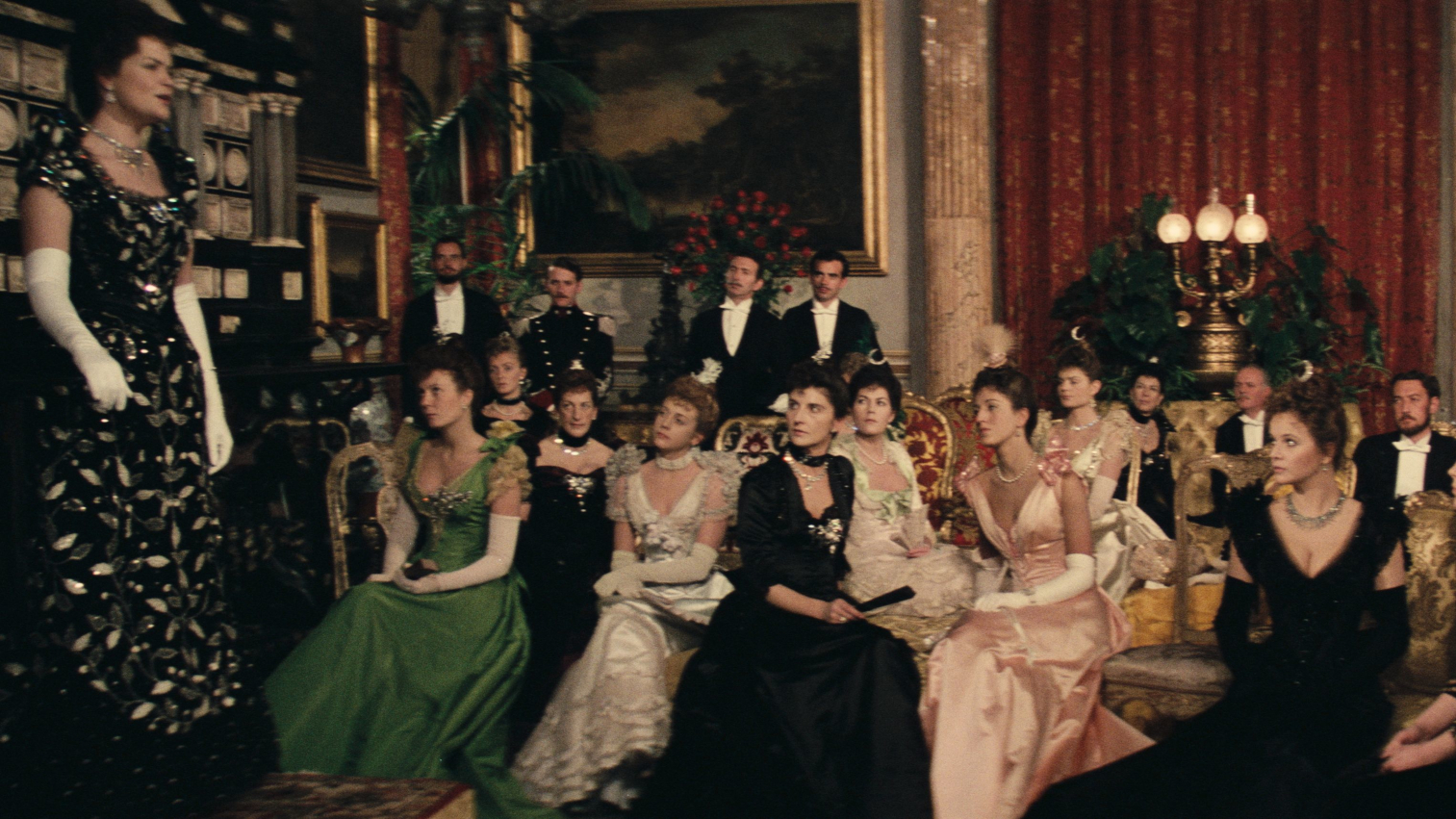
Gabriele D’Annunzio’s novel was based on a specific event, which had always recommended it to Visconti: the murder of a child, Count Tullio Hermil and his wife Giuliana represented not only the breakdown of family life, but also, Visconti said, “a particular society, and a particular Italy, for they belong to the upper middle class responsible for the advent of Fascism” … L’innocente is the last of his own masks, the final ritual before Visconti’s descent into death and his origins. This was an ultimate family tragedy, in which a mother and a father momentarily join in their desire to rid themselves of a bastard child, an intruder. And, in voluptuously mournful red and black, the film is a final scrutiny of a life in which the dominance of women is affirmed as it is in no other Visconti film – the reign of the three Fates presiding over birth, sex and death. Again, this turning back was no mere refuge or consolation, no mere elegiac self-indulgence, Visconti knew those salons of the past where, before the petits- fours, one assumed a worshipful air and suffered through one Mozart, two Schuberts and four Liszts; where lowered eyes and evasive looks told more than words about the fluttering of a heart, and people looked like moths trapped in lacquer-and-velvet boxes. The couple in the film, united by their mutual jealousy until they are tragically sundered, were Visconti’s parents. And his portrait of Giuliana Hermil, one of the loveliest portraits of wife and mother ever drawn in film, was his last declaration of love to his mother Donna Carla … In this last mirror, Visconti watched death at work: the horses drawing the hearse, the shuttered houses, soon sold, filled with the mortuary whiteness of furniture covers, the child’s death, the theatrically absurd death of Tullio Hermil. Visconti knew that L’innocente was an announcement of his own death … In the movie’s titles, against a background of garnet velvet, Visconti’s hand slowly turns the yellowed pages of an early edition of The Intruder, lingering over each leaf as if to stroke the soft, thick paper.
Laurence Schifano, Luchino Visconti. The Flames of Passion, Collins, London 1990