


Film notes
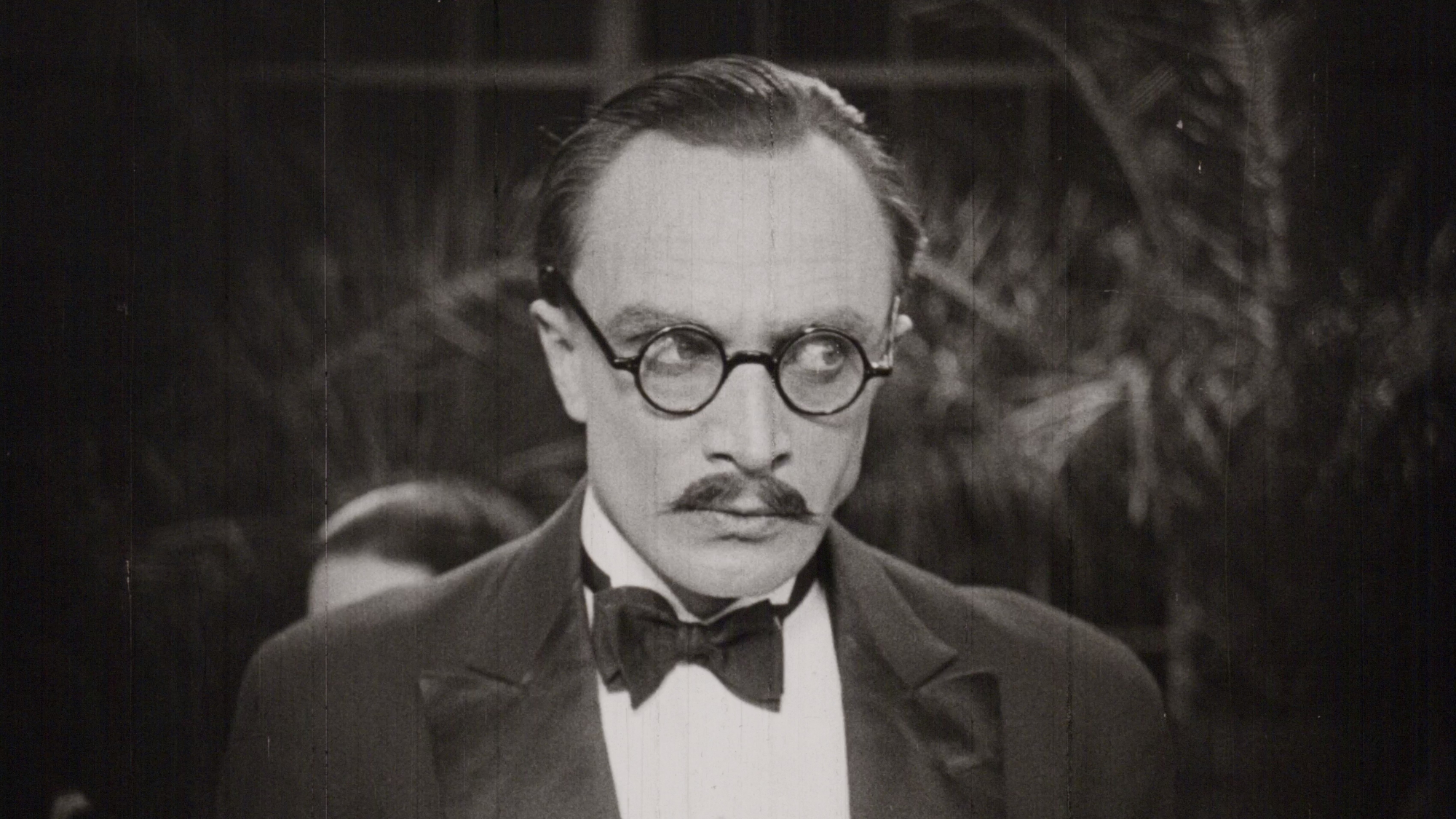
This film, once considered lost, is very special, not only for its cast of German film stars from the 1920s, but also for containing a meta-text of cinema within cinema. Conrad Veidt plays a psychiatrist, Dr Lamare, in love with his patient, a married woman named Diane (Lil Dagover), who suspects her husband is cheating on her. They are members of German high society and are filming an amateur movie at the UFA studios: they plan to donate the proceeds from its premiere to charity. Viktor, Diane’s husband, aware of the attraction she holds for Lamare, suggests that he hypnotise her, which is where the complications begin. The scene at UFA allows for an appearance by Emil Jannings as himself, parodying his role in Murnau’s The Last Laugh, released a year earlier, which is quite a rarity. Because Veidt hypnotises and manipulates the will of his victim (as in Caligari), and that the victim is the same actress from that film, we have a feast for cinephiles. Discovering Veidt’s comedic side is a surprise, as many of his silent films remain lost. His facial expressions and body language in portraying the obsessive Lamare are key to this. Lillian Hall-Davis, who would work with Hitchcock later in the decade, delivers a fresh and jovial performance as Viktor’s lover. Finally, Lil Dagover, in an unusual role, gives a performance that never quite reveals the effectiveness of Lamare’s hypnotism. This was one of the first films made by Lothar Mendes in a career that began in 1921 and ended in 1946, filming in Germany, the US, and England, under contract with Paramount Studios and working alongside Alexander Korda. This is a good opportunity to remember one of the forgotten names of German silent cinema, a filmmaker who achieved success in other countries, motivated by the persecution he faced in Germany from 1933 onward. This film was considered lost until it was found in Chile in perfect condition on a nitrate print.
Jaime Córdova