Film notes
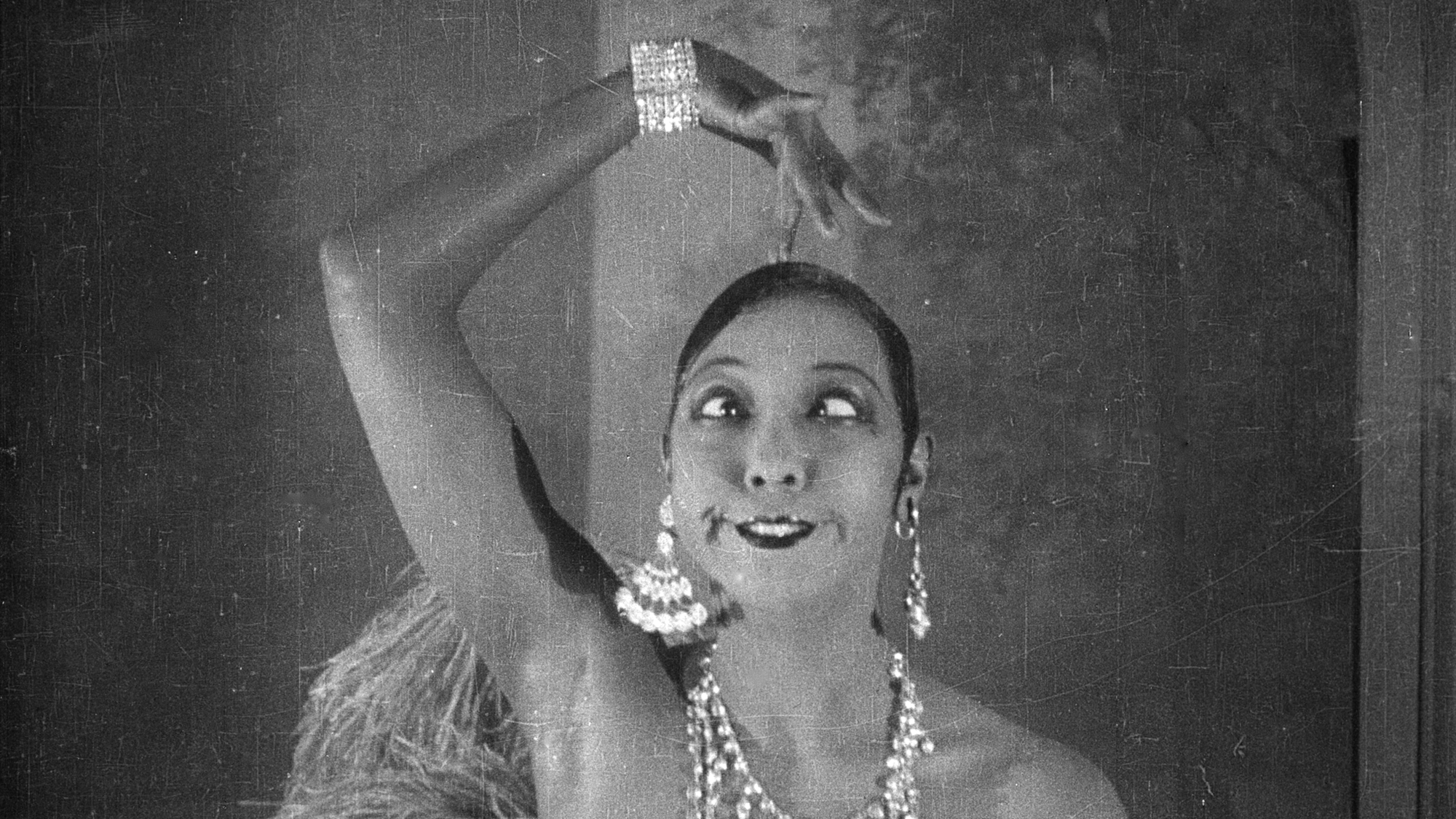
Directed by Joe Francys (or Francis) and produced by Alex Nalpas (brother of Louis Nalpas, founding director of Victorine Studios) for the Star Films company in 1927, La Revue des Revues was devised to publicise the Folies Bergère Theatre shows in Paris. A second film, La Folie du jour, directed by the same team in the same year, had the same promotional objective (and featured the famous “Fatou” number, with that low-slung banana belt). Clément Vautel’s screenplay provided the narrative for the visual spectacle: the rise of a young girl achieving her dream of being in a Paris revue. The film takes us behind the scenes of the Folies Bergère, Moulin Rouge and Palace theatres, before plunging us into the entire show created by Henri Varna, Paris’s top revue impresario, who at the time owned the Palace and the Bataclan, and would go on to co-write the hit J’ai deux amours. “Sparkling, elegant, funny and luxurious” as it was described by the press of the day, the film immerses us in the feverish nightlife of 1920s Paris – illuminated by the flamboyant neon signs of the boulevard theatres – which epitomised the electrifying and gyrating modernity of the Roaring Twenties. At the heart of this modernity, Joséphine Baker, now a lead dancer in the Folies, reigns as Queen of Music Hall with the rhythm and movements she has brought from America, a fusion of tap dancing, foxtrot and the Charleston, along with an extension of her show staged at the Plantation Club in Broadway in 1924. Around her, a succession of backdrops (Francys and Nalpas used tints to compensate for the limitations of black and white film and recreate the spectacle), costumes, sumptuous décor, gigantic fans, gilding that gleams and dazzling plumes, all come together to create an experience both luxurious and spectacular, designed to enthral a public thirsting for mind-blowing pleasures. So it was that Joséphine Baker featured on the billing alongside Lila Nikolska and Komarova, Skinine and Gretchikine, interspersed by Spanish and Albanian dances. Following the Parisian trend set by the eruption of Diaghilev’s Russian Ballet onto the scene in 1909, modernity was closely bound up with exoticism as a source of new and exhilarating forms. A modernity that was crystallised by the American artiste, who stands out as the most revolutionary of Parisian artistes in the film, as in the shows of the period.
Marién Gómez Rodríguez