
Film notes
In this programme we travel through time and space in an atmosphere characterised by heavy exoticism. The Greek origin of the word can be described as ‘from the outside’. And this is exactly what most of the films in this programme are doing: describing foreign cultures and their people as being strange, from the outside. The encounter with the other (“the Gypsy”, “the African”, “the Arab” abound here) follows a Eurocentric pattern: the heroic protagonists are from the west, the villains come from the east or south. Sometimes, a film’s main concern is adventure or a treasure hunt, and the exotic setting is used in a sober way, as in Der Schatz des Abdar Rahman, but if the film has a political agenda, then the villain will be a foreigner. This simple formula to spread a racist ideology worked so well that it remains unchanged today, in the 21st century.
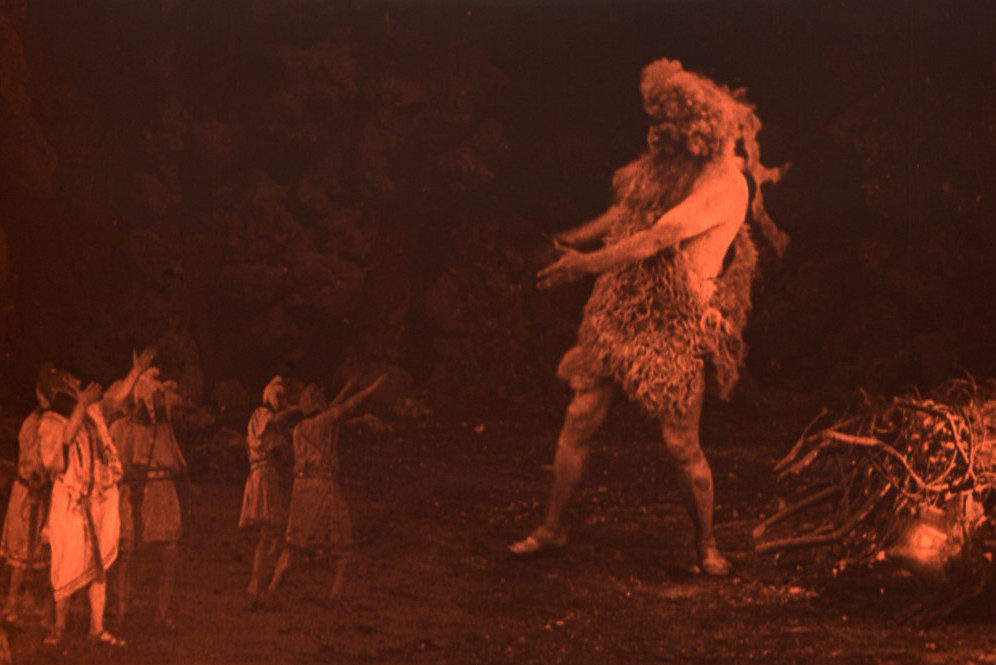
However, films about foreign cultures are not solely characterised by an orientalist perspective. There is also much appreciation of the achievements of foreign cultures, as in the views of the wonderful gardens in Delenda Carthago! This appreciation has long provided the motivation to capture the life of foreign cultures in films, books and photographs – sometimes leading to misinterpretations and stereotypical idealisations. A positive example is the 1929 Japanese re-issue of a 1911 Italian adaptation of the Odyssey created by the film narrator (eiga setsumeisha or benshi) Komada Kôyo. In the new frame story, set in contemporary Japan, one of the great tales of European literature is explained by a knowledgeable neighbour to a group of fascinated Japanese children. The new film is a successful east-west co-production, and also a wonderful illustration of the love of Japanese audiences for European films. Two non-fiction fragments complement two incomplete fiction films in the programme: spectacular shots of raging waves (probably Mare tempestoso, 1909) provide a closure for L’Odissea, and an Éclair travelogue showing the ancient wall of Constantinople forms an epilogue to Delenda Carthago!
Karl Wratschko