
Film notes
OLGA PETROVNA KHODATAEVA
Along with sisters Valentina and Zinaida Brumberg, Olga Petrovna Khodataeva is one of the major figures in Soviet animation. She was born near Rostovon- Don and grew up in Moscow. She and her elder brother Nikolai shared a strong interest in painting and they both enrolled at the Moscow School of Painting, Sculpture and Architecture, graduating in 1918. During the Civil War she worked as a graphic artist and a scenic designer. After establishing an “experimental studio for animation” at the Moscow Film School GTK (later to become VGIK), Nikolai Khodataev came to the attention of the authorities who commissioned a film in support of the Chinese Revolution. This is the famous Kitay v ogne (China in Flames), a medium- length animated film made in 1925, which revolutionised the rules of the genre. Like the Brumberg sisters and others, Olga joined the collective in order to help with the film. At the end of the 1920s, they collaborated on a few modest, poetic wonders, such as Odna iz mnogikh (One of Many, 1927), which mixed live action and animation, Samoyedskii malchik (The Samoyed Boy, 1928), and Grozny Vavila i tetka Arina (Terrible Vavila and Auntie Arina, 1928), a short animated pamphlet to celebrate 8 March and rural women’s emancipation. However, Khodataev’s avant-garde inspiration was hampered after official directives in 1936 established a centralised animation studio, whose watchword was to imitate Walt Disney. Khodataeva chose to persevere despite the restrictions. From 1936 to 1960 she worked for Soyuzmultfilm and made 32 animated films, mainly inspired by folklore from Russia or other Soviet republics. She died in 1968.
TATYANA LUKASHEVICH
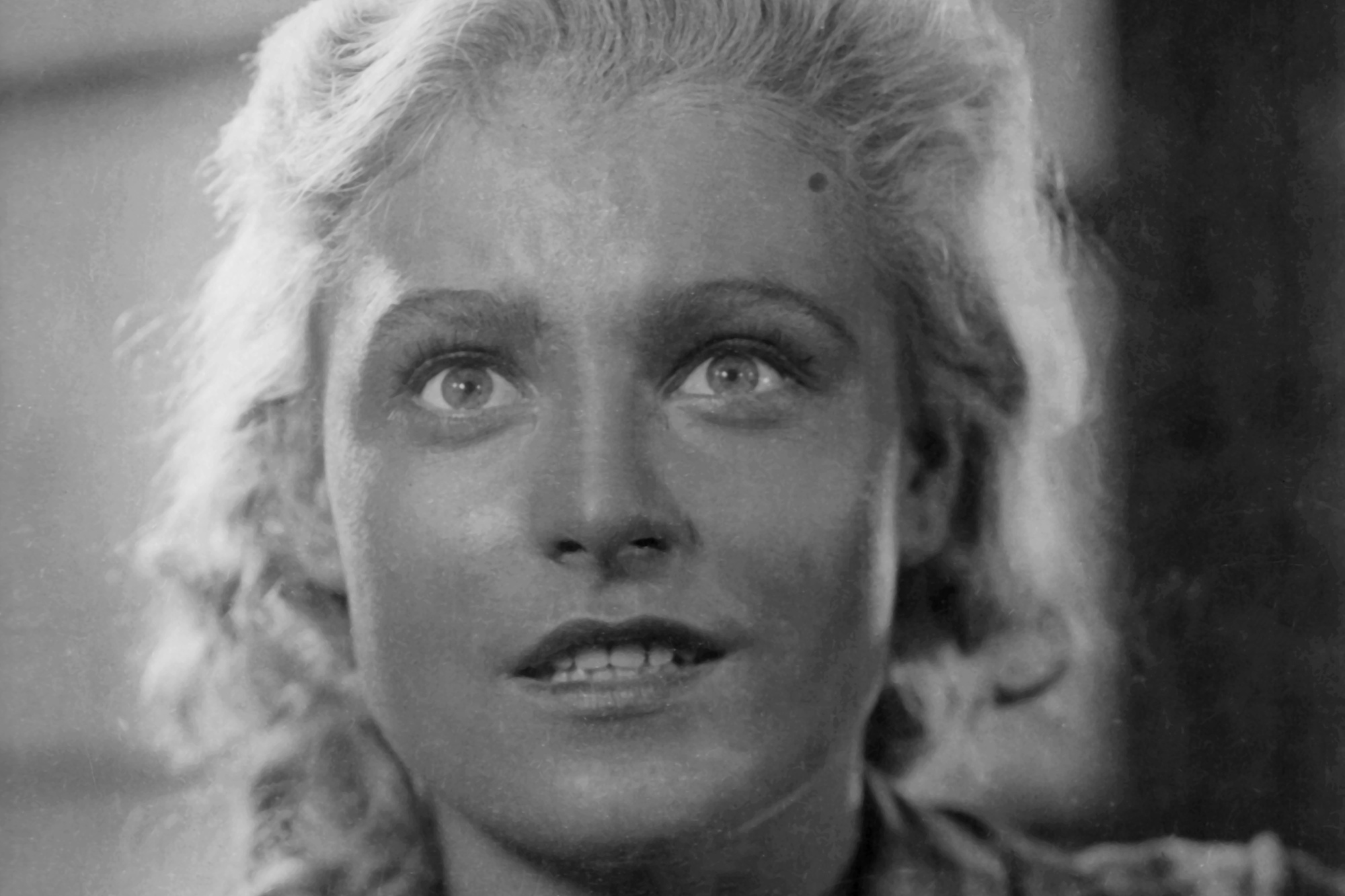
Born in 1905, as a teenager Lukashevich was active in the Adelheim Brothers’ troupe that performed throughout Russia. In 1922 she enrolled at the Moscow Film School (GTK, later VGIK) in the ‘acting’ department before moving to ‘direction’. She graduated in 1927, the first year in which the School awarded diplomas, and was therefore part of the 1927 generation formed during the golden age of Soviet cinema, which would later suffer the direct consequences of Stalin’s purges, the campaign against formalism and the war. While many of her classmates threw in the towel (Albert Gendelshtein) or were reported missing in action (Aleksandr Strizhak), she somehow would manage to direct 15 feature films and remain active until the end of the 1960s. From 1927 she worked as an assistant director and then director for Mezhrab-pomfilm. Her first feature, Prestuplenie Ivana Karavaeva (The Crime of Ivan Karavayev, 1929), is a depiction of bureaucracy (which unjustly condemns the protagonist) and its necessary control by the masses (who rehabilitate him). She then directed Vesennie dni (Spring Days, 1934), thought to be lost, in which the critic Glauco Viazzi saw “a sort of poem about life and happiness”. She delighted the public with Gavroche (1937) and especially with Podkidysh (The Foundling, 1939) in which she displayed her talent in directing children. There were 16 million spectators for that story of a little girl lost in the streets of Moscow, and the film continues to be popular (it was recently colourised). After returning to her passion for the theatre with postwar filmed stage performances (Uchitel tantsev, Dance Teacher, 1952; Anna Karenina, 1953), her films about teenagers such as Attestat zrelosti (Certificate of Maturity, 1954) and Slepoy muzykant (The Blind Musician, 1960), again brought her success. Is the invisibilization of women filmmakers the reason why most cinephiles don’t even know the name of Tatyana Lukashevich or is it, in the words of Peter Rollberg, “a sad testimony to the lack of official and critical appreciation for the art of entertaining mass audiences in Soviet cinema?”. A bit of both, no doubt.
Irène Bonnaud and Bernard Eisenschitz