

Film notes
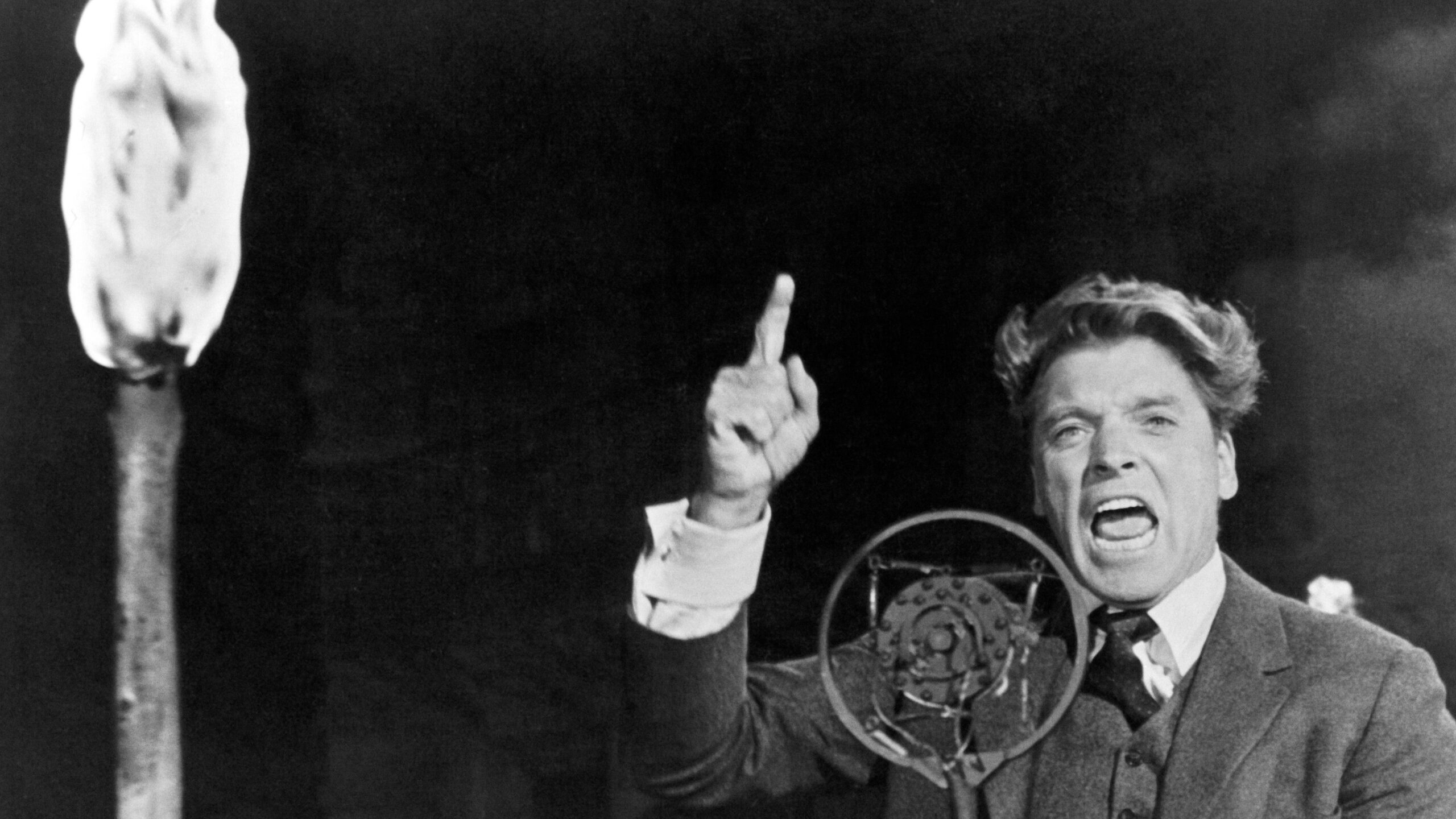
The best of Richard Brooks’ uneven and volatile body of work stands as a sort of sociological painting of America, and this adaptation of Sinclair Lewis’ novel marks in Brooks’ career the most fruitful convergence of his ambition and talent. America’s latent or glorified puritanism and intolerant, fanatical distortion of religious sentiment are subtly considered here through a specific and clearly characterised phenomenon (the ascendence of preachers and religious showmanship among the American masses) and through storybook characters that the author seeks to probe and understand rather than condemn. Several times he shows the bigots who condemn or support the evangelists to be even more unworthy than them. A blend of cynicism, hypocrisy, demagoguery, deviousness, unbridled high living, sincerity and an occasional disarming kind of innocence, the character created by Sinclair Lewis … has an ambiguity that gives the film its life and fire while stimulating reflection. It should also be noted that it is one of Burt Lancaster’s finest character studies. For once, Brooks’ tangibly textured description and critical analysis work well together … Brooks’ interest in puritanism and ambiguity carry across to his own work, as seen in Looking for Mr. Goodbar, the director’s best film alongside this one. Here, the puritanical vision of contemporary America seems to have buried once and for all the old liberal idealism of the past. For those who look closely, it is possible that Brooks’ work may yet hold some surprises.
Jacques Lourcelles, Dictionnaire du cinéma. Les films, Éditions Robert Laffont, Paris 1992