
Film notes
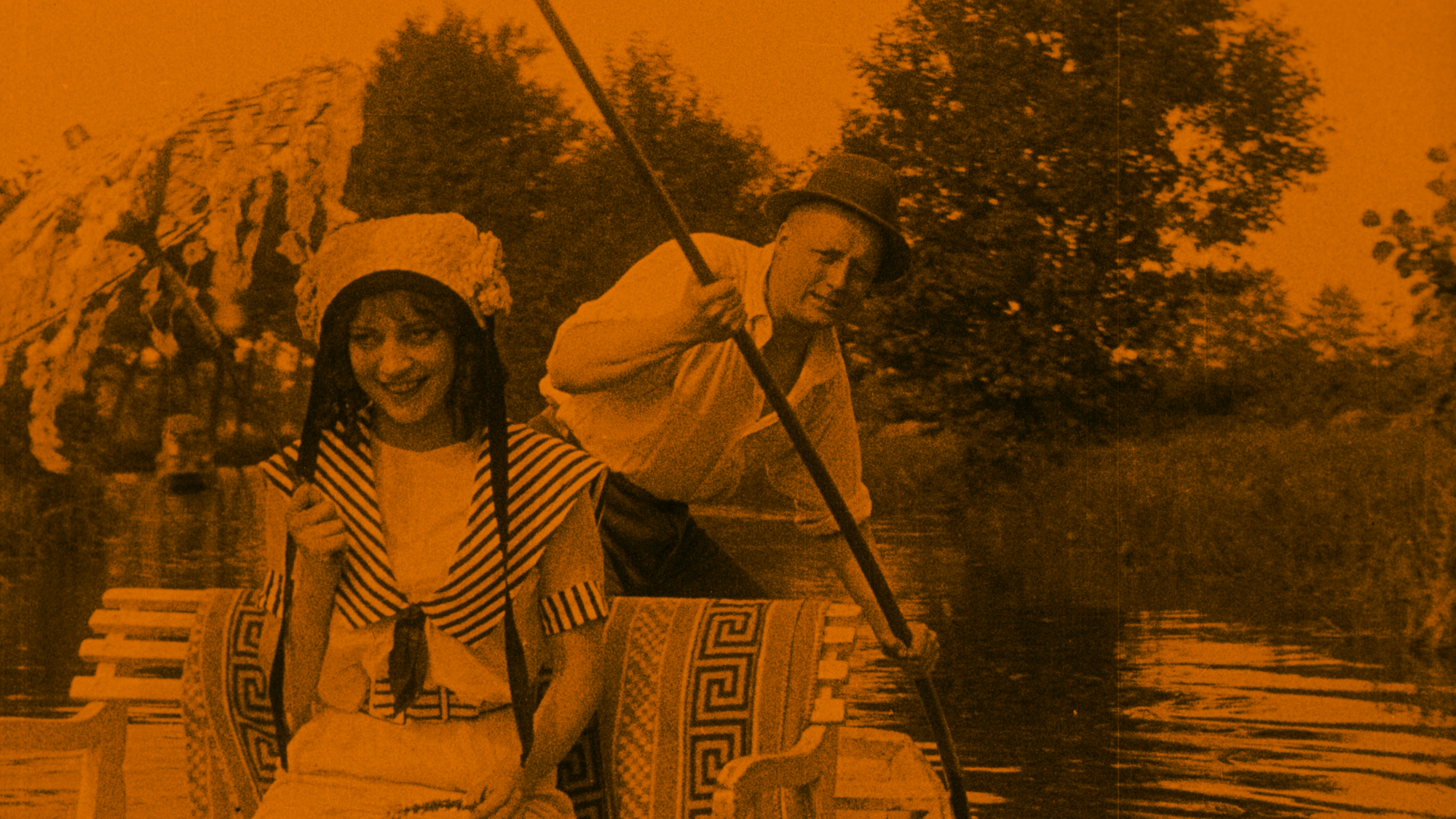
Supported by unprecedented promotional efforts, Urban Gad’s Der fremde Vogel premiered across multiple German cities on 11 November 1911. As part of the first Asta Nielsen series, the film marked a radical shift in early cinema, establishing the star system as the foundation for a new feature-length business model in Germany. Produced by Deutsche Bioscop GmbH for Projektions- AG Union (PAGU), the internationally successful series and its pioneering PR campaigns cultivated Nielsen as one of Europe’s first movie stars. The film’s tragic romance unfolds within the Spree Forest – a unique inland delta southeast of Berlin known as the “Green Venice” of Germany. Against a backdrop of intricate water labyrinths, lush forests and marshy landscapes, a local boatman (Carl Clewing) falls for a young Englishwoman (Asta Nielsen) vacationing with her father and suitor. By portraying an independent woman who defies her father’s marriage scheme, Nielsen’s character strives to overcome traditional gender and class constraints. The newly restored version offers fascinating insights into Nielsen’s star-making, full-body performance and Guido Seeber’s groundbreaking cinematography, particularly through shots missing from previous renditions. Filmed entirely on location – often from small, tossing boats – the then-unconventional outdoor shots made the film a sensation, with critics praising it as a triumph of cinema over theatre. For over a century, Der fremde Vogel was available only in black-and-white. Based on the tinting of three surviving nitrate elements, this new colour restoration offers an experience much closer to that of the original 1911 audiences.
Maria Matzke