

Film notes
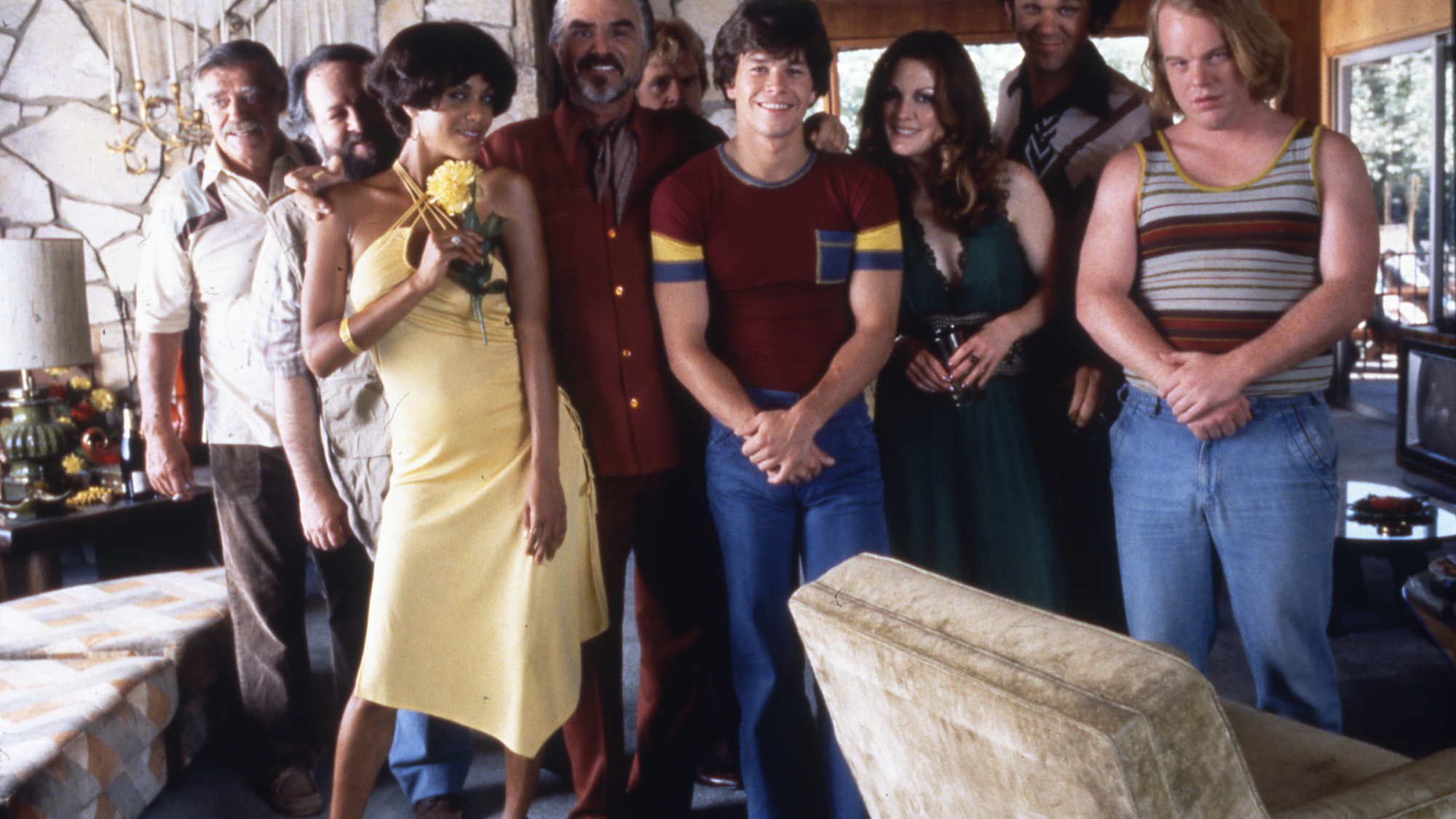
Paul Thomas Anderson was twenty- six when he made Boogie Nights, his second film, and he acts (with good reason) as though he already understood everything there is to know about American cinema. In a celebrated opening track shot, we are plunged into the San Fernando Valley (which is to Anderson what Hunsrück is to Edgar Reitz). The camera whirls through the Hot Traxx nightclub as if flinging open the doors to a secret realm, and within we meet the red-light gang of Jack Horner, Amber Waves, Rollergirl, Buck Swope, Reed Rothchild and, above all, Eddie Adams, the handsome but bewildered young man who will become Dirk Diggler thanks to a superhuman anatomical gift. And like any superhero, Dirk must learn to master his superpower. Set in the world of the California porn industry between the end of the 1970s and the beginning of the 80s, Boogie Nights is not just a film about the world behind the X-rated. It is a film about cinema and its evolution, but seen through the peephole of its most disreputable genre. Bucking convention, Anderson refuses to depict it as a squalid and miserable environment. Rather, he looks at this fringe world with the stylistic grandeur that Hollywood normally reserves for epic tales: tracking shots, zooms, songs, parties, whirlwinds, crowded interiors, dancing bodies – rather like a Dolce vita on coke. The shadow of Scorsese and Altman is evident, but the influence has already been transformed into something personal. Subsequently, Anderson would often (if not always) make films about impossible fathers and children searching for recognition. Here, this theme is expressed in one of its most tender and cruel images: Dirk standing in front of a mirror, alone with his body and the legend that body has produced (referencing Raging Bull). However, aside from its protagonist, the narrative tends towards the choral, and this over-excited fresco offers a moral diagnosis of the late twentieth century in which every desire for recognition must always pass through the mediatisation of intimacy. It is a film about capitalism, the body, the society of the spectacle.
Roy Menarini