

Film notes
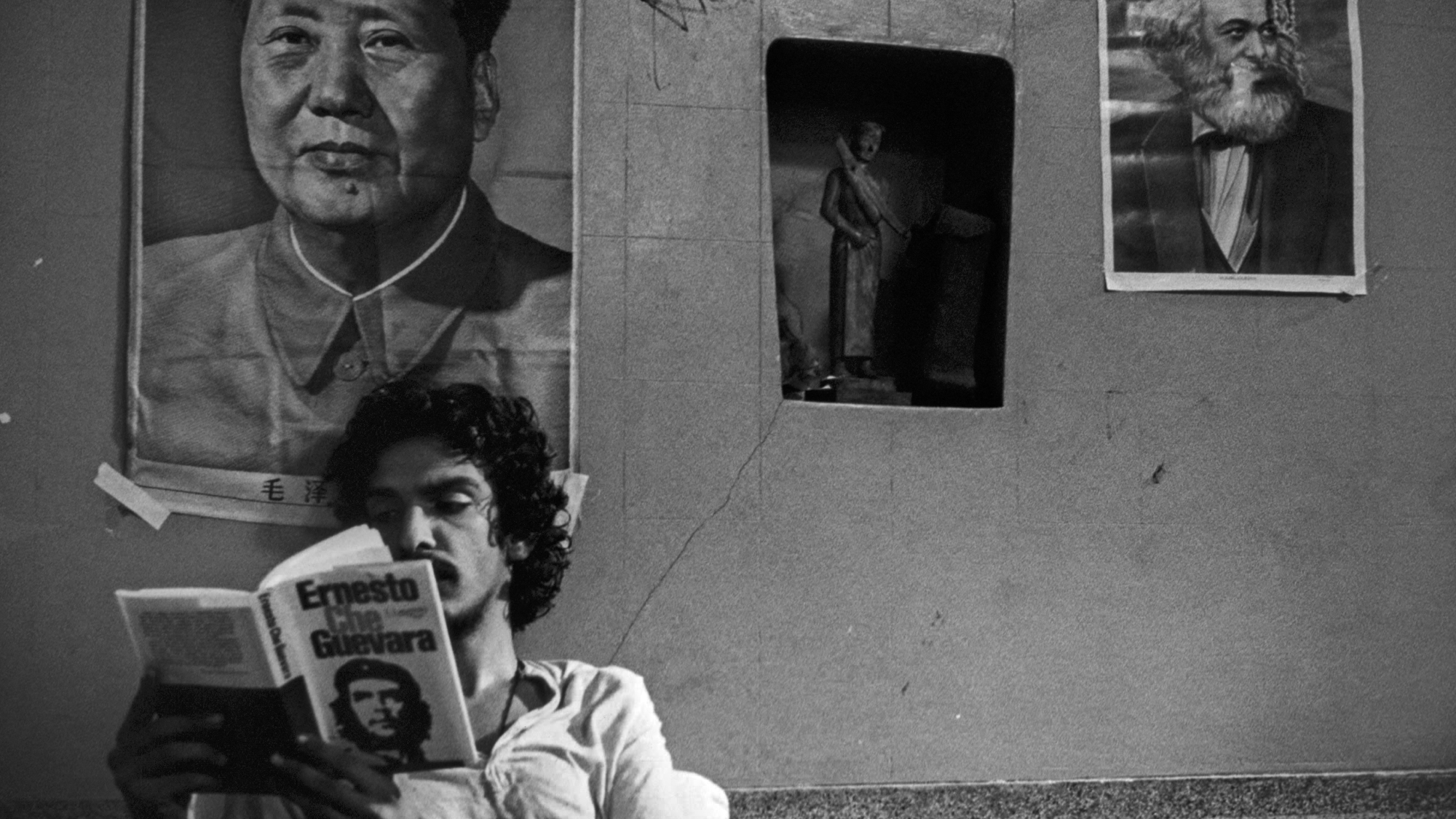
Amma Ariyan was filmmaker John Abraham’s final work before his untimely death in 1987. It is a film that details the history of revolutionary politics in Kerala through the prism of the road movie, adopting an iconoclastic structure in which flashbacks, ellipses and inserts punctuate the narrative with personal and historical reports on social resistance and political disillusionment, including the militant labour riots of Cochin in 1953. Indian Parallel Cinema was in many ways the first true de-colonial filmmaking practice to emerge out of India after independence and a political work such as Amma Ariyan was very much part of a broader collective revisionism taking place at the time. John Abraham captures a time of crisis and upheaval where resistance seems to be everywhere and comes most readily from a Keralan youth galvanised by the impact of the Naxalite Movement in the late 1960s, a peasant insurgency that had widespread political implications for the establishment and Leftist political thought in India. Abraham’s critique of orthodox structures in Indian society – including caste, religion, and the arts – was shaped by the cinema of Ritwik Ghatak, his teacher and perhaps his greatest influence. While many Parallel Cinema filmmakers have been compared to Ghatak, and directors such as Mani Kaul and Kumar Shahani drew on his fractured, melodramatic style, it is Abraham’s films that most clearly distil a sense of political revolt and critique of a corrupt system that persisted after independence. Another way to understand the film is through the persistence of trauma, which Abraham presents as a multilateral rather than singular phenomenon. He situates the Marxist political histories of Kerala within an ongoing historical trauma that has shaped working-class lives in violent and debilitating ways, while also reflecting on the aftermath of revolution and state repression. What emerges from the narrative’s reports is an open wound – an irreparable rupture that remains in contest.
Omar Ahmed