
Film notes
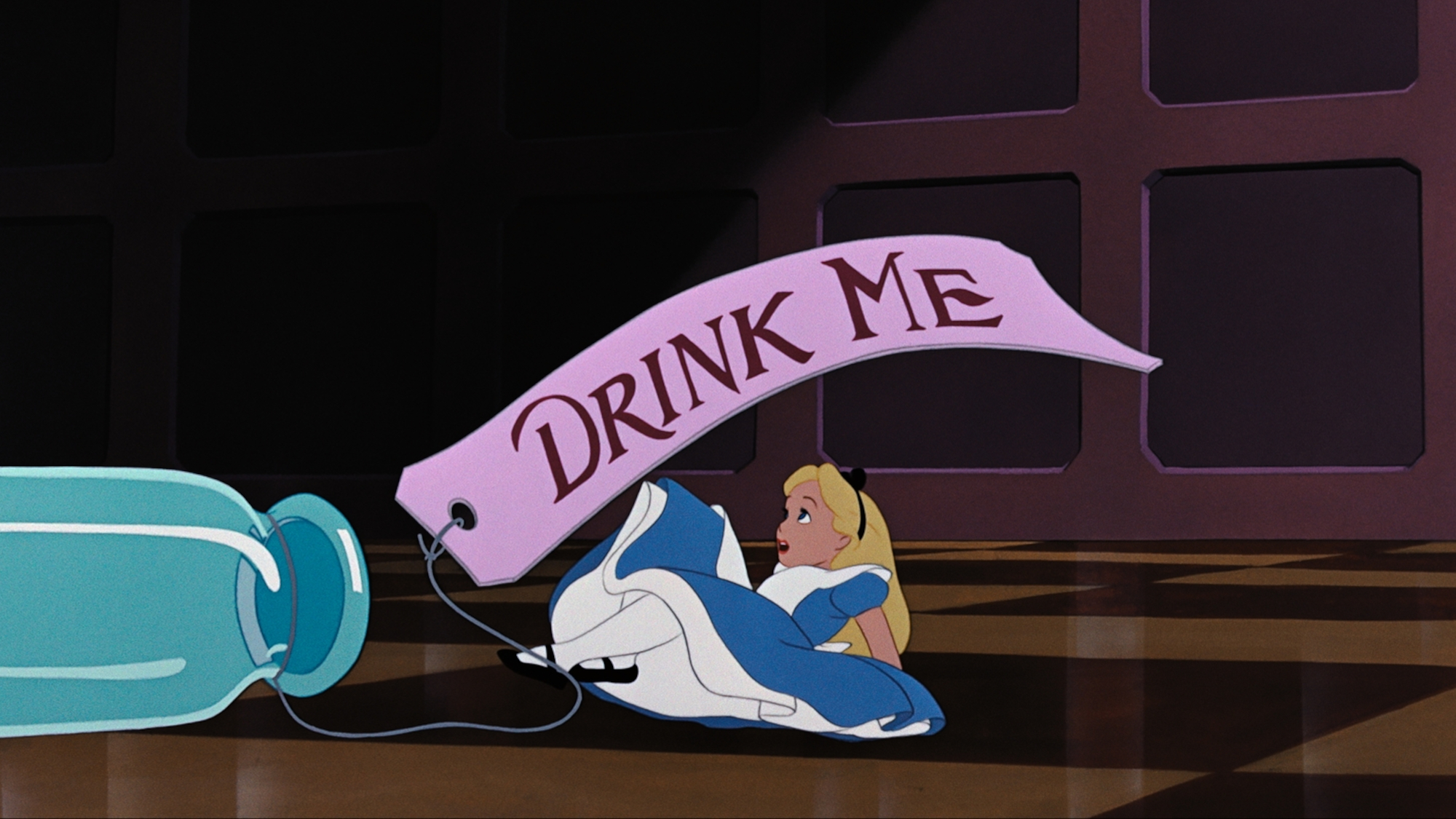
“Nothing is impossible,” the talking doorknob says to Alice. But it did at first seem almost impossible for Walt Disney to turn Lewis Carroll’s famous 1865 novel into moving pictures. Disney had purchased the rights to John Tenniel’s original illustrations for the novel as early as 1931 and thought of starring Mary Pickford as Alice in what was to be his first ever feature-length film. Disney worked on his ambitious project during the 1930s until it was halted due to World War II. After the war he picked it up again and even assigned British author Aldous Huxley to write a screenplay but still he was not satisfied. He did, however, like the designs of background artist Mary Blair, and after a re-write of the script the film finally went into production. It took five years to finish and was costly, causing Disney to use the profits from his success with Cinderella to finance the production. Combining elements from both Alice in Wonderland and Carroll’s later novel Through the Looking-Glass Disney ended up making an eccentric and joyful movie that is less sanitised than many other Disney movies in its tribute to playfulness and imagination. In the beginning of the movie Alice (with the voice of Kathryn Beaumont) says to her sister: “If I had a world of my own, everything would be nonsense.” After which Alice falls down the proverbial rabbit hole and spends the remainder of the movie wandering through a land of magic and make-believe, until she reaches the conclusion that she wants “no more nonsense”. All the absurdities have made her long for a world where things make sense again. The film itself, however, is splendidly nonsensical; it has no coherent storyline but is instead comprised of loosely combined scenes and moments in rich Technicolor with songs that literally rhyme flower with power. If there is such a thing as finding just the right amount of nonsense, Alice in Wonderland found it.
Sophie Engberg Sonne