Film notes
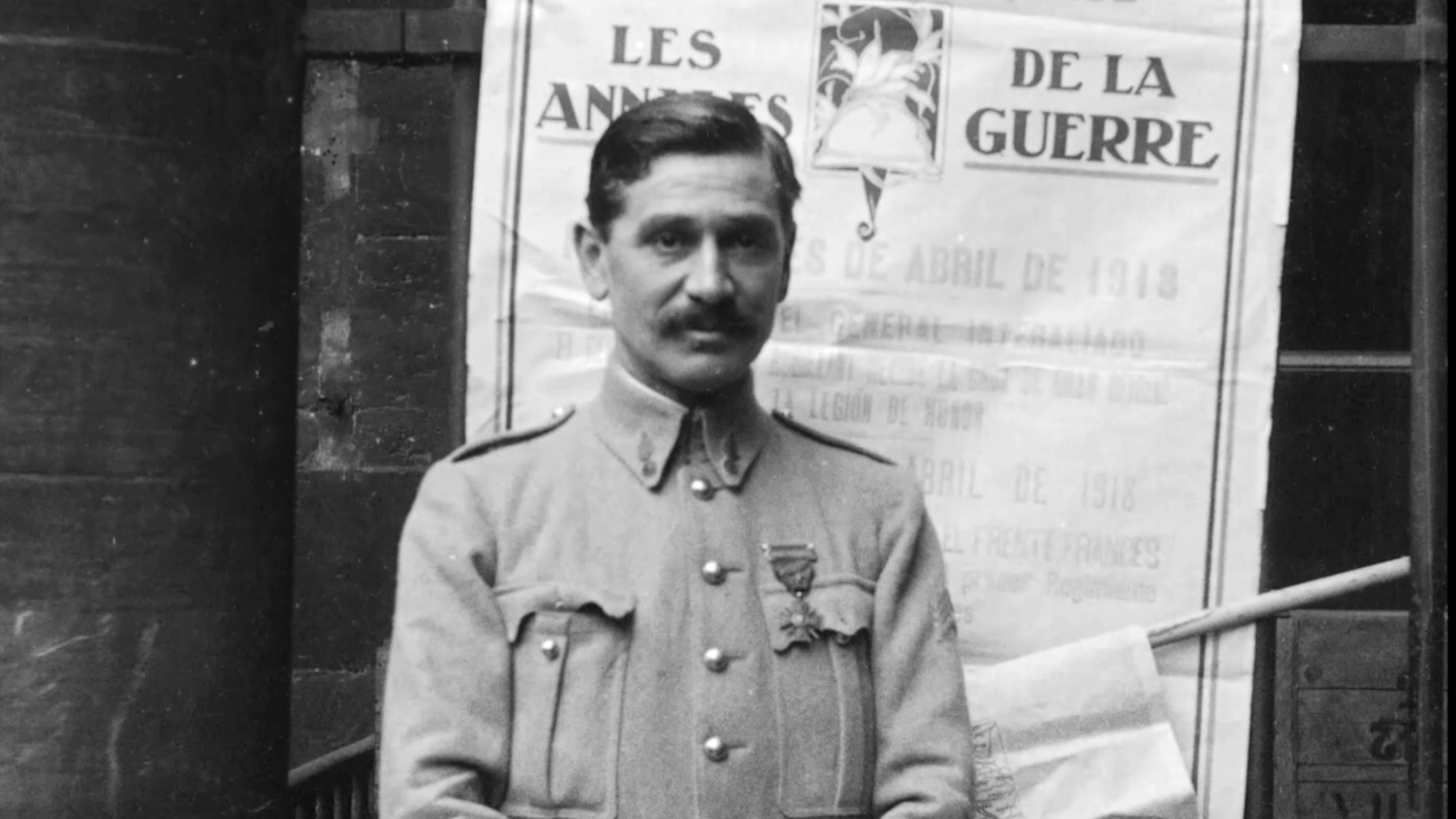
The Section Photographique et Cinématographique de l’Armée (SPCA) represents one of the first modern examples of a state-organised production of images for military, propaganda, and documentary purposes. One of its most interesting aspects is that it did not originate as an autonomous state body, but as a structure built on the skills and resources of the private film industry. In 1914, shooting war footage was still largely entrusted to civilian operators linked to the major French companies; in 1915, the section began to take shape around an initial group of four cameramen: Alfred Machin for Pathé, Pierre Perrin for Gaumont, Georges Maurice for Éclair, and Émile Pierre for Éclipse. This first group expanded rapidly during the conflict, eventually comprising several dozen operators and organised teams. In November 1915, Albert Samama Chikli enlisted voluntarily as a cameraman in the French army and, between 1916 and 1919, documented the conflict for the SPCA through film footage and photographs. Of all his work, this is today the best-preserved and best-documented part. ECPAD holds around 2,700 photographs, some forty autochromes, and more than one hundred films, largely consisting of unedited material. A complementary collection is preserved at Cineteca di Bologna: around one thousand positive photographic prints and rare documents, including daily reports, military orders, and his 1915 application letter. The compilation – the result of a collaboration between ECPAD and Cineteca di Bologna’s Chikli Project – offers a first glimpse of this vast corpus and includes excerpts from rushes shot by Albert Samama Chikli and other operators. It opens with one of the three rediscovered fragments in which Chikli himself appears in front of the camera. We encounter him again in the first of the compilation’s four ‘chapters’, Albert Samama Chikli au travail, where he acts as guide for a Muslim diplomatic delegation led by Kaddour Ben Ghabrit, a key figure in French diplomacy who worked to maintain the loyalty of the empire’s Muslim subjects, particularly in North Africa. The section Les Troupes coloniales documents the massive presence of soldiers from the Maghreb (190,000) and Senegal (135,000) deployed on the European front. Autour de Verdun conveys the brutality of war: lunar landscapes, fallen soldiers, and life in the trenches. The programme closes with a few rare moments of lightness in Trouvailles et orphelins.
Cecilia Cenciarelli