
Film notes
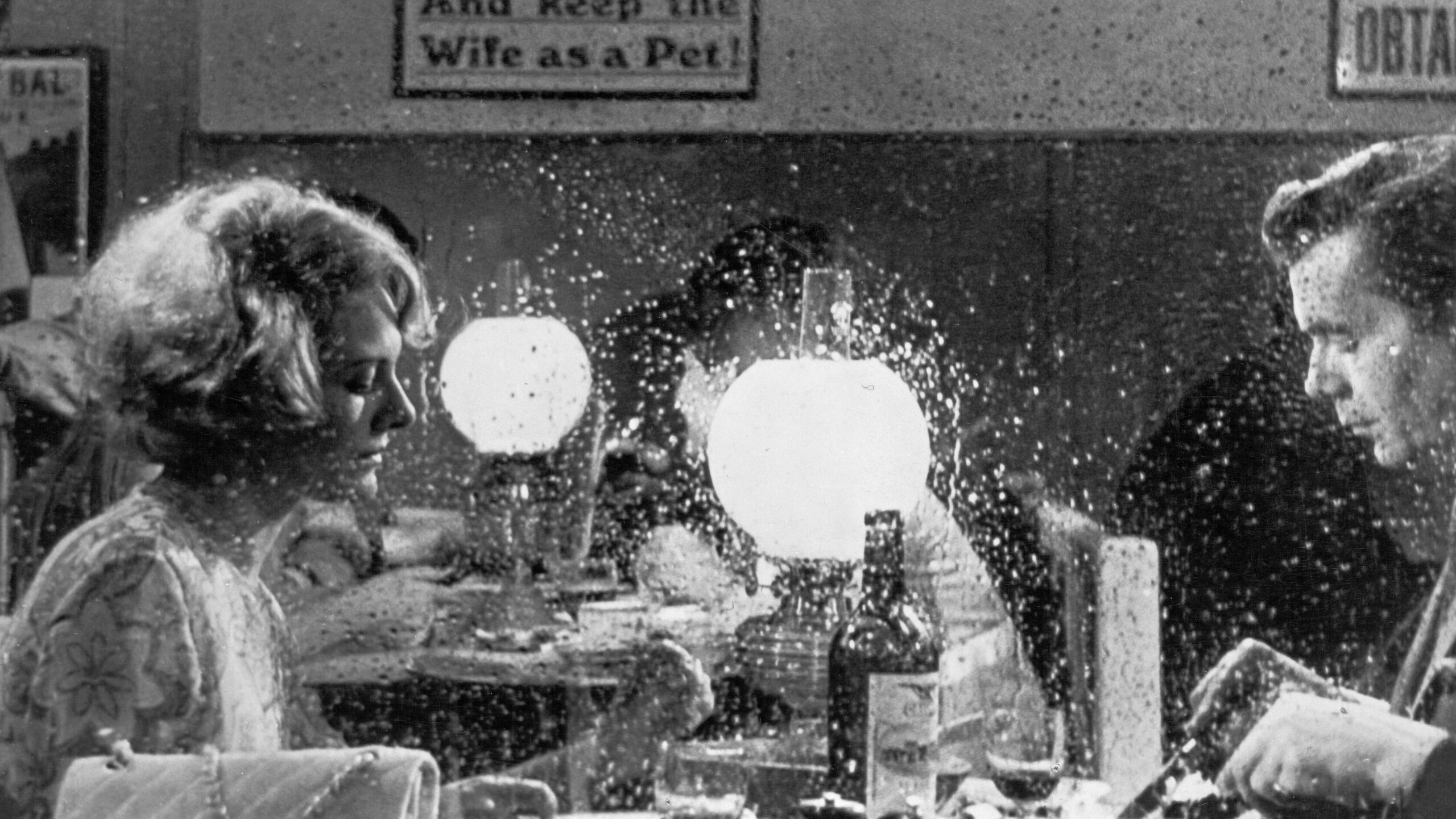
had a number of private screenings for The Servant … Among others I invited Sam Spiegel, with whom I had worked on The Prowler, and he told me, and other people, that he thought it was the best shot picture that he had seen in ten years. And it somewhat revived his interest in trying to work with me again. Later, when I came to New York with The Servant for the New York Film Festival, he began to present me with various projects. Judd Kimberg, who was working for Spiegel, called my attention to Accident which was a rather extraordinary, free association novel. Harold and I were looking for another film on which we could collaborate, and also for Dirk. And this seemed to me ideal material and so it did to Harold … The book was very fragmented in both the writing and the structure. And that’s what interested me because every fragment evoked something for me – and obviously also for Harold.
Joseph Losey, in Michel Ciment, Conversations with Losey,
Methuen, London-New York 1985
Compared to The Servant, Accident improves upon, if possible, dramatic construction. Where the former worked corrosively through the power of contrast to arrive at an illuminating yet futile reversal of roles (that is, at the discovery of the essential dynamics of power), the latter relies on an even colder style of writing and more precisely calibrated mimesis. The psychological and social phenomenology that distinguishes the characters and determines the weight of each in the unfolding of their relationships – that is, the concrete or potential “eventualities” of subjugation – acts on a flat surface, just as in the remarkable boating sequence: each character tends toward self-defence and is ready to attack, clinging to their own role in order to calculate the possibilities of conquest and domination. A collective convulsion, yet fatally kept in check by the rules of a system in which everything moves and nothing must change. … The crisis of the university professor now condemned to normality is once again a discovery of impotence; which is to say that the tragedy of the criminal policeman in The Prowler (a proletarian, or at least a poor wretch) is adapted, “domesticated”, to the way of living of the ruling bourgeoisie and its universe … Certainly the accident will remain in the troubled memory of those who experienced it as a potentially destructive exception, but the exception has been brought back into order, and the unease that continues to weigh on the professor (and almost certainly on the others, in different ways) stems above all from the effort of concealment.
Tullio Masoni, Paolo Vecchi, Giochi al massacro: la trilogia inglese,
in Joseph Losey, edited by Emanuela Martini,
Il Castoro/Torino Film Festival, Milan 2012