The Time Machine
[2026]
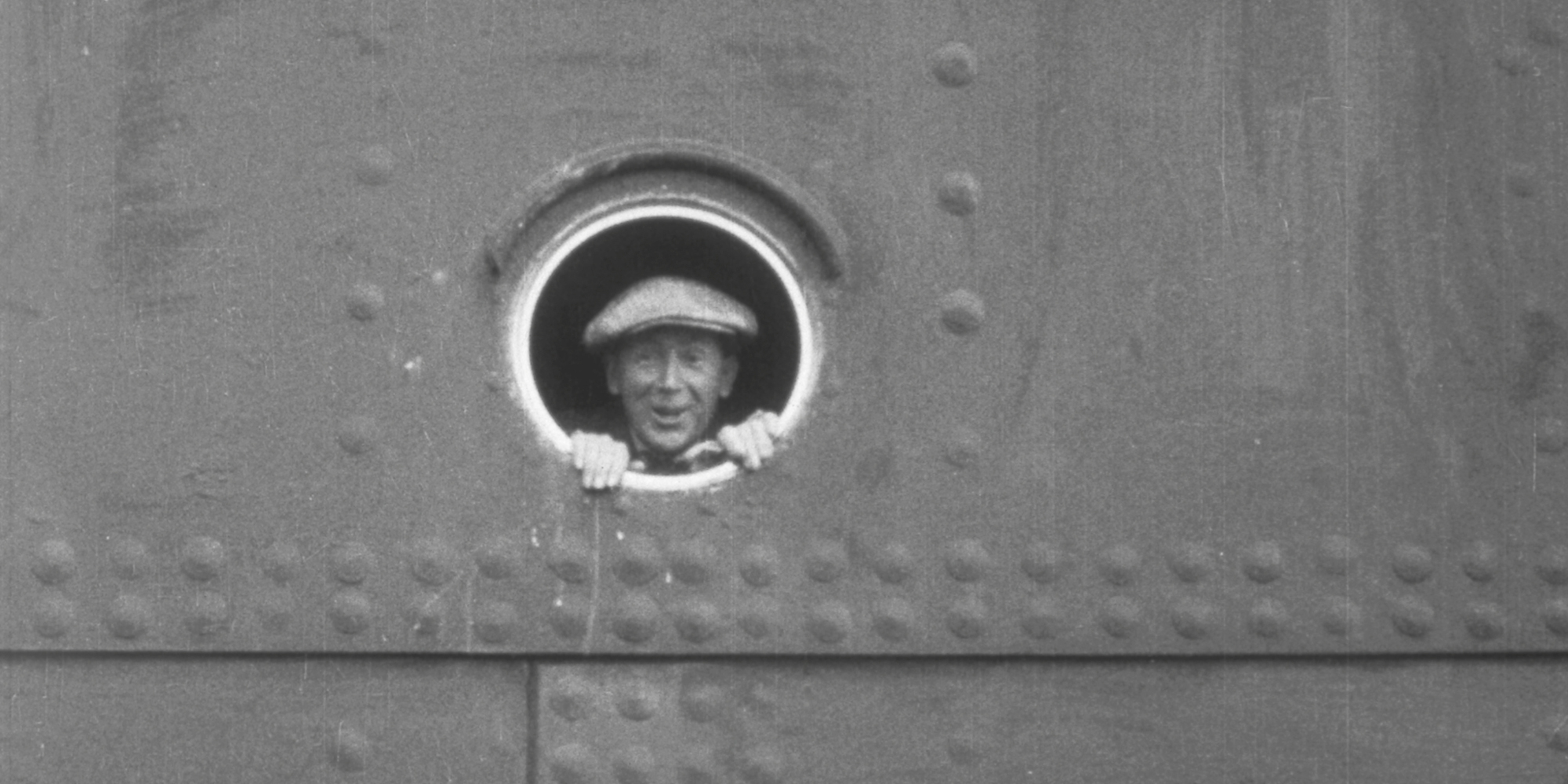
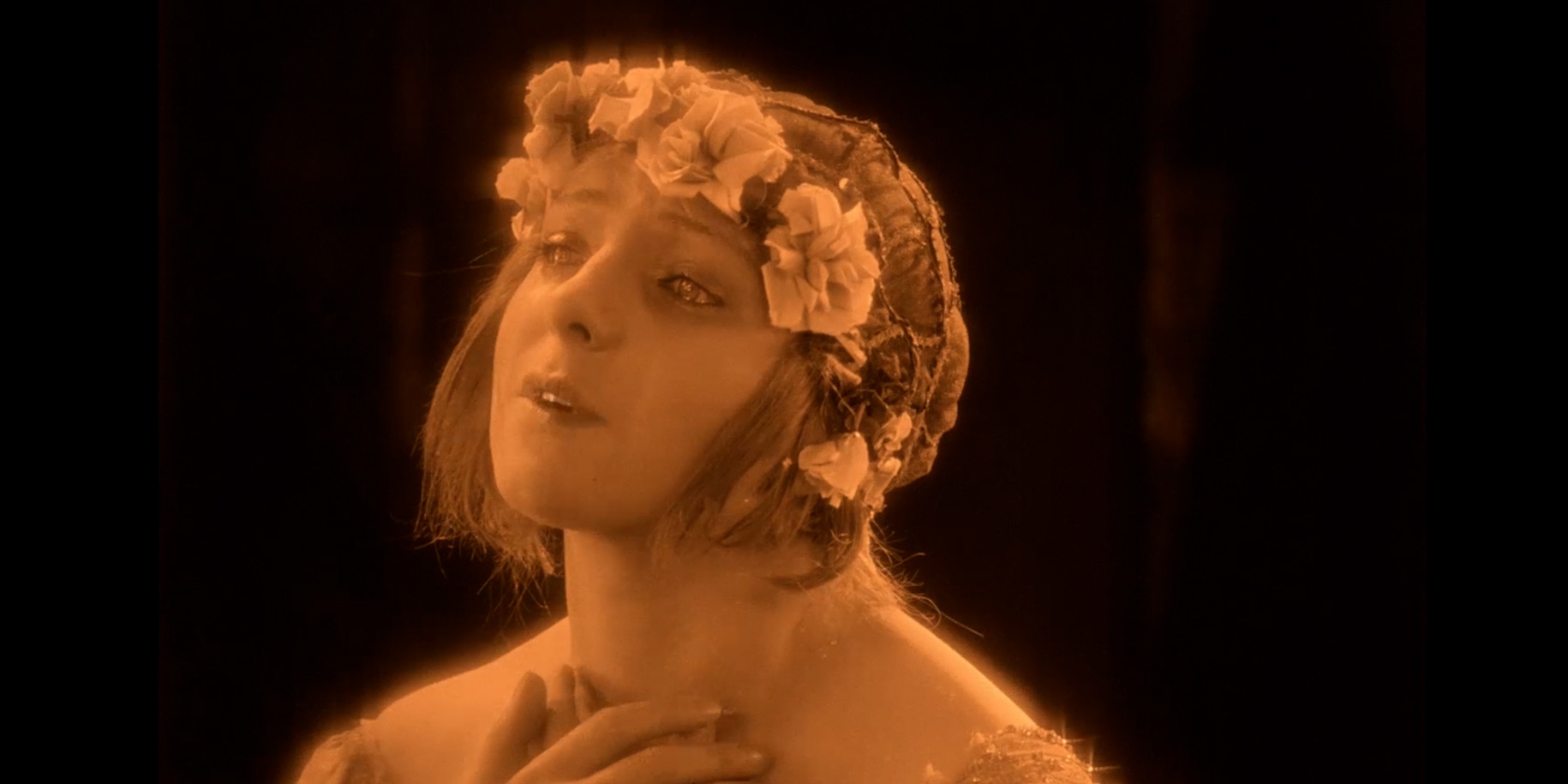
For the 24th year in a row, Il Cinema Ritrovato devotes a portion of its programme to the cinema of 100 years past with a curated selection of films mad and released in 1926. This year we’ll go mining for gold in the Yukon (by way of the Soviet Union) with Lev Kuleshov, witness the destruction of ancient Pompeii with Carmine Gallone and Amleto Palermi, make a Faustian bargain with the devil with F.W. Murnau, and visit two very different sides of Paris with Alberto Cavalcanti and Ernst Lubitsch. Enduring classics and canonical masterpieces are counterpointed by lesser-known (but no less brilliant) works such as Finnish director Teuvo Puro’s chilling, atmospheric Meren kasvojen edessä (Before the Face of the Sea). The programme continues to spotlight the work of women filmmakers with Karin Swanström’s “light summer film comedy” Flickan i frack (A Girl in Tails) and Lotte Reiniger’s seminal Die Abenteuer des Prinzen Achmed (The Adventures of Prince Achmed), the oldest surviving animated feature film. All, once again, supplemented by weird and wonderful fiction and non-fiction short subjects and newsreel clips.
Curated by Oliver Hanley
Die Abenteuer des Prinzen Achmed (Le avventure del Principe Achmed) d. Lotte Reiniger • L’Acteur Ivan Mosjoukine • Anémic cinéma d. Marcel Duchamp • Der Aufstieg d. Walther Ruttmann, Julius Pinschewer • The Big Swim d. Raoul Barré, Charles Bowers • Faust – eine deutsche Volkssage d. Friedrich Wilhelm Murnau • Flickan i frack (The Girl in Tails) d. Karin Swanström • Jerry the Troublesome Tyke: He Gets Fired d. Sid Griffiths • K 13 513. Die Abenteuer Eines Zehnmarkscheines d. Berthold Viertel • The Magician d. Walter Lantz • Meren kasvojen edessä (Before the Face of the Sea) d. Teuvo Puro • Now You Tell One d. Charles R. Bowers • Po Zakonu (By the Law) d. Lev Kulešov • Process o trëch millionach (The Three Million Trial) d. Jakov Aleksandrovicˇ Protazanov • Rien que les heures (Nothing but Time) d. Alberto Cavalcanti • So This Is Paris (La vità è un charleston) d. Ernst Lubitsch • Die Tragödie einer Uraufführung (Wenn die Filmkleberin gebummelt hat) d. O. F. Mauer • Gli ultimi giorni di Pompei d. Carmine Gallone, Amleto Palermi • What’s the World Coming to? d. Richard Wallace
Edition History
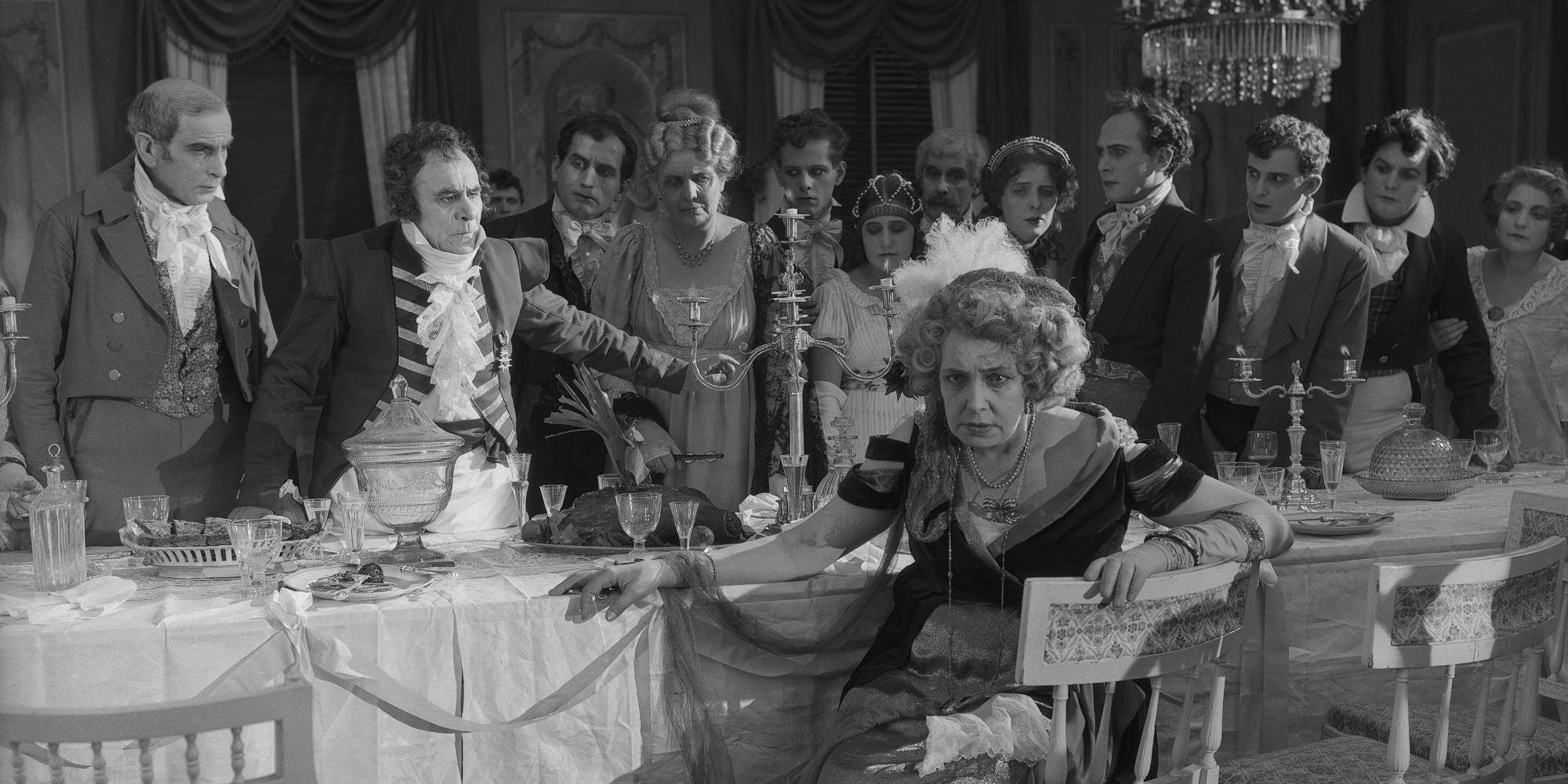
Once again, Il Cinema Ritrovato offers a selection of classics and rarities made or released in 1925, the year that marked the 30th anniversary of the birth of cinema. The year saw the emergence of future big-name auteurs such as Alfred Hitchcock, Jean Renoir, and Josef von Sternberg, whose 1925 debut features will all be showcased in the programme. Alongside undisputed masterpieces such as Sergei Eisenstein’s Strike or Carl Theodor Dreyer’s Master of the House, the programme will feature comparatively lesser-known gems, all with live musical accompaniment. The strand continues to highlight the work of female filmmakers in an exemplary fashion while also placing a spotlight on the pioneering Black American director, Oscar Micheaux. As always, the feature-length films in our programme are supplemented by thematically relevant short subjects and newsreel items that offer a glimpse of life “behind the screen” in 1925.
Curated by Oliver Hanley
Curated by Oliver Hanley
Mariann Lewinsky once aptly described the A Hundred Years Ago strand as a “travel agency, organising excursions into the past”. So, what are the main “sights” festival attendees can look forward to on their guided tour through the year 1924?
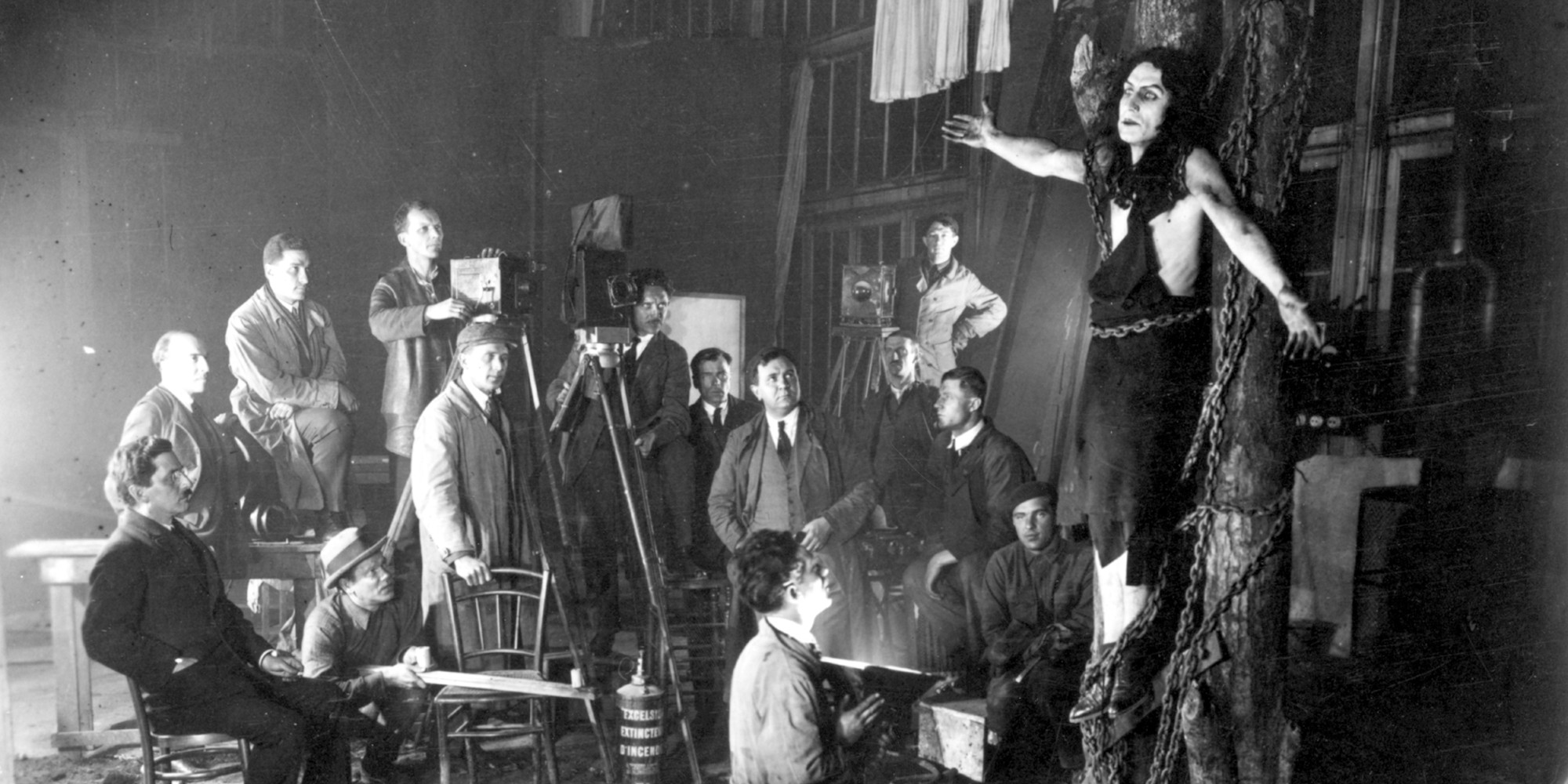
The year 1924 marks the end of Swedish silent cinema’s golden age with the release of Gösta Berlings saga, which we are fittingly presenting in a new digital restoration. After this film, his last made in Sweden, Mauritz Stiller joined fellow countryman Victor Sjöström at the newly formed MGM studios in Hollywood. Sjöström’s second American feature, He Who Gets Slapped, continues our spotlight on “filmigration”, as does J’ai tué!, a French production featuring Japanese star Sessue Hayakawa, then on self-imposed exile from Hollywood allegedly due to rising anti-Japanese sentiment.
Emil Jannings’ poignant portrayal of the anonymous hotel porter in F.W. Murnau’s Der letzte Mann stands in contrast to his over-the-top personification of Nero in Quo vadis?, the Italian film industry’s infamously doomed attempt to re-establish itself as a major international player.
One of the most popular films released in a breakthrough year for Soviet cinema is nowadays one of the least known: Dvorets i krepost’ (The Palace and the Fortress). A unique, recently digitised, tinted-and-toned nitrate print of the abridged German version will be presented at Il Cinema Ritrovato for the first time, giving us a rare opportunity to experience a Soviet film of the 1920s in colour.
With Chaplin hard at work on The Gold Rush (1925), and Keaton’s œuvre having been restored and showcased at Il Cinema Ritrovato in recent years, the door was open to “third genius” Harold Lloyd, who is featured this year in the hilarious Hot Water.
We turn our attention to Hungarian cinema for the first time since 2019 with Béla Balogh’s second adaptation of children’s classic A Pál utcai fiúk (The Paul Street Boys). The winter sports drama Der Rächer von Davos, meanwhile, is the first feature-length Swiss production to be included in the strand.
This selection of classic and lesser-known feature films is complemented by fiction and non-fiction short subjects, animated cartoons, fragments of otherwise lost films, trailers, unreleased footage, and newsreel items. Particular attention will be paid to the avant-garde, and we continue to highlight the work of talented female film-makers, focusing this year on Canadian actor-auteur Nell Shipman (who can be seen in one of her last films, White Water), and British screenwriter Lydia Hayward (the brains behind the black comedy The Boatswain’s Mate).
Oliver Hanley
Curated by Oliver Hanley
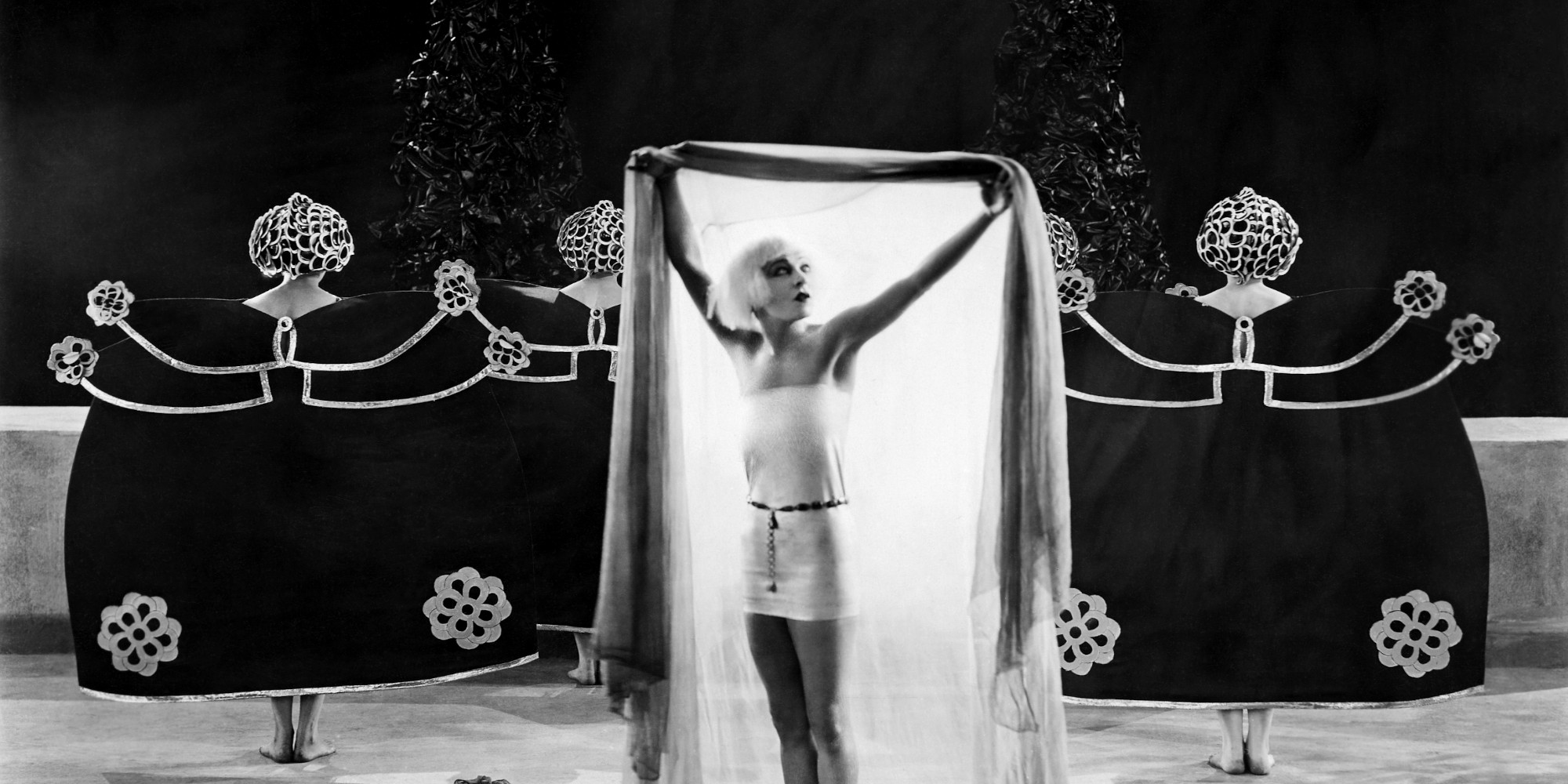
2023 marks the 20th anniversary of A Hundred Years Ago and the beginning of the next chapter for the strand, under new stewardship. The current programme picks up where the last one left off, both literally and figuratively, giving long-time and younger festival goers an opportunity to (re-)discover some key films and filmmakers of 1923. Of course, we couldn’t resist adding a few surprises, and selected non-fiction shorts and newsreels to highlight some of the year’s major events.
Appropriately, “(new) beginnings” is a theme connecting several films in this year’s edition. 1923 saw Sergei Eisenstein and Jean Epstein emerge as film-making talents. With The Covered Wagon, Hollywood reinvented the Western as an “epic” genre. Buster Keaton completed his transition to feature film director with Our Hospitality, producing some of his finest work over the following years. Screening in the Recovered and Restored strand is a new restoration of A Woman of Paris, Chaplin’s first (and ultimately sole) foray into serious drama.
Migration is another theme running through this year’s selection. Postwar instability led to notable cases of filmmakers fleeing their home countries out of economic or political necessity, as exemplified by two major films made by Ivan Mosjoukine and other Russian exiles at the French Films Albatros company, Le Brasier ardent and La Maison du mystère. Meanwhile, Ernst Lubitsch became the first of Germany’s foremost film directors to venture to Hollywood, while the American Sidney Goldin was responsible for one of the best Austrian Jewish-themed comedies, Ost und West, the latter premiering in a new digital restoration.
Italy’s film industry was in decline as a result of the toll the country suffered in the First World War and the drain of talent that sought better working conditions abroad. Nevertheless, with L’ombra (premiering in a new restoration) and La fuga di Socrate, we showcase remarkable later examples of two of the most popular genres of the previous decade, the diva and forzuti films.
Seminal films making a welcome return to Il Cinema Ritrovato this year include La Souriante Madame Beudet, Germaine Dulac’s impressionist-feminist masterpiece, and Schatten, a highpoint of German Expressionist cinema. Such cases are indicative of the increasing importance of being able to (re-) experience these films as they were meant to be seen (and heard): on the big screen with live musical accompaniment and, where possible, on 35mm film.
Oliver Hanley
Curated by Mariann Lewinsky and Karl Wratschko
Since 2003 the festival has dedicated a strand to films from 100 years ago, and with this edition we will have covered 27 years of film history, from 1903 to 1922 plus 1896 to 1902 in the Century of Cinema strand. We started out as explorers in uncharted territories, presenting a majority of films that had not been seen in public for decades. Our research in archival vaults around the world has led, year after year, to astonishing discoveries and to a number of monographic programmes (and Dvd editions) adding substantial chapters to our knowledge of cinema, among them the series dedicated to comic actresses and suffragettes, views from the Ottoman Empire and director Albert Capellani, whose magnificent Les Misérables (1912) in the Recovered and Restored section shouldn’t be missed.
Now that we are in the 1920s and the 2020s our material, mission and audience have radically changed. In the past the films were mostly interesting if unknown; for 1922, most of the interesting films we found happened to be well-known works, if not classics, by Chaplin, Delluc, Dreyer, Dwan, Flaherty, Murnau, Nazimova, Reiniger, Stroheim and Vertov. Several titles included in the programme have enjoyed a high reputation right from their first appearance. Some are easily accessible on Dvd or YouTube. Nanook of the North and Nosferatu might be called outright popular. Why screen them in Bologna?
We have observed an important change in the audience recently, with new generations and a much wider public now attending. Many of the spectators have not experienced all the great films of the past on a big screen, which amounts to not having seen them. The 1922 strand offers the possibility to discover Salomé, La Femme de nulle part, Robin Hood or Die Gezeichneten and many more films in a proper projection on a cinema screen (and Nosferatu or Foolish Wives on the giant screen of Piazza Maggiore). To know what cinema is about, it is crucial to view films as they were meant to be seen, in their proper theatrical setting and with the full impact of the luminous image on a big screen. This holds especially true for the films of 1922, which experiment in different ways to enlarge cinema’s potential of expression, of aesthetic and emotional effect. There were also technical innovations, such as the new 9.5mm format, which changed the world of amateur film forever. We will celebrate the 1922 launch of the Pathé Baby in the festival section Great Small Gauges. As we do every year, we have inserted newsreel footage to nudge you to inform yourself about the contemporary political situation and we have been also on the lookout for good shorts. The most beautiful film in the entire festival may be the British advertisement Changing Hues from 1922. But let’s discuss that after the festival.
Mariann Lewinsky and Karl Wratschko
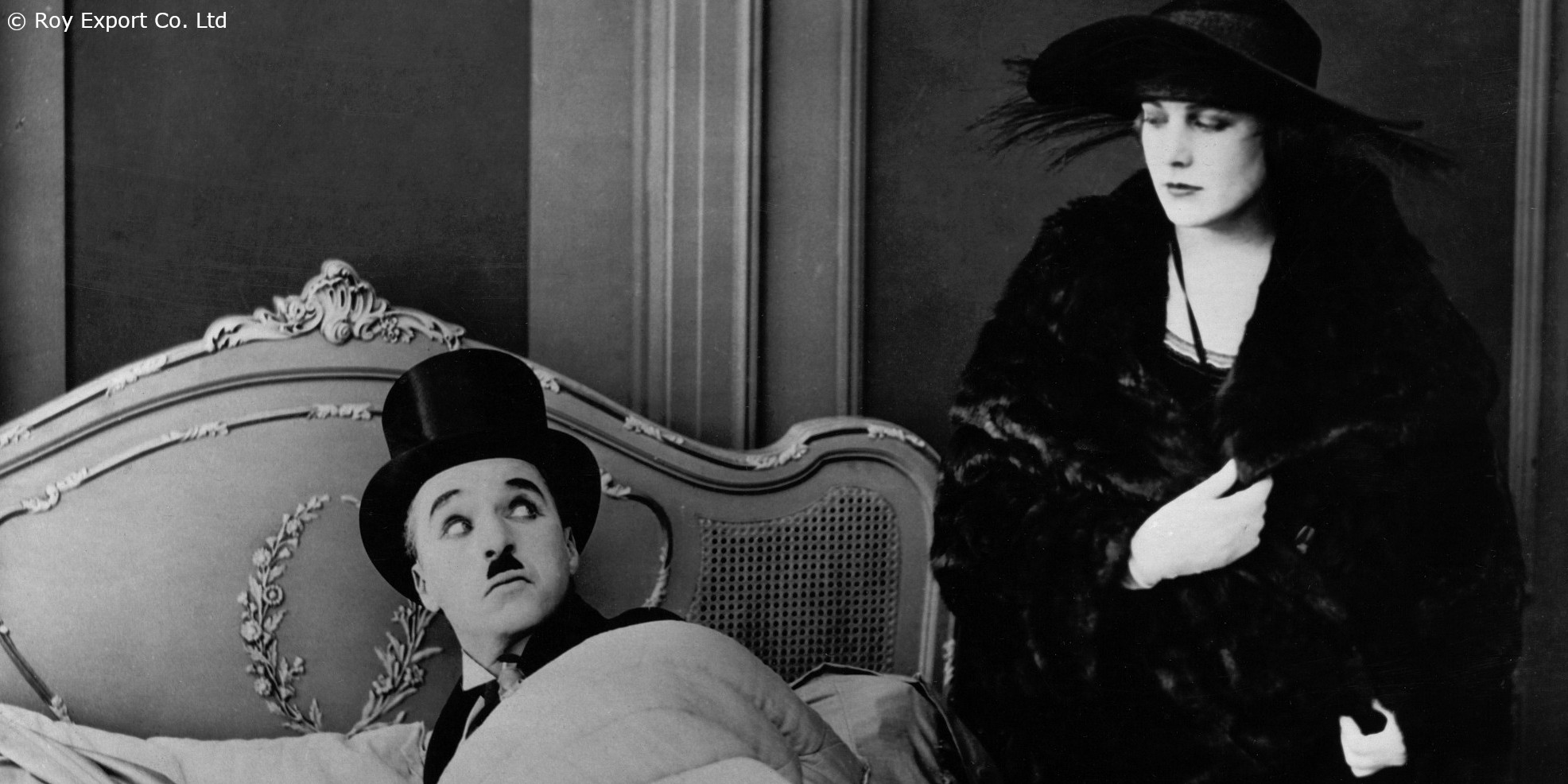
Curated by Karl Wratschko and Mariann Lewinsky
1920 was meant to have been the last episode of the Hundred Years Ago strand. The pandemic made it impossible for us to travel to view and discover films in the archives; and anyway, we reasoned, how much remains to be discovered in the last decade of silent cinema? A small tribute to 1921 would do fine – maybe the new restoration of I figli di nessuno and a classic or two.
So much for good intentions. As you will gather from the following pages, they paved the way to an exuberant programme of 37 long and short films. It turned out that 1921 is a remarkable vintage, a meeting place of Not Yet and Already. Top directors such as Ernst Lubitsch (Die Bergkatze), Victor Sjöström (Körkarlen) and Mauritz Stiller (Johan, not in the programme) are still working in Europe – soon they would all be in Hollywood. Weimar cinema and the avant-garde movement had already made their mark, but Soviet production has not yet picked up. As a consequence, Gosfil’mofond holds in its collections many prints of imported works from 1921, some of which are not known to exist elsewhere. No one has seen Arbuckle’s Crazy to Marry or Sessue Hayakawa’s The Swamp in decades – but you will.
Great stars of the 1910s such as Hayakawa, Alla Nazimova (Camille) and Henny Porten (Die Hintertreppe) not only continue their acting careers in 1921 but also have their own production companies. Such artistic and financial independence would soon become unthinkable in the US. So would an Asian leading man (or any leading actor not ‘Caucasian’ in the racial classification of the US).
While The Kid, probably the most essential film of the year, does not figure in the programme selection, comedy certainly does, represented by seven important performers: Arbuckle, Biscot, Chaplin, Hardy, Keaton, Laurel and Larry Semon. On film, it was a wonderful year for fun.
And in other respects? Hitler became party leader of the NSDAP in July 1921. Bolshevik rule in Russia developed into a totalitarian expansionist government, using terror to stay in power; popular rebellions were crushed (Kronstadt, Tambov), and the Red Army invaded and occupied the Democratic Republic of Georgia in February 1921. On an international level, the Comintern requested its members to break with reformism, causing the workers’ movement to split into Social Democrats and Communists in 1921. This fatal rift would favour the ascent of fascism. In the US, where obsessions with morality and race influenced politics, the Arbuckle scandal of 1921 foreshadowed future witch-hunts and led to a system of self-censorship within the movie industry.
Historical events are rarely seized en directe by cinema. As a guide to the general context, we would like to recommend to you to read or re-read The Origins of Totalitarianism, by Hannah Arendt.
Mariann Lewinsky and Karl Wratschko
Programma curated by Mariann Lewinsky and Karl Wratschko
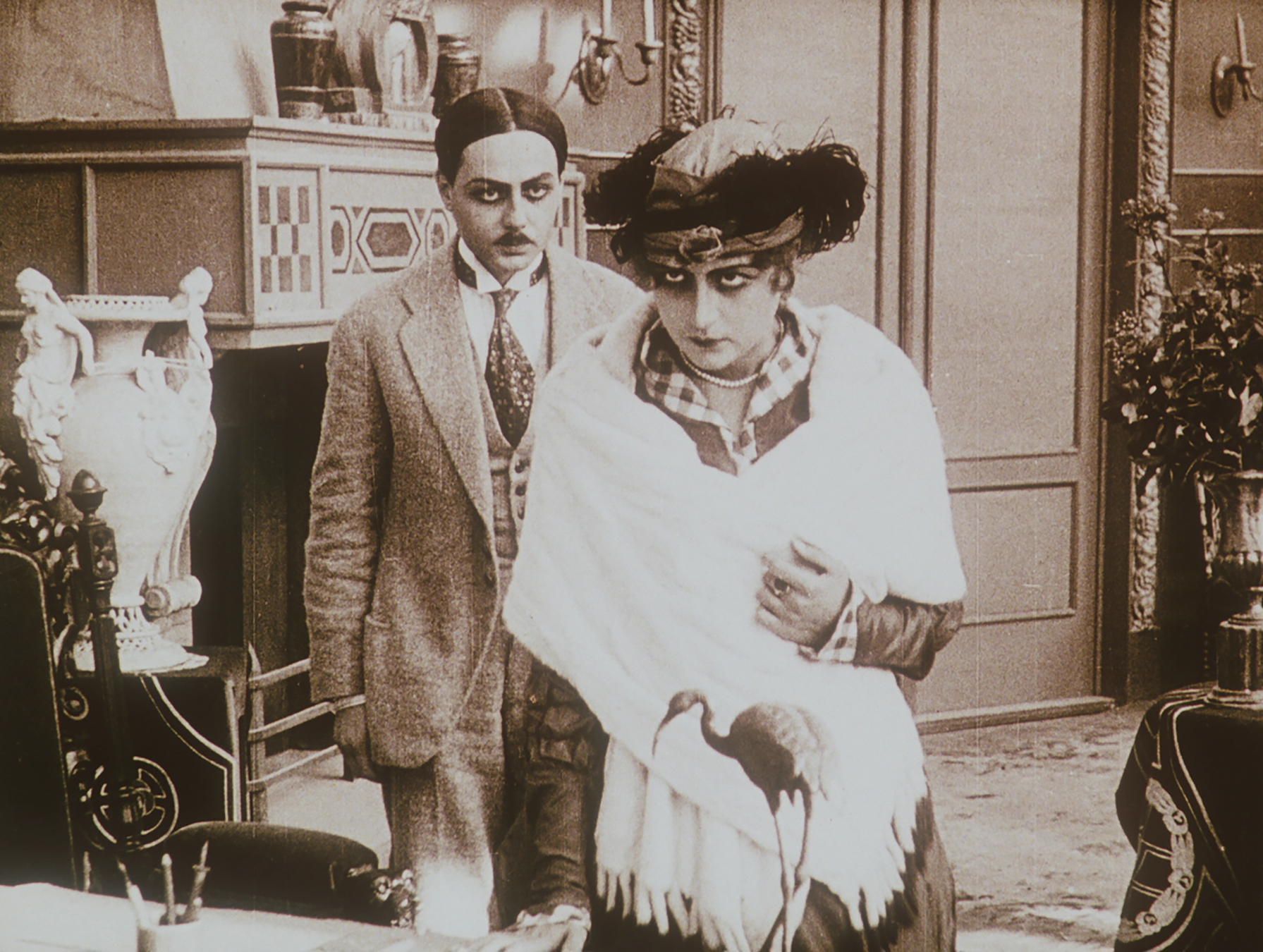
With 1920, the A Hundred Years Ago section enters a new decade. This required some changes in our approach. Until now, we have tried to give an overall view of the year’s film production, visiting as many archives as possible, receiving countless screeners from cherished colleagues in film archives and scouring the internet. When we started preparing the 1920 strand, it became clear that this way would no longer be practicable. The lists of titles from the archives were suddenly incredibly long. Two years after the Great War, the volume of film production was soaring again. We set priorities. In Italian cinema, the genres of forzuti and popular adventure films promised to be interesting. This trail led to our first chapter and to wonderful discoveries such as La cintura delle Amazzoni. It also became apparent that in 1920 a great number of two-part or multi-part films were produced, but limited time for screenings, we decided to present only the first episode each of Fritz Lang’s Die Spinnen and of Polidor’s serial starring Astrea – the weaker second episodes are quite independent films, anyway. Hoping for a revelation we hunted for the several lost works directed in 1920 by actress Diana Karenne, to no avail, but with Germaine Dulac and talented screenwriter Renée Deliot other female filmmakers naturally found their way into the programme. In the second chapter, dedicated to betrayed women seeking revenge and redress, we will meet, as well as Miss Dorothy (played by Diana Karenne) and La Belle Dame sans merci (directed by Dulac) another, Maruska (played by a mysterious Julietta Romona), in Tam na horách, a remarkable and completely unknown Czech production by the nomadic Sidney M. Goldin. By the way, the print of Tam na horách will give you a spectacular surprise. In 1920 Ernst Lubitsch reached a first high-point in his career. Although one might think that Lubitsch is omnipresent, this is actually not true at all. When did you last see Anna Boleyn and Kohlhiesels Töchter on the big screen? Both are outstanding works, the tragedy and the satyr play, and their stars, Henny Porten and Emil Jannings, are admirable performers, blowing away our old prejudices. As usual, the programme includes numerous short films, an important part of cinema production and screenings of the time. Finally we can introduce this year’s serial, another great discovery – all 15 adventure-packed episodes of Ruth of the Rockies with legendary actress Ruth Roland, fearless and bold serial queen, set in the Wild West. One film was decided upon well in advance by secret negotiations held after the screening of the Ledecký print of Soleil et ombre by Musidora at the 2019 Il Cinema Ritrovato. A new 35mm black-and-white print of Stiller’s Erotikon (1920) with real tinting done by Jan Ledecký would be screened at the next festival.
Mariann Lewinsky and Karl Wratschko
Programme curated by Mariann Lewinsky and Karl Wratschko
1919 is the first year of the A Hundred Years Ago strand for which a certain canon exists. Widely known films such as Blind Husbands by Erich von Stroheim, J’accuse by Abel Gance, Broken Blossoms by D.W. Griffith and Madame Dubarry by Ernst Lubitsch immediately spring to the cinephile’s mind when considering the first year after the Great War. Putting them together we could have arrived at a rather impressive programme in 10 minutes. But the easiest option seemed not to be the most interesting one, and we decided, as in every year since 2004, to go on a pilgrimage to the archives and view as many films from 1919 as possible. We would almost ignore the canonised classics of 1919, but not entirely: our selection includes films by Carl Th. Dreyer and Mauritz Stiller. Declared a masterpiece as early as 1935 (by Bardèche and Brasillach), mentioned in every book on film art or film history and widely screened, Stiller’s Herr Arnes Pengar gives the measure of film art in 1919, and moreover is a case of a great film that has become greater with time.
We also decided at an early stage to include as many short films as possible, and to accompany the features with newsreels, advertising films, travelogues, short comedies and educational films, to give an impression of what a cinema show looked like in 1919 and to give a more complete idea of the scope of film production. This type of film hardly ever leaves the vaults of the archives, being difficult to programme and a hassle to screen. But they bring the given year back to life and sometimes offer glimpses of real beauty. For all these reasons we feel our responsibility to screen them in our programme.
The focus is on films from Germany and Scandinavia. This was not planned but simply happened as a result of the fact that in 1919 the most interesting films were made there. The quantity of ‘good’ films from Germany was remarkably high, and it would have been no problem to do a convincing A Hundred Years Ago with German films only. We are aware of risking criticism for our Germanophile tendencies, and heap injustice upon injury by sneaking an additional German production from 1919 into the festival: a brand new 35mm copy of the completely unknown Tötet nicht mehr! by Lupu Pick, a wonderful complement to Sylvester (1923) by the same director, scheduled to be screened in a special event in honour of Enno Patalas (1929-2018) in the Piazzetta Pier Paolo Pasolini.
The long festival days will take care of connecting all the strands of Il Cinema Ritrovato. Perhaps, however, you will stop for a moment and think of Georges Méliès (58) who in 1919 was running a variété theatre in his former film studio, of Musidora (30) who was working on her second film Vicenta, and of Georges Franju (7) who was presumably going to school in Fougères.
Mariann Lewinsky and Karl Wratschko
Programme curated by Elena Correra e Mariann Lewinsky
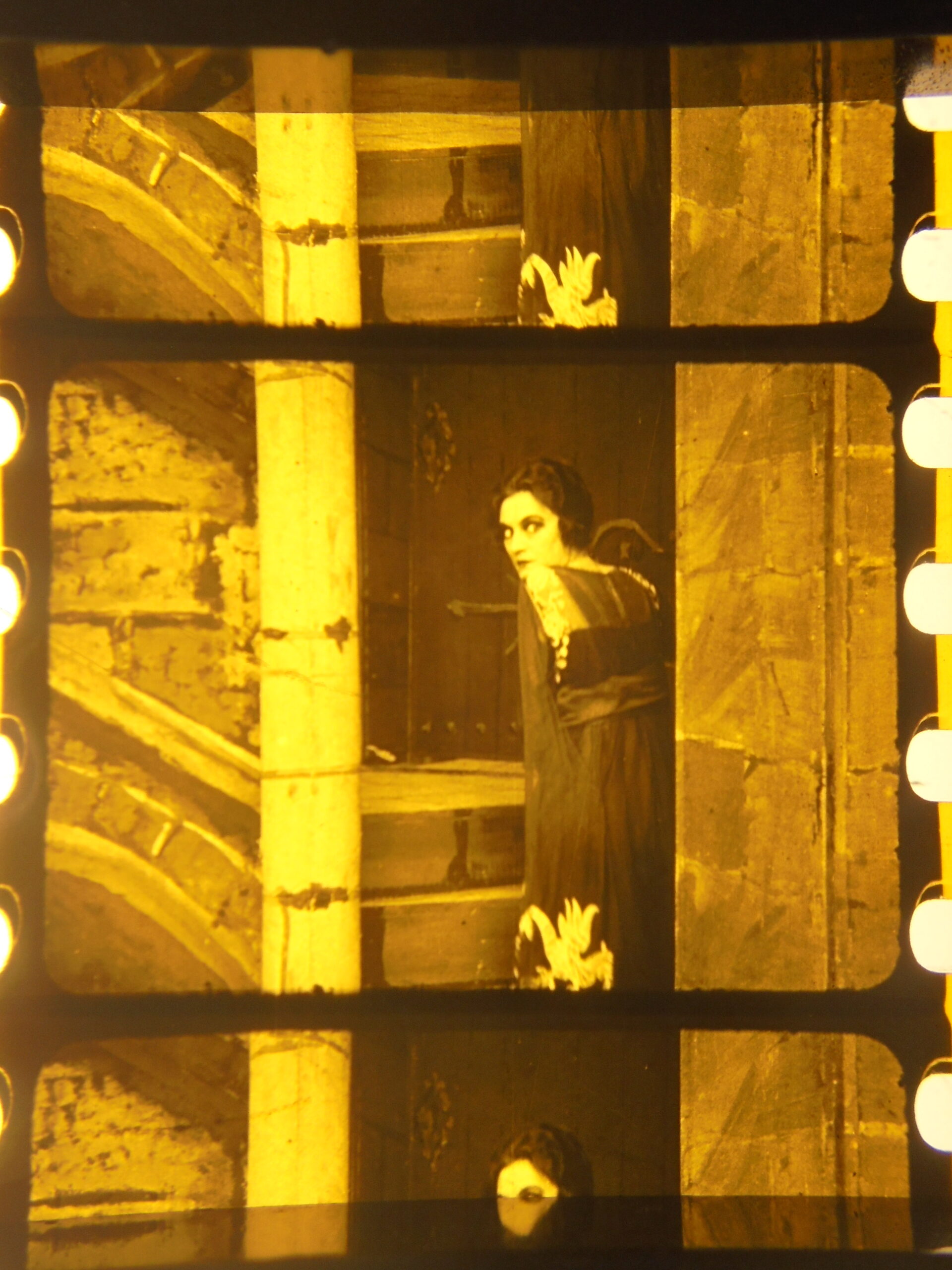
1918 was a watershed year. When the Great War finally came to a close, political systems were re-imagined and boundaries redrawn. Our first chapter is dedicated to war and politics; and Frank Borzage’s war drama Seventh Heaven (1927, screened in the Piazza Maggiore) is directly connected to the films from 1918. Important productions and newsreels come from Hungary, Czechoslovakia and Finland; like little flags they mark some of the new, independent republics on the changed map of Europe.
From a watershed, the view opens on both sides. Chapter 2 on Russian cinema combines works looking to the future (by avant-gardists Majakovskij and Vertov) with a film-tale depicting the czarist period, Father Sergius. The destiny of Olga Rautenkranzová, Czechoslovakia’s first woman filmmaker and a protagonist of Chapter 3 dedicated to female filmmakers and screenwriters, reminds us that not only nations strove for independence, but also women, and that their struggle for equality in film production had a very long future ahead.
For Italian cinema, 1918 seems to have been a golden year. But the gorgeous diva films in Chapter 4 appear like phantasmagorical evocations of a past, doomed to fade. What did not fade are the shimmering colours of L’avarizia, starring Francesca Bertini, a black and white positive print, tinted and toned by Jan Ledecký back in 1991. A proof that the original techniques achieve not only the most accurate results for tinting and toning (as compared to the other ways of reproduction including digital ones), but also durable ones. Restoration techniques too should always look both ways, to the past and to the future.
And what about the present of 1918? Nothing better for enjoying the present moment than popular entertainment. Adventure films, serials full of suspense, and comedies celebrating their darling actresses and actors delivered audiences in 1918 from the restraints of reality and gave them a good time. Join them and watch Tarzan in Chapter 5 and the resourceful Leah Baird, chasing the evil Wolves of Kultur through fifteen episodes, in Chapter 6.
If you prefer to cling to your idea that Germans silent films are artistic but gloomy, better refrain from seeing the wonderful finds from 1918, German comedies (or parts of them) screened in the section Recovered & Restored, with brilliant Ernst Lubitsch, irresistible Hedda Vernon and versatile Henny Porten in the double role of a stage-struck cook and a tipsy countess. The attentive guest will discover how the strands of the festival are connected, for example, by art director Ben Carré.
Film-historically speaking, the major event of 1918 was Carl Theodor Dreyer directing his first film. Praesidenten was released in 1919, and it is the first title we put on our list for the 2019 programme A Hundred Years Ago.
Mariann Lewinsky and Karl Wratschko
Programme curated by Mariann Lewinsky e Karl Wratschko
The past has not changed since the creation of the series A Hundred Years Ago in 2003. The present did. Due to new image technologies there are now more silent films available than ever. YouTube is full of them, and some archives make parts of their collections accessible online. In its first years, our section presented films impossible to see elsewhere; in 2017 most films will be presented as films, in the original 35mm format very difficult to see today.
In the catalogue, the films are organized into four thematic chapters. They do not correspond to the order of projection during the days of the festival. As side dishes to the features, you will find a generous amount of short films. There is no serial scheduled this year, but – high time – some choice animation films. We hope to be able to develop a representative animation program in future editions. Several films from 1917 are to be found in other sections – Lucciola with the silent films of Augusto Genina, Caligula with the Rediscovered and Restored and Mater dolorosa by Abel Gance in the section Colette and the Movies. Moreover, sections are connected by links, so you can follow Mozžuchin from 1917 (Kulisy ėkrana) to 1923 and to 1926 (Kean and Casanova) or see two works that Frank Borzage directed in different periods.
The Italian futurists did not make it into the programme – there is nothing worthwhile in Thaïs except the art direction of Prampolini in the finale. Nor did another film, unknown, very minor, but with a promising title and fabulous production credits: Beloved Vampyre (USA, 1917), a Knickerbocker Star Feature directed by Horkheimer.
Mariann Lewinsky
Despite there being more than 2000 films from 1917 to choose from, the vast majority were produced in the well-established film nations of that time. Tragically, almost all of the titles from countries outside of Europe and the USA simply did not survive. We did manage to unearth some exceptions for this year’s show. A superb long feature from Mexico called Tepeyac managed to survive a century of humidity, as did Lanka Dahan, a fragment from India. And we will also present a pioneering animated film from Japan called Namakura Gatana. Equally off the beaten track this year is part of our European selection: Az obsitos from Hungary, Bestia from Poland and some Russian films (see below) we provide rare images from the East. Another focus this year is on German cinema. The blanket ban on French movies in the Fatherland gave German production companies a chance to profit from the wartime media famine. Admittedly, a lot of the output was propaganda which is fascinating as a side dish. But it also seems that this was the moment when Germany became one of the major powers in silent movie production. December 1917 was when the giant Universum Film AG (UFA) studio was born. And one could also argue that many of the acclaimed stylistic elements which are emblematic of the German cinema of the 1920s actually originated in this strange time of war. Perhaps you’ll agree when you watch our two excellent feature films, Die schwarze Loo (Max Mack) and Furcht (Robert Wiene). Maybe German Expressionism wasn’t born in 1919-20 with The Cabinet of Dr. Caligari; and maybe aesthetic revolution is more of a meandering and long-winded affair. We’d actually say the same thing about real revolutions, too. For sure, 1917 is etched in popular imagination as the year of the Russian Revolution. But few people now recall that there were actually two Russian revolutions in that one year, and that these revolutions were the culmination of political protest and civic strife stretching back decades. These developments are discussed in two Russian films this year: Revoljucioner by Evgenij Bauėr and Ne nado krovi! by Jakov Protazanov. They both originate from that tiny, light-filled window after the Tsars’ time had ended and before the Bolsheviks took control and began the process of aggressively rewriting history to glorify themselves.
Karl Wratschko
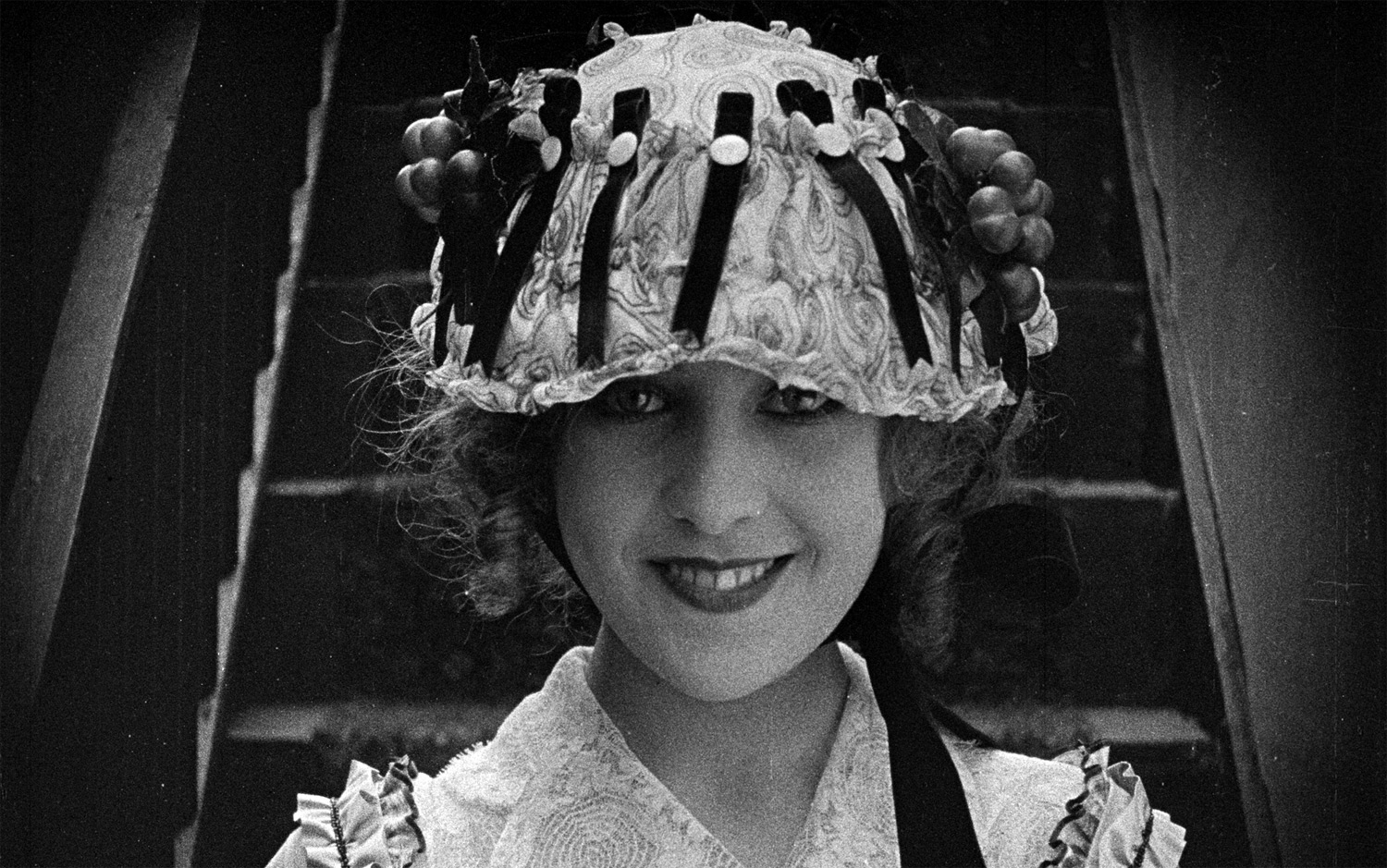
Who will come to see films from 1916? How should the A Hundred Years Ago section be done this time? Among the festival audience there will again be the world’s most knowledgeable authorities on silent cinema; these living film libraries have seen all there is to see and have followed for decades our and other specialized festivals. There will be people who have recently fallen in love with silent films and are enthralled by every image. Some spectators crave for an epiphany of the fleeting real emanating from a unidentified fragment, others for the security of famous feature films; hard-working researchers will look for their research area, be it the gendered representation of Irish immigrants, the use of tracking shots in the metadiegesis, or whatever.
And what if in recent editions of Il Cinema Ritrovato all interesting works had already been screened, used up so to speak? The production of 1916 minus Capellani, Chaplin, Weber, Nielsen, Dwann, Hart… maybe there’s nothing left but dust and boredom!
When preparatory viewings began, the films dispelled all curatorial worries. As in the previous years, the A Hundred Years Ago series and its catalogue are organized into chapters, dedicated this time, very simply, to three film-producing countries – Italy, Russia in the last year before the revolution and the USA. Special attention is due to first-rate directors such as Stiller, Perret, Bauer, young Borzage and young Genina, to female scriptwriters Anita Loos, Zoja Barancevič and Fabienne Fabrèges and to a glamourous generation of stars – Vera Cholodnaja and Ivan Mozžuchin, Norma Talmadge and Douglas Fairbanks, Jenny Hasselquist and Lars Hanson, Lyda Borelli, Bianca Virginia Camagni, Helena Makowska, Diane Karenne and many more.
You will find an array of subtexts and topics to explore – ballet dancers; the war; Dada; the reconstruction of past ages; however, in celebration of the 30 years of Il Cinema Ritrovato, the emphasis is on the prints and restorations presented, and what they stand for. The screening will include complete prints and fragments, prints without intertitles, a poor quality print, a 16mm version, the most recent photochemical and digital restorations as well as past projects, including MoMA’s important yet controversial reconstruction of Intolerance in 1989. Most films from Czarist Russia sadly survive only in dull duplicates from the eighties, in black and white, until miraculously several tinted nitrate reels turned up and came to Bologna to be restored. Our vision of the cinema of 1916 is made difficult by obstacles, veils, blocked passages, and that is a good thing. It sharpens our perception, fires the imagination, makes us dream. It moves us to search and dig, to find money and technical solutions, to restore and screen; it makes us film lovers, specialists, archivists, curators.
Mariann Lewinsky
Intolerance by David Wark Griffith • Madame Tallien by Enrico Guazzoni • Umirajuščij lebed’ (The Dying Swan) by Evgenij Bauer • Žizn’ za žizn’ (A Life for a Life) by Evgenij Bauer • The Mystery of the Leaping Fish by John Emerson • The Half-Breed by Allan Dwan • Life’s Harmony by Frank Borzage • Il figlio della guerra by Ugo Falena • Signori giurati by Giuseppe Giusti • Vingarne by Mauritz Stiller • Le Pied qui étreint by Jacques Feyder • Les Gaz mortels by Abel Gance
Programme curated by Mariann Lewinsky and Giovanni Lasi
Our A Hundred Years Ago series and its catalogue are again, like last year, organized into thematic chapters, consisting of several films or sessions. While some of the works from 1915 presented – among them the serial Les Vampires and Italian diva films Assunta Spina or Il fuoco – are canonized classics of film history, the core themes are linked to political history and the catastrophe of that year, the ongoing War.
The war devastated Europe and led its film industries and their formerly international businesses to ruin. France and Italy (the latter entered the war on May 24, 1915) lost the vast export market territories of the Central Powers, Germany, Austria-Hungary and the Ottoman Empire. Shipping routes were cut. In summer 1915, distributor Jean Desmet in neutral Netherlands had to screen programmes consisting of pre-war films, some of them made as early as 1911 or even 1910, for lack of supply.
The themes of diva film, war and emigration are not confined to A Hundred Years Ago but are to be found as well in other sections of this edition – Armenia, Velle and Murillo, Frascaroli, and the Restored Silents –, all of them connected by a network of films.
My warmest thanks go to the archives who have preserved and lent the films, and to the colleagues who have helped to organize this section.
Mariann Lewinsky
1915. Italian Film
During the first months of 1915 production was running at full speed galvanized by the wild success of the previous two years. Francesca Bertini, Lyda Borelli, Pina Menichelli, Gustavo Serena, Alberto Capozzi and Emilio Ghione, to name the most well-known, were part of a sociological phenomenon hitting the entire planet: film celebrity worship by the masses. In 1915, some of the most notable Italian silent movies were custom made for them: Assunta Spina and Diana l’affascinatrice, starring Francesca Bertini and Gustavo Serena; Il fuoco for the duo Pina Menichelli and Febo Mari; Fior di male and Rapsodia satanica – released later in 1917 – starring the incomparable Lyda Borelli.
This divine period of Italian cinema was not only due to the excellence of its actors but also to the quality of a generation of great directors like Carmine Gallone, Nino Oxilia, Gustavo Serena and Augusto Genina, who by 1915 had developed fully mature directing skills. On a technical level, the Italian film industry could also count on first-class professionals like cinematographers Carlo Montuori, Alberto Carta, Angelo Scalenghe and Giorgino Ricci.
After Italy entered the war, the dazzling lights of national film slowly faded, and, in tune with the bellicose times, other myths and other more aggressive ideologies took over.
Giovanni Lasi
Searching by year (and not by director, country, or genre) has in past editions of this section yielded programmes made up of virtually unknown films; and for both the curator and the audience, the element of surprise, discovery, and astonishment was always an important part of the experience. This is no longer the case. We are no longer in the terra incognita of Early Cinema. And even without ever having seen the films – let’s say Le Corso rouge or Maison Fifi – or knowing much about directors like Oxilia or Machin, the waters are now familiar, with some titles (like Cabiria)long figuring in printed film histories. I have decided to keep up the idea of a research project, and to organize a series of thematical chapters. They explore a few major aspects of cinema (in Europe) at the historical moment of the beginning of World War I, which would bring an end not only to ruling many dynasties but also to the hegemony of French and Italian Cinema. The curatorial work consisted this time not in editing programme sessions, but in creating a vast net of connections which spreads over the week of the festival, and moreover is connected to the other sections dedicated to silent cinema – Dulac, Porten, Views from the Ottoman Empire, and Restored Silents. I have included films that are not from 1914, finding it more important to follow hopefully inspiring approaches than to stick to the rules, e.g., the production year 1914. My warmest thanks go to the archives who have preserved these films, and to the colleagues who with their work and advice help every year to realize this section.
(Mariann Lewinsky)
In January 1914, Francesca Bertini was prominently featured on the first page of the American magazine “Motography”, and a few months later the “Moving Picture World” celebrated Lyda Borelli as “the Bernhardt of the Photo Play”. Their male colleagues, such as top actors Emilio Ghione and Mario Bonnard appear equally in the international trade press, giving proof of the impact of the Italian star system. Italian cinema was a worldwide commercial success and by 1914 it also occupied an important place in the national artistic culture: Roberto Bracco, Matilde Serao, Nino Oxilia, Lucio d’Ambra, Nino Martoglio, leading figures of the cultural scene are all firmly engaged in cinematography ; Gabriele D’Annunzio is fêted in the press for the mediatic event of the year, Cabiria, for which he assumed the well-paid but fictitious autorship. Apart from this colossal, or Guazzoni’s Caius Julius Caesar or Oxilia’sSangue bleu or Negroni’s Histoire d’un Pierrot, the Italian film industry as a whole reached an unprecedented level of productivity and creativity in 1914, the main reason being an ongoing generational change. Gallone, Palermi, Genina, Zorzi and Campogalliani all made their first work in 1913-1914. A revolution that would make film history and was already in full swing in 1914.
(Giovanni Lasi)
“And so we came to the fateful year of 1913” (Cecil B. DeMille)…
Since 2003 the adventure of our A Hundred Years Ago series has consisted in discovering, via its films, an unknown cinema. But the year 1913, the last year of peace before the Great War, is anything but unknown. The Pordenone retrospective back in 1993 on the 1913 production has left a lasting impression, and a flurry of publications and research. Here in Bologna, many major works, themes and filmmakers have been presented at past editions of the festival: the German and Italian leading ladies, the comedy series, Albert Capellani, Alfred Machin, Léonce Perret and Eleuterio Rodolfi etc. Is A Hundred Years Ago for 1913 still needed? This year more than ever, I saw my curatorial work as an experiment, open ended. The aim was, as every year, to convey via the programming – the selection and combining of films – an interpretation of that one year’s production, and to display some of its characteristic aspects, for the programmes are like the display cabinets of an exhibition. The reconstruction of a film programme from October 1913 (same structure, different films) proved the ideal way to capture the 1913 production comprehensively and to understand it properly in one central matter, that of the enormous variety in standard running times. In historically inspired programmes numerous short films illustrate the heights of narrative and visual perfection attained by the 1913 one-reeler. I consider this at least as relevant to cinema history as the fact that more and more long films (not infrequently struggling with structural problems) were produced and enjoyed sensational worldwide success. Quo Vadis?, the film of the year 1913, was a case in point. One thematic programme is dedicated to antiquity in the cinema, and other core themes – such as divismo and the approach of war – are distributed through the section. However, some single films have now been assigned a far more representative role than was the case in earlier editions. Thus one 15-minute Western must speak for the whole, enormous genre, and the short Kasperl-Lotte for all the films – and it is striking how many there were in 1913 – about lost, kidnapped or orphaned children (such as L’Enfant de Paris ì and Sans famille, neither of them in the programme.) Place of honour went to the Italian production, with some emphasis also on Germany. France is underrepresented this time, since important films (those of Victorin Jasset as well as Capellani’s Germinal and La Glu) have been shown in Bologna recently or are at the moment being restored (Maudite soit la guerre and Fantômas)… Next year in Bologna!
Will festival visitors find this year’s A Hundred Years Ago as meaningful and necessary as usual? Thanks to the viewings and research in preparing the event, some significant finds have been made and a considerable number of films restored. That is already a lot. Valait le voyage.
My gratitude goes to the colleagues and collaborators of all participating archives.
(Mariann Lewinsky)
In 1913 the industry was experiencing great expansion: on one side the major film studios were investing more in their productions than ever before, while at the same time new small and medium-sized studios were popping up with a level of drive and energy which was completely unexpected. Foremost among these was the Celio studio from Rome, established in 1912 with direct links to Cines and Film Artistica Gloria which, in the promotional pages published in February 1913, just after its constitution, clearly expressed the company’s prerogatives: “Gloria will produce exclusively full-length artistic feature films” – a declaration that could have been the motto for all major Italian productions that year. In fact, the films released in 1913 were characterized not only by their extraordinary lengths and artistic ambitions, but also by the grandiosity of the production and consequently the amount of capital invested. This higher investment in most cases paid off enormously. Epic films like Quo Vadis? and Marcantonio e Cleopatra (Antony and Cleopatra, Cines), Gli ultimi giorni di Pompei (The Last Days of Pompeii, Ambrosio), Nerone e Agrippina (Gloria), Spartaco (Spartacus, Pasquali) invaded the market the world over. Films set in ancient Greece or Rome, besides guaranteeing a huge box-office draw, became the definitive global cinematic model and set the standards for a genre that would continue to be successful for generations to come. This was not the only feat accomplished by Italian cinema at the time. During the same period when audiences were flocking to movie theatres to gawk at Roman consuls, Pompeian matriarchs and Thracian gladiators, a film was released which would come to be known arguably as the first of a new genre, the Italian diva-film: Ma l’amor mio non muore! Regardless of its right to be labeled the first of its kind, it is undeniable that Caserini’s film is characterized by those stylistic, formal and cultural elements which were to become emblematic of the golden age of Italian Diva cinema. These films brought to the limelight such stars as Lyda Borelli, Francesca Bertini, Pina Menichelli, Maria Jacobini, Leda Gys and Hesperia, who in 1913 were already beginning to display their magnitude.
If full-length feature films were the hallmark of a prestigious studio, Italian cinema was no less affirmed by its production of comic shorts, whose most popularly acclaimed names continued to be André Deed, Ferdinand Guillaume and Marcel Fabre. Fabre directed and starred in Ambrosio Studio’s Le straordinarissime avventure di Saturnino Farandola (The Extraordinary Adventures of Saturnino Farandola), one of the greatest examples of Italian silent fantasy films. Along these same lines, another one-ofa- kind feature to emerge on the Italian cinematic panorama of 1913 was Excelsior, a screen adaptation of the famous 1881 allegorical ballet. Despite the approval by the select audiences at the premiere showings and the enthusiastic response of the critics who praised its innovative use of the medium, the splendor of its direction and the perfection of the synchronicity between the images projected onto the screen and the live music performed in the theatres, the film was a dismal flop, confirming once and for all that 19th century culture had become a thing of the past. Quite paradoxically, future was ancient Rome.
(Giovanni Lasi)
Programme curated by Mariann Lewinsky
Feeling that early cinema was not explored sufficiently, Il Cinema Ritrovato started, in 2003, the Hundred Years Ago series. But we cannot claim, by any stretch of imagination, that the films of 1912 belong to early cinema, or that they have not yet been sufficiently explored. Since 1982 the festivals of Bologna and Pordenone have offered 550 opportunities to see that year’s films. I therefore decided to prioritise unfamiliar works.
The first archive I visited was the Národní filmový archiv in Prague, and it was a remark by its director Vladimír Ope˘la, to the effect that programming should always be political, that strengthened my resolve to use the films of the past to reflect the present. So the three Dark Materials programmes came into being. The other programmes bring us some particularly beautiful films, as well as subjects especially popular that year and also technical innovations. As usual, the festival week was not sufficient to accommodate all my favourites ideas (programmes that did not happen are Anybody Here for Love?, Lions in the Drawing Room and Western), although I did manage to smuggle Eclair 1912 and Gaumont 1912 into the Silent Colour section. This year it is again Giovanni Lasi who has contributed his specialised knowledge in curating the Italian programmes. In 1912 a great deal was being written about films and the cinema. Writers started to visit the cinema regularly; they experienced “the world in cinema” and cried bitter tears when “the French boat-hauler pulls his dead bride upstream, slowly and laboriously, through the countryside in full bloom” (Peter Altenberg: the film is obviously Léonce Perret’s Le Haleur).
One of the most significant of the 1912 cinema texts is Viktor Klemperer’s Das Lichtspiel. Klemperer recognised the cinema as “the most democratic and most international of institutions”. Of its internationalism: “Films do not go on tour abroad – for they are everywhere at home”. Of its democracy: “It is democratic through and through, offering as much to ordinary people as to the more educated”. He noted that the programmes in both elegant and working-class cinemas were identical and that “the ‘ordinary people’ treat serious material with great reverence, and the ‘educated’ evince noisy appreciation of slapstick pranks”. He also felt the cinema provided “space for the viewer’s creative imagination” and all, educated and uneducated, were “both compelled and enabled to give a soul to those moving bodies – or, to put it more simply, to write their own text for the pictures”.
Relative to the theatre, he saw its surrogate, the cinema, as superior in its central element, drama, “using unmediated action to jar us, to lead the self out from the confines of its everyday feelings into the freedom to participate in other people’s destinies” (Viktor Klemperer, Das Lichtspiel, in Velhagen & Klasing Monatshefte, April 1912, now in Fritz Güttinger, Kein Tag ohne Kino, 1984).
(Mariann Lewinsky)
Programme curated by Mariann Lewinsky
“The old one- and two-reelers were better,
Cinema before the war was much more varied
The short films should not be the supporting programme but the
programme itself….»
Hans Richter, 1929
Film is the art of the fourth dimension: time. In Il Cinema Ritrovato, which is dedicated to the cinema of the past, the time factor is multiplied. And in the “Hundred Years Ago” section, which has been regularly generating “Hundred Years Ago” programmes since six, seven and eight years ago, it is multiplied to the nth degree. In any case, the curator was happy to lose herself in the old films. Now though, in 1911, a tang of the present is wafting towards her: she stands at the edge of the wood, behind her the virgin forest of early cinema and before her a vista of the well-travelled highways of the 1910s – Léonce Perret, Asta Nielsen and the diva film, the comic actresses… and a road sign: “2 years to Quo Vadis?”.
“2 or 3 Things We Know about 1911”
The quantity of 1911 films available in the archives of Europe defeated me. This year, long before the end of my viewings I already had too much good material. So now, and in the future, it is no longer possible to organise systematic and complete viewingsm from which to assemble a representative overview of a year’s production. So how to decide, how to choose… The accent in this year’s nine programmes is, as previously, on Italy and France. I have omitted work that was shown in recent editions of the festival (such as Perret, Nielsen and the comic actresses), giving priority to lesser-known material. A major theme for 1911 is the crime thriller: the genre was booming all over Europe and in all production companies. The first episode of Zigomar caused a sensation and Victorin Jasset made a name for himself as a brilliant director. Other thematic programmes will look at today’s current events mirrored in the past, pantomime and – in the “Colour in Silent Cinema” section – antiquity in the cinema. Both these themes are to be continued next year. Italian comedy stars will feature, distributed in programmes across the week: 1911 is an exceptional year in this area.
(Mariann Lewinsky)
Section curated by Mariann Lewinsky
With 12 programmes in the 2009 festival, the “Cento anni fa” section had reached its upper limit. The 1909 cinema year proved to be a turning point: some genres and structures which had been central now disappeared or drifted to the margins, while others came to the fore.
The clear signs of impending change led us to set the section up differently for the 2010 edition. The number of programmes has been reduced to one a day and the programmes have become rather longer so that now and in future we can – in line with historical practice – combine longer films with a supporting programme of shorts. We have also limited the focus to European production. (Even so, the number of preserved films was so great that we could not view everything and had to make a preselection beforehand)
We were able to add an extra one-off programme, “The Colours of 1910”, into the “Colori” section (Cinema Arlecchino) and other selected films of 1910 featuring athletic and adventurous women will be shown in the context of the “Fearless and Peerless. Adventurous Women of the Silent Screen” section.
1910: Stars and Names
In the topography of 1910 cinema certain aspects become prominent. After Cretinetti’s groundbreaking productions at the Itala studio in 1909, numerous comedian-based series were launched, and it was in 1910 that Pathé opened its Comica Studio in Nice, headed by Roméo Bosetti. With series featuring Léontine and Bébé, Rigadin, Robinet and Max and many others, 1910 saw the first seeds of one of the strongest generators of audience engagement: the star system. Among cinema-goers’ new favourites were some of the most successful stars of the Paris vaudeville stage, such as Mistinguett and Charles Prince, alias Rigadin.
Film historians have traditionally seen (and still see?) 1910 as the end of the short film era and the birth of the long film. But too many long films were made before 1910 and too few longer films dated 1910 are known for us to continue to assert this demarcation. Another transition, however, does seem to me un-ambiguous and significant: 1910 as the end of anonymity, 1910 as the first year of names. Names of actors, names of directors.
Not all made their debut in 1910 – many had been in films for some time – but what was new and would remain with us was the stream of names which from now on accompanied the films. The names of 1910: Falena, Feuillade, Novelli, Bertini, Perret, Jasset, Denola, Monca, Capellani, Napierkowska, Mirval, Sylves- tre, Numès, Fabre, Guillaume, Lepanto, Robinne, Delvair, Maggi, Fromet and so on, and so on, and so on.
1910: Landscapes, Travelogues and A Tale of Three Cities
The curator of this section has always conceived it as a travel agency, organising excursions into the past. But in the case of 1910 the travelling is no longer purely metaphorical: it is itself a dominant theme. The landscape appears differently, in novel ways, in the films of 1910, no longer as backgrounds or views, but instead permeating the writing. For the first time landscape and plot are perfectly integrated, be it in adventure films or romantic dramas.
And as if this weren’t enough, the four programmes of the section form a long journey, from Paris (“Gaumont 1910”, curat- ed by Dominique Païni) via Vienna (Nikolaus Wostry) and Prague (Blažena Urgošiková) to Italy (Giovanni Lasi and Luigi Virgolin) and from there on a royal expedition to the Himalayas (Giovanni Lasi). I thank all my fellow-curators for the knowledge, the ideas and the films which they have so generously placed at our disposal and for their unswerving commitment.
(Mariann Lewinsky)
Section curated by Mariann Lewinsky
We present twelve programmes, about a hundred films in total, with the aim of bringing the world (and the cinema world) of 100 years ago into our 2009 reality. So the scope of “A Hundred Years Ago” appears to be similar to that of last year’s programme – but it has secretly expanded. For it also includes the first programme of”All the Colours in the World”: “The Colours of 1909”.
The opening programme of the Cinema Ritrovato festival celebrates a particularly appropriate anniversary: 100 years of film festivals. Our historical reconstruction brings together eight (of approximately sixty) films which were shown in October 1909 in Milan at the first ever international film festival, the “Primo Concorso Mondiale di Cinematografia”.
Half of the monographic programmes are dedicated to a national cin- ematography and the others to specific production companies – “Italy 1909”, “USA 1909” (both double programmes), “Film d’Art 1909” and “Denmark & Nordisk 1909”.
The swiftly growing Italian industry was focusing on export, with its historical costume dramas, documentary films and Cretinetti – star of the first real comedy series. In the USA, in 1909 alone, Griffith shot an extraordinary total of 142 films for Biograph, while Vitagraph remained the dominant American studio in Europe. Pathé Frères, the unchallenged market leader, not only distributed the production of the nominally independent Société Film d’Art: it also set up, under the creative direction of Albert Capellani, a more successful com- petitor, S.C.A.G.L. And then there was the Danish newcomer, Nordisk, which registered its polar bear Trademark on 23rd April 1909 and would soon play a very prominent role in the international film market.
Our research project has been running since 2003 and provides a cinema history in real time, year by year. This is its seventh interim report and it includes some context evoking the world of 1909; in images of the time (“Lost World”), in the most momentous cultural events of the year (“What’s New in 1909”) and in the geopolitical sit- uation, marked as it was by colonialism and inequality (“Wanderlust and Geopolitics”).
In terms of cinema, 1909 was a clear turning point. Ends and beginnings overlapped. This was the year when several series typical of early cinema, such as the féerie and films with sound on disc, start- ed to peter out (“Farewell, Early Cinema”) and other genres and phenomena, crucial in the coming years, had begun to take shape: film stars, newsreels, feature-length films (“Coming Attraction: Feature Length”). But alongside these changes some things remained constant. For example, from the earliest days until at least 1916 or 1917 accident rubbed shoulders with intention: non-fiction and fiction were happy to share the same space and time. This basic feature of the early cinema is a major attraction of the Cinema of Attractions, as defined by Tom Gunning: which is also often a “Cinema of Distractions”, as proposed by Luke McKernan.
Cinema History 1909: The Industry Gets Organised
In most countries early films and film exhibition fell, almost unnoticed, into the legislative sector of travelling trades. But once film production and exhibition (which had become increasingly sedentary) had experienced a massive growth spurt, society and the law started to react to the new medium: 1909 saw the first cases of censorship and admission restrictions for children.
1909 has entered cinema history as the year of the Paris “Congrès International des Fabricants de Film”, which took place in early February, with Georges Méliès as its chairman and Charles Pathé and George Eastman its patrons. This was the European producers’ reaction to the “Trust” which Edison had set up in 1908, with the aim of excluding European production from the lucrative American market. Edison was also trying to ensure for the members of the cartel exclusive rights in the use of film stock produced by Eastman. (Eastman himself dropped this idea, when Charles Pathé threatened to go into film stock production on his own account). The congress notched up a number of lasting agreements: technical standardisation of the perforation, a fixed rental tariff per metre of film (which lay only slightly below the sales tariff in force at the time) and the swift transition, pushed by Pathé, from sales to rentals, to the disadvantage of local retailers. This led to regional boycotts of Pathé and, in the case of Great Britain, to the French devil being ousted by the American Beelzebub. The opening of the British market to American imports would come to inflict far more damage on the local producers than the mighty Pathé had done.
How Much Longer?
Many people are now wondering – and asking me – how much longer our “A Hundred Years Ago” programme can go on. Most seem convinced that the short film disappeared shortly after 1910 and the feature-length film took over. This might be correct if one assumes that film history is the history of the entertainment feature. But our aim is to discover and present film production of the past in all its manifestations. As what could be called an unavoidable side effect, we are also generating a history of cinema programming. From 1908 onward one genre, the scène dramatique, became noticeably longer. But one long drama does not make a cinema programme. The polyphonic programmes of the short film era are succeeded by the triadic harmonies of documentary-comedy-drama, the basic structure of cinema programmes up to the end of the silent film era. “A Hundred Years Ago” will continue for a good while yet.
Gaps and Additions
The process of programming certain themes or films means we have to forego others. Sadly, no place could be found for the circus, alcoholism, madness and tourism, all themes which were tackled in several works of 1909. Likewise, to name but one title, we had to cut Film d’Art’s impressive filming of Tolstoy’s Resurrection. L’Assommoir, however, is in the programme, although it had its première at the end of 1908, because we could not locate a complete copy last year. In the course of viewing for the programme, films are often newly-identified or more precisely dated. In two cases productions now dated to 1908 were kept, as particularly worthwhile extras.
Thanks
This year, as before, Henri Bousquet’s Pathé catalogue has been an indispensable, invaluable compass in the jungle of early cinema.
My special thanks go to Giovanni Lasi (curator “Concorso Milano 1909” and “Italy 1909”), Luigi Virgolin (co-curator “Italy 1909”), Tom Gunning (curator “USA 1909”), Béatrice De Pâstre and Alain Carou (curators “Film d’Art 1909”) and Thomas Christensen (curator “Denmark & Nordisk 1909”) for their precious work and cooperation. While preparing the programme I viewed about 400 films in ten European archives, and that meant a lot of work for a lot of people. Thanks are due to Bryony Dixon (London), Caroline Patte (Paris) and Elif Rongen Kaynakci (Amsterdam) and many others, too numerous to mention.
For the third time we are featuring an exhibition of film posters, this one from 1909, from the collection of the Fondation Jérôme Seydoux-Pathé. These are originals, of extraordinary quality and very rarely exhibited. On behalf of all those attending the festival, we thank those who have so generously lent us these unique documents.
All Pathé and Gaumont titles are shown with permission of Gaumont Pathé Archives.
(Mariann Lewinsky)
Programme curated by Mariann Lewinsky
Every year since 2003, Il Cinema Ritrovato festival has featured the section “A Hundred Years Ago”, with films made one hundred years ago. We did not start with the official beginning of cinema history in 1895, but entered somewhat belatedly with 1903 (curated by Tom Gunning), just in time to capture the incredible development of the new medium in its early years. We are currently (re) discovering so much of what the cinema was discovering for itself at breakneck speed in those days. And this festival programme is gradually proving to be a long-term research project in real time, at the proper pace: from year to year. Each time it uncovers an historical layer of the cinema, revealing the changes since the previous year. (Isn’t there something a bit strange about retrospectives that condense decades of a directing or acting career into a single festival week?)
Cinema Ritrovato represents a necessary precondition for our project of an empirical history of film. Here, these at once very simple and very difficult films do not appear isolated and marginal, but rather in the appropriate context: as part of a stream of many other films of the same era. Here they encounter an interested audience and good presentation conditions. The mood is somewhere between a festive event and an everyday visit to the cinema, which gets pretty close to the original situation and raison d’être of the films. For that reason the films attain a particular clarity here, and indeed are almost lifesized (which is not the case when we watch them via DVD or the Web). Without the spectacle of large format presentation, we cannot possibly appreciate the films’ wonderful qualities, their values of astonishing beauty, directness and variety.
The curator’s mandate is, through the programme, to describe the cinema of one hundred years ago in as precise, informative and attractive a manner as possible. To translate the chaos of material from 1908 (more than 400 titles, without GB and the USA in European archives) into the cosmos of the programmes.
How, then, are we to present the year 1908 in cinema, and organise some one hundred titles? Half of the twelve programmes are devoted to three important national cinemas, the French film industry with the Pathé frères as the leaders in the world market, the USA – D.W. Griffith debuted at Biograph in 1908 – and Italy, which launched its future export hit, the sword-and-sandals epic, in 1908 with the first and perhaps finest version of Gli ultimi giorni di Pompei (The Last Days of Pompeii). Two programmes explore the topography of genres, prominent among them in 1908 the phono-scène or Tonbild (with Gaumont and Messter as the strongest producers) and the new genre of the detective series: Nick Carter, the literary king of detectives since 1886, became a film hero in 1908. Of all genres the animation film developed the most rapidly, since its effects were subject to the greatest pressure to innovate; the scènes de féeries et contes, in contrast, the most opulent film genre of the years 1902-1906, did not survive long after 1908. The four remaining programmes are constructed around thematic and aesthetic viewpoints, in part according to a basic principle of the films of 1908, the popular opposites: poor and rich, man and woman, life and art, attraction and narration.
In many respects, the production of 1908 simply continued that of 1907. There were, however, a few striking changes – the following three, at any rate: firstly, based on the routine of temporal and spatial concatenations played out hundreds of times in the chase films, in the detective films, in particular, intensified narrations appeared with stringent links between cause and effect and parallel plots. Secondly, the interior imaginings of film figures were quite frequently given visual form in 1908, based on techniques developed in animations – the beginning of subjectification. And thirdly, thanks to Film d’Art, the S.C.A.G.L. and export-oriented Italian production, numerous literary and theatrical works were filmed. In 1908, this genre experienced the beginnings of a hugely dynamic growth spurt. Our first programme, “Women of 1908”, incidentally also opens the programme section “Irresistible Forces: Suffragettes and Female Comedy 1910-1915”. Finally, there could be no cinematic year 1908 without the canonical (and much-maligned) classic L’assassinat du Duc de Guise, and without the film d’art. The Festival 1908 will close with a sketch of the film’s premiere on 17 November 1908 in the Salle Charras in Neuilly and a screening on Piazza Maggiore. We also have the good fortune to be able to show an exhibition of original film d’art posters in homage to Film d’Art in the lobby of the Cinema Lumière, works of poster art of exceptional quality from the collection of the Jérome Seydoux-Pathé Foundation. And we thank the generous lenders for these unique visions d’art.
1907 was not notable in world history. Nothing much happened. An earthquake in distant Jamaica, a few diplomatic negotiations between France, Great Britain and Russia – it was a quiet year in the beautiful Belle Epoque.
But 1907 is of enormous significance in the history of the cinema. It is the year of a decisive change: film became a mass medium. And that is probably the most significant event of the year 1907 in world history.
The main factor in this development was the Pathé company, which systematically industrialised film production and created a rental market alongside the film sales market already in operation. Mass production and the rental market made it possible for the permanent cinemas to change their programme weekly and their number increased exponentially in 1907. And whereas audiences in 1904 or 1905 saw films which were one or two years old, in 1907 production and consumption were almost simultaneous. Geneviève de Brabant, for example, announced by Pathé in the Supplément of July 1907, was running in Bologna as early as the first week of July! A far bigger audience was reached via the now dual market, for both sales and rental. The first worldwide web, cinema allowed people in very different places around the globe to see exactly the same thing at the same time and to share the same virtual experiences. The fact that, with the Internet, we too have lived through the development of a technology into a mass medium gives us an immediate understanding of the situation of the new mass medium a hundred years ago.
Not constrained by any laws – the only regulations concerned safety, fire prevention and sometimes the volume of the music – the cinema was for a few years a genuine mass medium, accessible to all, a communal experience for all age groups. And it was this completely heterogeneous audience of children, women and men that was addressed by heterogeneous film programmes, made up from living pictures of the most varied genres.
We know the range of Pathé’s twelve production categories (other companies used slightly different names): 1. scènes de plein air, 2. scènes comiques, 3. scènes à trucs et à transformations, 4. scènes de sports – acrobaties, 5. scènes historiques, politiques, militaires, d’actualités, 6. scènes grivoises, 7. scènes de danses et ballets, 8. scènes dramatiques et réalistes, 9. scènes de féeries et de contes, 10. scènes religieuses et bibliques, 11. scènes ciné-phonographiques, 12. scènes d’arts et d’industries. We know the cinema programmes were made up of fifteen or more pictures switching from genre to genre, and such constant change is in itself an element of attraction and entertainment, but I do believe we need to extrapolate from the variety of films in the programmes and the range of production categories to conjure up the different groups among the mixed audiences which watched these films in the cinema tent or hall. We have not yet drawn a clear line from each film to its target audience. If we mentally establish these connections film by film, we can suddenly perceive with great clarity the historical cinema experience, the interplay between the screen and the audience. Films succeed each other in the programme, and they will appeal to, or bore, first one group then another and some will appeal to all – and each individual’s interest will fluctuate through the course of the show (just as in a newspaper some will attentively read about domestic politics but not the economy, the fashion coverage will address specific groups while all will dip into the “news in brief”). The motifs, contents and attractions of the early cinema in their kaleidoscopic abundance seem to us more functional and somehow stronger in their expression if we imagine them directed at their most interested group of viewers. And the shortness of the films allowed rapid change, so that a programme could offer enough interesting material for all the audience groups. (This could explain why the maximum length of films remained stable for several years at 300-400 metres.)
While the cinema later became a sphere which was only accessible to adults (like sexuality), and thereby became one of those experiences which divided children from adults, in 1907 it was the very opposite: there was one communal sphere for both big and small, and children’s films had a strong presence in the mix. This varied mix surely caused extra confusion to later assessments of this already confusingly strange pre-1910 cinema.
The “A Hundred Years Ago” section this year consists of nine programmes in two groups. The first five programmes are systematic and historical: Bologna 1907, Pathé 1907, two national cinematographies (Italy 1907 and Great Britain 1907) and the Joye Collection, the biggest historical collection of the years 1905-1913. The second half consists of four programmes built around some clusters and themes which emerged from viewing about 200 films.
This section is taking place for the fifth time and the changes since 1903 – many more films and much longer films – became obvious in selecting the programmes for the festival: the material just would no longer fit into the allotted time of an hour a day. (Pro memoria: Pathé used 45,000 metres of negative stock in 1907 as compared to 23,000 metres in 1906, and the average length of its films was 129 metres in 1907 as compared to 67 metres in 1905, as we know thanks to Henri Bousquet and Laurent Le Forestier.) The Festival kindly did give this section some extra time, but I still had to leave a lot out, such as a programme entitled “Dashes and Dots” (longish, black and white chase films, the “dashes”, alternating with short scènes à trucs in colour, the “dots”) and a programme entitled “Déjà vu” (consisting of a short programme of five films, which would then have been run a second time with five different but extremely similar films).
108 short films make more trouble and work than 108 feature films, and I would like to express my heart-felt thanks to all the archives, institutions and individuals involved for their help in this complex undertaking. Special thanks are due to Roland Cosandey, Bryony Dixon, Giovanni Lasi, Stéphanie Salmon, Luigi Virgolin and the Fondation Jérôme Seydoux-Pathé, who have all generously contributed their precious time, knowledge and documents. All Gaumont and Pathé titles are being shown with the kind permission of Gaumont Pathé Archives.
Back once more to our peaceful 1907. There seem to have been some “Évènements au Maroc” (the last title in our programme). What sort of évènements? In March of that year a doctor in Marrakech suspected of being a French spy was killed, whereupon France and Spain sent troops, who killed about a thousand Moroccans, and divided up the land between them as they had been planning to do since 1904. France “pacified” the country and in 1912 set up a “protectorate”. Not until 1956 did Morocco regain its independence.
Mariann Lewinsky
In the passage from 1905 to 1906, one fact remains firmly unalterable: the dominance of Pathé. Its historical rival, Gaumont, follows at a good distance. For a market ever more hungry for novelty, dominance belongs to the one with the distribution capacity to reach the maximum number of projection halls and spectators. A great part of French production is absorbed abroad, with branches rapidly opening around the world, consolidating their dominant position. Thanks to natural advantages the United States is able to enjoy an ample and capillary network of projection halls, and between 1905 and 1907 it triumphantly rides the nickelodeon boom. On this terrain Vitagraph starts its rich flowering, innovating promotion strategies and making use of numerous distribution offices, which permit its European business to flourish.
In the shadow of the colossi, various production firms are born, with financial bases structured according to the regular rhythm and production modes of capitalist industry. All of which translates into adequate technical and organizational structures, systematic production activity, a regular weekly supply of novelties to the market, a general tendency to specialization, effected by small units consisting of director, cameraman, and actors working on the same theme or genre. The year 1906 marks a development of studios and stages, which permits increased production as well as effective control of mise-en-scène.
The year also sees the birth of Nordisk Films Kompagni, Lux, and Eclipse (already the Parisian subsidiary of the Urban Trad- ing Company, the biggest English firm). Italian production flourishes, with the Roman company Cines, heirs to the distinguished Alberini e Santoni, and Ambrosio of Turin. Cinema is part of a singular and fortunate convergence of capital, industry, and technical development, thanks to the intervention of banks and electrical companies, who provide film production with more breathing space. Cinema is seen as a mechanism to be oiled with enormous finance.
Otherwise, it is enough to look at the length of the films to recognize the changes in progress. In 1906, in an exponential increase, half of Pathé productions exceed 100 metres. Narrative also becomes more complex. At the newborn Nordisk, for instance, half of the long films of its first years of production are dramatic subjects. Scripts undergo considerable development; production is submitted to closer supervision. Special effects become a device to be used in a story’s dénouement, and trick films tend to merge into other genres. Reconstructed actualities cede to films “from life”, and are generally made by firms which have sufficient means to send their own cameramen around the world.
Cinema’s vitality draws strength from the circulation of ideas and reciprocal comparison, procedures so exquisitely equivocal and subtle as to risk passing for plagiarism. It is also a story of renegades and adventurers playing for hard cash. Gaston Velle, Pathé’s celebrated metteur en scène, is lured away from the Paris company by Cines, and joins the technical director Filoteo Alberini in the role of artistic director, making almost exact copies of films he made in France. Imperturbably, the following year he makes a volte face, returning to his old company and repeating the same process in reverse, leaving behind a trail of accusations and recriminations. Extraordinary, too, is the case of Charles Lucien Lépine, a director who has taken over his technique at Pathé with Gaston Velle. He too follows in the footsteps of the Italian adventure, joining Carlo Rossi, destined to become in 1908 Itala Film; but the abandoning of the Parisian firm temporarily lands Lépine in jail.
Cinema is in clear expansion, establishing roots. If fairground shows and travelling showmen remain profitable, particularly in the provinces, business in big cities is being consolidated. The first luxury theatre in Paris, the Omnia, at 5 Boulevard Montmartre, opens in December 1906; the flower in its buttonhole is first-run films, with a new programme every Friday. Often theatres are run by ex-fairground showmen, and in this Bologna is no exception. We have only to think of the Cinema Marconi in Via Rizzoli, the city’s first permanent theatre, opened in 1904 by Guglielmo Cattaneo, a former travelling showman. A passage once used as a fishmonger’s shop, it is the pivot between the old world and the new, closed and then reopened after renovation. The 21 November 1906 issue of Avvenire contains an announcement of its second life: “The hall has been divided into two special areas, where the seats of first and second class are designated; an elegant platform has been erected on which every evening during the projection concert selections are played, and decorations have been added which make it more gay. Such innovations contribute to attract an ever bigger public to the theatre.”
From 1906 we get a marvellously vivacious picture, in which different forms of production and fruition co-exist side by side: permanent theatres and seasonal fairs, travelling showmen and artistic directors, story films and actualities “from life”, researched historical reconstructions and little comic divertissements. With the eight programmes which we are presenting this year, making use of suggestions by Mariann Lewinsky, we have tried, even if only partially, to open some treasure chests to resurrect the often unpredictable vitality of this era. Serge Bromberg and Henri Bousquet have selected some of the most significant gems of Pathé; Agnès Bertola concentrates on rival Gaumont; Bryony Dixon sheds light on the little-known production of Great Britain, while Jon Gartenberg retraces the first splendours of Vitagraph. Giovanni Lasi focuses on Italian production, exploring comparisions with the other important new European firms. The activities of two pioneer cinema showmen are brought to life in the programmes of Camille Blot-Wellens, dedicated to Antonino Sagarmínaga, and of Nikolaus Wostry, on the collection of Karl Juhasz.
Luigi Virgolin, Andrea Meneghelli
One Thursday morning ten years ago – 28 July 1995, to be precise – on the screen of the small cinema of the Nederlands Filmmuseum, Sleeping Beauty fell asleep. Cut; intertitle (in German): “One hundred years later. Departure for the hunt.” We sat there thunderstruck. Fait accompli; resistance impossible. Psalm 90 says that a thousand years are as one day in the sight of God. But there, in that cinema, a hundred years were a splice in a Pathé film of 1908.
Now, ten years later, the frontier of 1895 is still quite perceptible for us: the end of the era without cinema, and the beginning of the era that could be filmed. (This watershed will turn into an abstract historical fact when nobody remembers people who lived prior to 1895.)
Now, from 1995 onwards, for every year there are films of 100 years ago. Sleeping Beauty does not need a time machine to arrive in the future; she gets there in her sleep, as all of us do on a minor scale every night. Imagine that someone has fallen asleep in 1905 while watching a film, just at the start of a splice, and wakes up 100 years later, here in Bologna at the Cinema Ritrovato, in the same film but on the other side of the splice, and sees the film until the end.
What are ten years? From 1895 to 1905, and again from 1905 to 1915, cinema changed enormously. What, and how much, chan- ged in a single year, from 1904 to 1905? Starting to work on 1905 I asked myself whether the structure of the program could or should stay the same as last year, or whether it had to be completely different. The “pictures” of 1904 were in direct contact with other forms of entertainment: variety, opera, parades, series of slides, and the actualities of the Panopticum. This relationship still exists in 1905, but in a recessive form, as one among many aspects. On the whole the production has a different texture; it gives the feeling of a consolidated cinematographic identity, and uses its means and effects expertly.
The longest scènes de plein air now offer in 200 metres a rich and varied program: the newsreel format is ready for future use. In the scènes dramatiques or comiques (which Méliès, in his text on the four genres of vues cinématographiques of 1906-1907, counted among the vues composées or de genre), a number of formal procedures are perfected and standardized through their systematic application. The short “physiognomical” films transform the close-up into a routine. All sorts of protagonists pursue each other across the screen, in countless variations of the chase film that encompass all registers, from the cheerful and funny to the threatening and fatal. And our attentive eye follows the trajectories of people, vehicles, suitcases, or dogs from shot to shot, bestowing continuity upon them. The calculated game of anticipation creates suspense and empathy. In France the longest and most expensive films were produced in the féerie genre, the fairytale film.
The production is anonymous, serial, and without stars, authors, or single masterpieces. No film of that period contains all its meaning, since that is found in part outside the film, in the position it occupied within the complete program of a cinematographic show. Every film of those years is a priori conceived and produced as a fraction of a program of around 12 or 15 scènes. The lengths (from 20 to 280 metres) and the genres are correlated to their position in the sequence of the program. Therefore, instead of “film” we should use historical terms like “scene” or “picture”, which imply the notion of being a component. A cinematographic “picture” has a specific tonality (comparable to the affects of Baroque opera); it is not complex. The complexity of the cinematography of 1905 is only revealed via a complete program. I believe that this intrinsic incompleteness of the single “picture” (and the confusion with a “film”) is the main reason for the misunderstanding and neglect of this material, even though the period from 1895 to 1915 is undoubtedly the most dynamic and varied in the history of cinema.
If last year the main problem was finding sufficient material from 1904, this year the problem was finding decent copies. The survival ratio of the production of 1905 is quite good, considering the number of titles still in existence, but the general level of conservation is appalling. It is time to launch a restoration campaign for the films of cinema’s first decades. It would probably benefit such a project to think not only in terms of genres but also in terms of tonalities and their positions in a program of the period. A single film should be considered and restored bearing in mind the overall complexity of a complete program, from the initial scène de plein air to the final comic scene.
The title of our section is “The Films of 1905”. It comes close to being “The Pathé Production of 1905”. To compensate for the strong preponderance of Pathé films, we have dedicated two programs to other production companies: Parnaland, presented on Friday 8 July by Camille Blot-Wellens, and Alberini e Santoni, presented on Sunday 3 July by the AIRSC, following a period program with La presa di Roma. To conclude the section, on Saturday 9 July Roland Cosandey will present a monographic program on scènes d’actualités (the Urban Catalogue of 1905 uses correspondingly the descriptive terms “actual pictures”, “historic pictures”, or “war pictures”).
I would like to thank all those who have made the 1905 section possible. With over 100 films, it is its own film festival.
Mariann Lewinsky
In 1995 we celebrated the centenary of cinema. It doesn’t really matter if 1895 was the year in which the cinema or a new apparatus called the Cinematograph was invented. What we wanted to celebrate was the start, Year 1. According to this dating method, 1904 would be cinema’s Year 10 .
It is an inconspicuous year in film history, a year that easily goes unnoticed and that for some mysterious reason seems to have left little trace. If you do research, time and time again, in catalogues, chronologies, and filmographies, between 1903 and 1905 you will find simply a blank gap! In the Bologna State Archives, the file containing documents from 1904 evidently went missing during World War II. But slowly, the particularities of this nondescript year emerged and thus its significance in the history of cinema: 1904 is a watershed, the pivotal year in which everything that went before had not yet disappeared and in which everything that was to come had already made its appearance. In this year, with the end of the Lumières’ film production, the era of the origins of cinema is drawing to a close, while its second phase, that of travelling shows and the French film export industry was already in the rise just before the great expansion. Travelling cinematograph shows reached their peak in 1908; in the same period, there was the rapid spread of permanent cinemas and the boom of the film industry in every major country. A portion of last year’s 1903 Cinema Ritrovato programme was devoted to the production of Méliès, particularly his own special genre, the vues à transformations which was neither declining nor rising in 1904 but in its prime. In the lists of films produced by Pathé (by far the largest production company at the time), the comic genre definitely dominates 1904; while melodrama and tragedy are numbering only 5 titles out of 150 in their sales catalogue that year.
In 2003 the Cinema Ritrovato introduced an annual section of the festival dedicated to the films of 100 years before. An attractive idea, but not as simple as it first seems, as there is no symmetry between today’s cinema and the cinema or films of the past. Cinema? Film? There was no such thing at the time, there was instead a projection show, an entertainment with no name but a variety of self-definitions (“Gigantic electric paintings”), and with modular units (“Splendid projection, divided into three parts and 35 pictures – 75,000 animated photographs”).
Tom Gunning’s definition of the origins of cinema as “a nomadic, protean form searching for an identity and able to become many different things to many different audiences” certainly fits 1904, the year that closes the period of the dawn of cinema. At the same time, a number of aspects of the future identity of the cinema were already fully developed. The structure of the programming in cinemas between 1908 and 1910 was substantially the one used by travelling showmen in 1904.
The aim of the five programmes in this year’s survey is to create a series of views on the projection show of 1904, to highlight a few aspects. It is an attempt of interpretation via mimesis, by means of the visual event, rather than the theoretical text or diegesis (narrative), to use for once these terms in their original Aristotelian meaning. In contrast to last year’s 1903 section, which had an Anglo-Saxon slant, this year’s programming focuses on the historical set-up of continental Europe, where French production played such a dominant role in the market. The choice of films however is not strictly limited to 1904. In the first place, the idea was to consider not only films produced in 1904, but also what was shown and seen that year. We then had to reckon with the problem of our material, the sources. Only a part of the films produced in 1904 (many of which were not shown before 1905-1906) and shown in 1904 (produced in 1902-1904) has survived. Only a part of the surviving material has been identified, dated, and preserved. Only a part of the preserved material is accessible, since in some archives it is not possible to consult the catalogue by year of production and therefore there is no way of tracking down films made in 1904 in these collections. Finally, some films attributed to 1904 are not from that year.
The Painting of the Tang period is studied in copies made in the Ming dynasty, as most of the originals are lost. We have taken the liberty of substituting a lost 1904 film with a later one with the same subject. In the period preceding 1909 the prints were screened for several years, exploiting their commercial life to the full and successful subjects were systematically reproduced and multiplied via remakes, plagiarism and imitations, and were permanently available. For example, views of the waterfalls of the Rhine appeared in sales catalogues and on cinema bills from 1896 to 1914, and perhaps even longer.
After all none of the films being shown are 1904 originals; they are all late copies, substitutes.
The final programme selection will be made after the festival catalogue has gone to press, in order to check the quality of the prints. What is the relationship between a poor black-and-white copy or a paper print and their originals in brilliant colors? In 1904 color was the attraction of the moment. Brightly colored luminous projection! Let’s hope for the best!
After the FIAF Symposium in Brighton in 1978, a new (as well as very old) area of cinema research was proclaimed: “early cinema.” Although the “Brighton Project” focused on the period from 1900- 1906, this new area of intense research and speculation took in a longer period. If we think of early cinema as roughly including cinema’s first two decades, 1903 falls more or less in the middle of this period. We are no longer dealing with the period of the first inventions or the first screenings of cinema, which occurred internationally by 1900. But we are also not yet dealing with what André Gaudreault calls the institutionalization of the cinema: the era of industrialization of film production, rationalization of film distribution and the establishment of specialized film exhibition systems (no longer as a segment of a vaudeville, café chantant or the music hall performance), which took place between 1905 and 1909. If early cinema often seems to be a nomadic, protean form searching for an identity and able to become many different things to many different audiences, then 1903 is a year in which cinema still has a variety of ways of defining itself without any single one yet claiming dominance.
The five programs of films from 1903 we have selected attempt to reflect this variety. In retrospect, the year 1903 stands out as the year in which longer and more ambitious “story films” appeared. Whether the fair-tale pantomimes of Méliès (Le Royaume des fées), Pathé (La Poule Merveilleuse), or Hepworth (Alice in Wonderland); the more contemporary crime dramas of Edison, (The Great Train Robbery) and Hepworth, (Daring Daylight Burglary), or the tableaux-like historical reconstructions (Rise and Fall of Napoleon the Great) or theatrical productions (Uncle Tom’s Cabin), these films all exceeded the running time of most films produced in 1903, and presented their various stories in a number of interlinked shots. However, the study of early cinema has taught us not to simply see this period as moving inevitably towards longer and more complex narrative films.
These programs reveal as well the strong vitality of the very short film; the brief gags and trick films, non-fictional views that typify what I call the cinema of attractions. In the cinema of attractions storytelling plays a secondary role and the accent lies more directly on addressing the viewer with a dose of visual pleasure. While the story film may seem more familiar to viewers rooted in modern classical cinema, I hope these programs also indicate the delights and visual surprises that cinema can present outside of storytelling. Further, the story films themselves seem to balance the interest in following the story with the moments of astonishment in which the audience gasps as an outlaw fires point blank from the screen or monsters metamorphose before us.
Tom Gunning