The Time Machine
[2026]
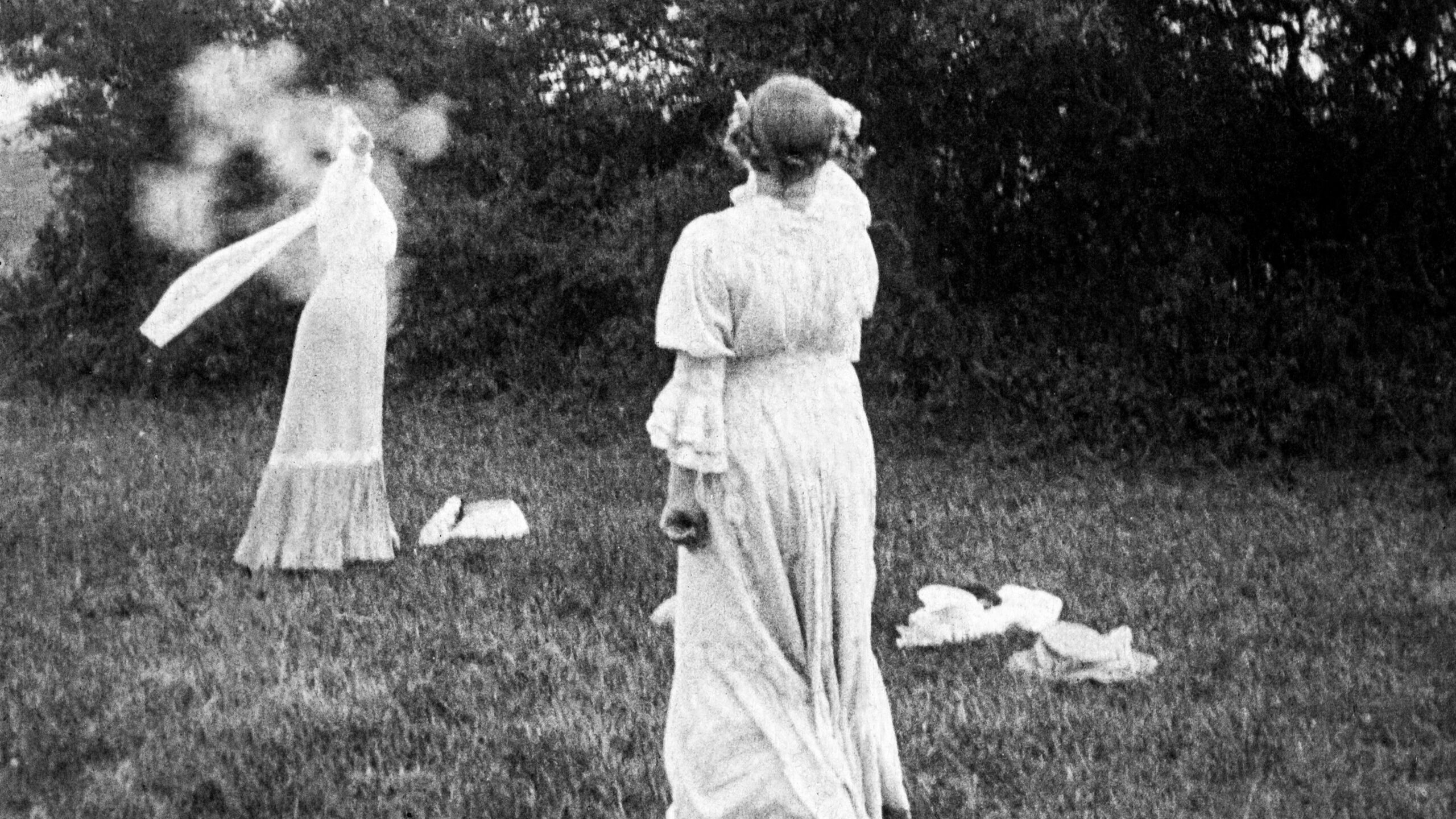
“Tramps attack a woman on a bicycle without knowing that she is a professional boxer.” – “A child writes a letter to his dead father and is run over and killed while on the way to post it”: the film plots of 1906 bear a striking resemblance to the famous news-in-brief items published that same year by Félix Fénéon. New highlights in this year’s programme include dramas of unprecedented refinement by Albert Capellani and the very first productions of the Danish company Nordisk. The section explores cinema’s experimental vocation, the growing emotional involvement of spectators, and the ability of films to reflect social realities such as racism and the ambivalent representation of women, poised between misogyny and emancipation. Documentary footage of the San Francisco earthquake and the mining disaster at Courrières, France, brings terrible events of the past vividly into the present. Many fascinating aspects of early cinema await discovery in the more than sixty titles in the programme, almost all of them screened in 35mm prints.
Curated by Mariann Lewinsky and Karl Wratschko.
Photo: La Peine du talon (Manifesto di Louis Charbonnel) © Fondation Jérôme Seydoux-Pathé (Fonds Morieux – Van de Voorde)
Edition History
Curated by Mariann Lewinsky and Karl Wratschko
Welcome to Bologna, to the annual fair of moving images, and welcome to the 1904 section, the newest among all the attractions you will find here! Only nine years ago, travelling showmen were presenting at fairs the first spectacles of animated photographs. Who would want to watch old feature films when you have at your disposal the “unlimited amusement” (Franz Kafka) of young cinema, with its short films so full of invention, momentum, and beauty?
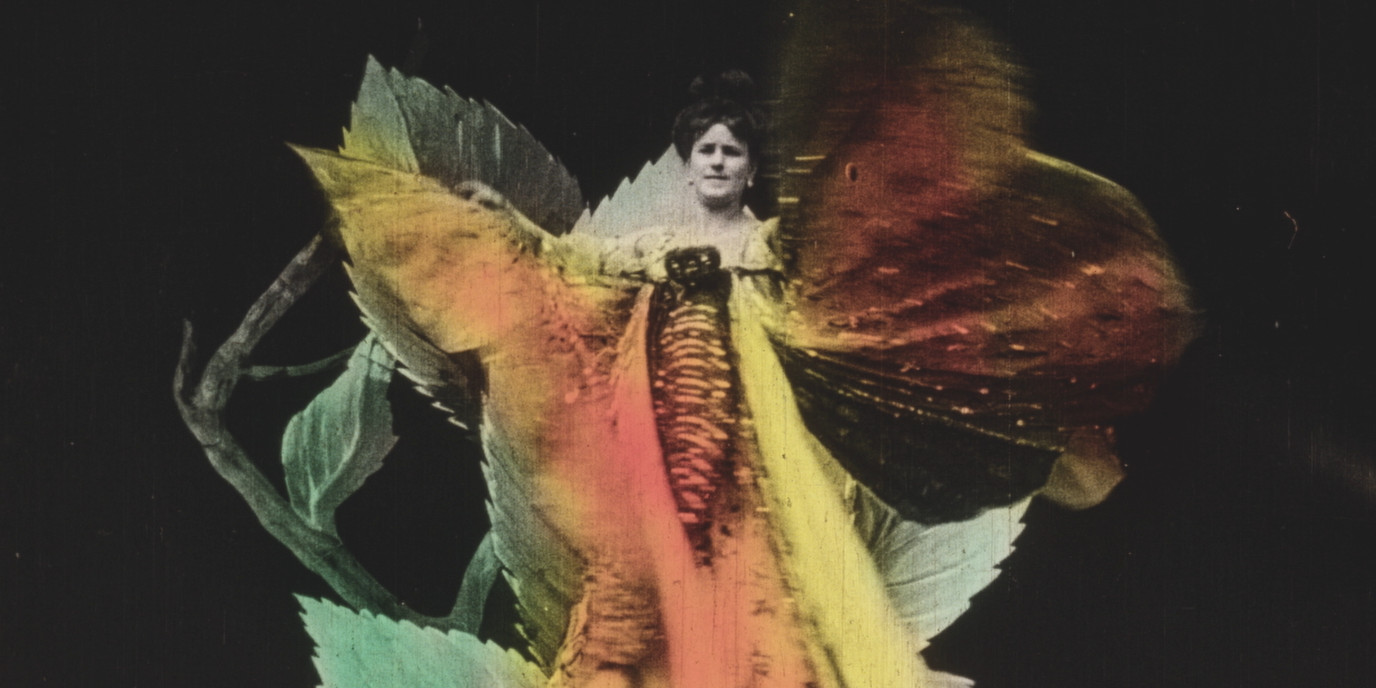
We have selected more than fifty films and arranged them into five programmes, each highlighting different aspects. The two programmes A Magnificent Year and Latest News! are approximate reconstructions of a film show of the time. Their titles—drawn from entertainment magazines—and their structure, embracing a wide variety of genres, remind us of the closeness between cinema and the music hall. Filmmakers such as Gaston Velle and Lewin Fitzhamon had themselves been music-hall performers; successful variety turns (Cambrioleurs modernes, Danse apache, Métamorphose du papillon) found their way onto the screen, and the only actors whose names we know today are stage stars (Dranem, Louise Willy, and Henry Bender).
Because of their extraordinary quality, a great deal of space is devoted to documentary films. Industrial films show, in spectacular images, the Westinghouse Company in Pittsburgh, in the United States, and the coal mines of Shirebrook, in England. In 1904 this genre displays a marked aesthetic shift. The contrast between the harsh working conditions in industry and mining and the deceptive splendour of the images produces a disturbing effect.
Some of the documentaries are already quite long—two Urban productions from 1904 run to more than forty minutes—and are edited in elaborate ways; others retain the brevity of a Lumière view. In 1904, moreover, the Lumière company ceased film production, while that same year Pathé Frères, now on the threshold of industrialization, produced a Sortie des employés de l’usine Pathé. France, Great Britain, and the United States were the principal producing countries—elsewhere, cinema was still largely the affair of amateurs and cinema exhibitors. In his filmography of Italian cinema, Aldo Bernardini lists for 1904 around twenty local actualités produced by Filoteo Alberini (Cinematografo Moderno, Rome) and Rodolfo Remondini (Sala Edison, Florence).
Wherever possible, we have naturally chosen to show 35mm prints, in order to come closer to the original viewing conditions and to allow the projection speed to be adjusted in real time.
Our thanks go to all the institutions and individuals who helped us in this complicated undertaking. Special mention must go to Hervé Pichard of the Cinémathèque française, who struck a new 35mm print of Bulles de savon. The programme may be subject to occasional changes.
Curated by Mariann Lewinsky and Karl Wratschko
The One Hundred Years Ago series began twenty years ago, in 2003, when Tom Gunning presented fifty-five films from 1903 in a section entitled The First Great Year of Cinema. Our current title, The Century of Cinema: 1903, is not much more original. Amaze Me! or The Great Experiment might perhaps have been more appropriate; the assertive The Best Years in the History of Cinema, at the very least, would have been accurate.
And so here we are again, back at 1903, but, to quote Heraclitus, one cannot step into the same viewing twice. Of the sixty-four titles in our six programmes, only twelve were shown in 2003, and it is likely that roughly the same percentage of spectators who were present then (or might have been) will be sitting in the audience in 2023. Moreover, what has not changed in the broader picture is that early twentieth-century films remain one of the most undervalued and least known chapters in film history, which is why Il Cinema Ritrovato continues to offer the opportunity to discover them.
Films? Or should we rather call them views or tableaux, the words used in 1903 to designate the individual brief elements of a composite programme, thus highlighting their fundamental difference from the cinema that was to come?
Our intention is to free both the films of 1903 and the audience of 2023 from any didactic obligation, and what we recommend to spectators is a voluntary suspension of the habits of classical film viewing. Let us try to appreciate these films in their radical difference, enjoy this respite from narrative and psychological coherence, and allow ourselves to be joyfully astonished. In doing so, we anticipate years that are now close at hand, when, around 1907, cinema would achieve its own marvellous aesthetic identity—only in turn to lose it again.
As a tribute to the first curator of this section, we conclude with an excerpt from a recent interview with Tom Gunning: “I think the merit of the 1978 Brighton conference was that it placed early cinema before all our eyes, and corrected the idea that before Griffith there had been nothing of any importance and that early films were, so to speak, a bore. Instead, we discovered there that those films were extraordinarily interesting. They had a non-narrative style, which […] implied a new reflection on the relationship with the spectator, a new reflection on space; a whole series of things that were radically different and […] an alternative approach, not focused on narrative. Christian Metz claims that cinema is by its very nature a narrative art. For Metz, this is not even a theoretical point of view. It is an incontestable fact. And it was precisely this incontestability that was challenged then—a challenge to which film history itself gave us the authority.”
Curated by Mariann Lewinsky and Karl Wratschko
In 1902, filmmakers’ enthusiasm for the new medium was immense: they invented and experimented with new techniques such as miniaturization (Le Voyage de Gulliver à Lilliput et chez les géants), adopted overhead camera angles (La Soubrette ingénieuse), and worked with the very first close-ups (Rires et pleurs). They were clearly delighted to present ever longer fairy-tale productions and biblical stories composed of multiple tableaux. In 1902 Georges Méliès, at the height of his career, made Les Aventures de Robinson Crusoé, Le Voyage dans la Lune—a film destined to travel very far—brilliant trick films, and much more. His sumptuous féeries were a worldwide success, but they were illegally copied by Edison in the United States and imitated by Zecca for Pathé in France; even the Lumière brothers, in order to include a few respectable scènes à truc and à transformations in their catalogues, hired Gaston Velle, a professional magician.
A significant feature of that year was the “reconstructed actualities,” a Méliès specialty ever since the extraordinary L’Affaire Dreyfus of 1899. Rather than showing The Coronation of Edward VII, we preferred the action-packed scenes of Éruption volcanique à la Martinique from May 1902, a Méliès work long considered lost, of which the Filmoteca de Catalunya has rediscovered a hand-coloured print. It will be interesting to compare it with Zecca’s reconstruction of the same event. British films of 1902 such as Reservist Before and After the War and His Only Pair are marked by a certain social-critical impulse, while others such as How to Stop a Motor Car seek to push the tricks of early cinema to their limits.
The earliest magic of moving photography continues to cast its powerful spell in the vedute dal vero of A. Lumière et ses fils, Mitchell & Kenyon, and Mutoscope & Biograph, but change is in the air. Driving it forward is the French company Pathé Frères, which introduced a new level of professionalization in every sector of production and distribution. In 1902 Charles Pathé founded the company’s first agencies in London and Berlin, and the growing variety offered by the Pathé catalogues attracted buyers. The labels of the séries de production (what today we would call genres)—Scène comique, Scène d’acrobaties, Scène historique, Scène d’actualité, Scène biblique, Scène de danse, Scène de plein air, Scène grivoise—stimulate the imagination and allow us to read the Pathé catalogue like a book illustrated with moving images (and in fact the catalogues were used in exactly this way by travelling exhibitors when ordering films). A programme dedicated to Pathé Frères and its séries will offer an overview. In 1902 films were not only produced, sold, and watched, but also collected, and it will be fascinating to discover which films from 1902 the Spaniard Antonino Sagarmínaga acquired for the great collection he assembled between 1897 and 1906, the finest years in the history of cinema.
Curated by Karl Wratschko and Mariann Lewinsky
The miracle of cinema repeats itself. We climb aboard, luggage in hand, the time machine to admire what Bologna audiences of one hundred and twenty years ago saw at the Reale Cinematografo Lumière at 13 Via Rizzoli. Many other surprises await us in the cinema of 1901. There is the inexhaustible fascination of reality captured on film in the views of the Lumière brothers or of Mutoscope & Biograph, which at the time travelled the world, or in the films of Mitchell & Kenyon, rooted in the more circumscribed English context. There is the explosive unreality of astonishing trick effects that opened up new horizons for the art of magic.
The pleasure principle takes shape as a scientific intuition in comic sketches about “what is in a man’s mind,” at roughly the same moment when Freud in Vienna was publishing his theories of the unconscious revealed through dreams, slips of the tongue, and jokes. Some British pioneers, such as R.W. Paul and James Williamson, took the first steps toward more sophisticated films, while the French filmmaker Ferdinand Zecca, newly arrived at Pathé, inaugurated a new genre destined to sweep away the cinema made up to that point: drama. In 1901 cinema showed a powerful drive to move beyond mere entertainment, as demonstrated by the singular documentaries on life in southern China made by the French diplomat Auguste François, using a camera supplied to him by Léon Gaumont.
Programme curated by Mariann Lewinsky
Perfect timing. Cinema entered the world in 1895, and thus had just enough years of trial and refinement ahead of it to reach the finish line of the twentieth century in top form. Yet the rush toward modernity ushered in by the new century would prove deeply ambiguous. To be sure, in 1890 Albert Robida had foretold video concerts via téléphonoscope for the year 1955 (in his фантаstic novel The Twentieth Century: The Electric Life), and in 1900 the Paris Exposition Universelle celebrated “the young and radiant Fairy Electricity, who brings as gifts to contemporary industry two crucial elements: movement and light,” as a certain J. Trousset wrote enthusiastically in 1899. But Robida himself also designed for the Exposition a medieval Vieux Paris, which was received with warmer enthusiasm than the many screens, small and large, showing moving images…
With its twelve stands devoted to cinematic equipment and seventeen projection spaces, the Paris Exposition nonetheless marked a prestigious milestone for cinema (to paraphrase the research published in 1986 by Emmanuelle Toulet). It was also a gathering point for operators from all over the world: anyone who owned a camera went there and filmed. Our 1900 section has therefore taken shape not as an overview, but as a centrifugal dissemination outward from a central point. The young Giancarlo Stucky bought a 15mm Gaumont amateur camera in Paris, and once back in Venice recorded images that once again make our eyes shine—worn out by too many screenings—with their moving vitality and their breathtaking sense of the here and now. Engineer Sieurin of Höganäs likewise purchased a camera (a standard 35mm model), along with a quantity of Gaumont films, and became a pioneer of Swedish cinema. Londoner Joe Rosenthal went to South Africa and China to cover the Boer War and the Boxer Rebellion.
The point of radiance consists of some of the cinematic attractions presented at the Paris Exposition—the Lumière views projected at the Cambodian Pavilion and at the Galerie des Machines (larger than Bologna’s Piazza Maggiore!) and the filmed theatrical scenes accompanied by the phonograph cylinders of the Phono-Cinéma-Théâtre. Or perhaps the epicentre was elsewhere, and was a star rather than a point? In 1900 Georges Méliès, far removed from the Exposition and from the non-fiction films intended to promote nations and consumer goods, was taking care of his audiences in music halls, travelling shows, and at the Théâtre Robert-Houdin, delighting them with marvellous trick films, a Jeanne d’Arc of monumental length (250 metres), and an enchanting Rêve de Noël, which he had made with the ambition “to create a work as artistic as possible, but also entertaining and interesting.” Objective achieved.