The Cinephiles’ Heaven
[2026]
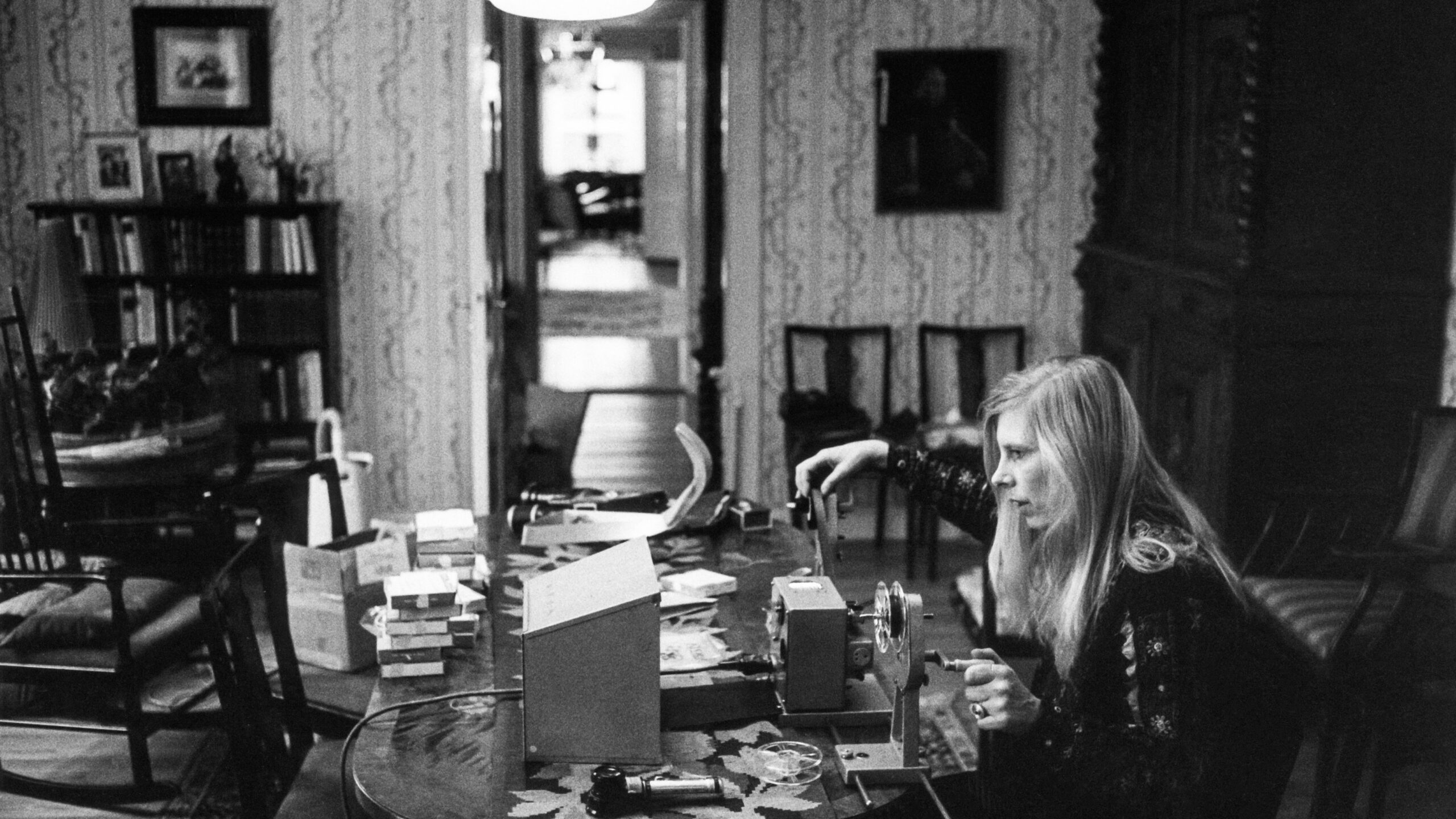
This year, we are excited to showcase the work of two exceptional filmmakers. The Swedish filmmaker Gunvor Nelson (1931–2025) emerged from the vibrant experimental film scene on the US West Coast in the second half of the 1960s, before continuing her creative journey later in life in her native Sweden. Twelve films spanning the 1960s to the 1990s explore distinct phases of her work, including rhythmically structured films, personal films, her only narrative experimental feature, collage films, and, last but not least, two previously unreleased works. Historically, 16mm film was the predominant medium for scientific filmmaking, accounting for a significant portion of film archives, yet it is rarely seen on the big screen today. To address this, we will present six films from the 1960s and 1970s by the French filmmaker Éric Duvivier (1928–2018). Created outside the conventions of traditional art cinema, his works demonstrate how cinematic expression can flourish even within more rigid genres such as scientific film. His imagery also reveals an often overlooked chapter in the history of surrealist cinema, offering audiences a captivating glimpse into a singular artistic vision.
Curated by Karl Wratschko, with Julia Mettenleiter (Svenska Filminstitutet), John Sundholm (Stockholms universitet), and André Habib (Université de Montréal).
GUNVOR NELSON: Schmeerguntz (1966) • Muir Beach (1969) • Kirsa Nicholina (1969) • My Name is Oona (1969) • Take Off (1972) • Moons Pool (1973) • Frame Line (1983) • Red Shift (1984) • Light Years (1987) • Field Study #2 (1988) • Time Being (1991) • Oona is my Daughter’s Name d. J.T. Vale (1974)
ÉRIC DUVIVIER: Concerto mécanique pour la folie (1963) • Ballet sur un thème paraphrénique (1963) • Le Monde du nouveau né (1964) • Auto-stop – Les cinq grandes constitutions psychopathiques (1964) • Phobie d’impulsion (1967) • Autoportrait d’un schizophrène (1978)
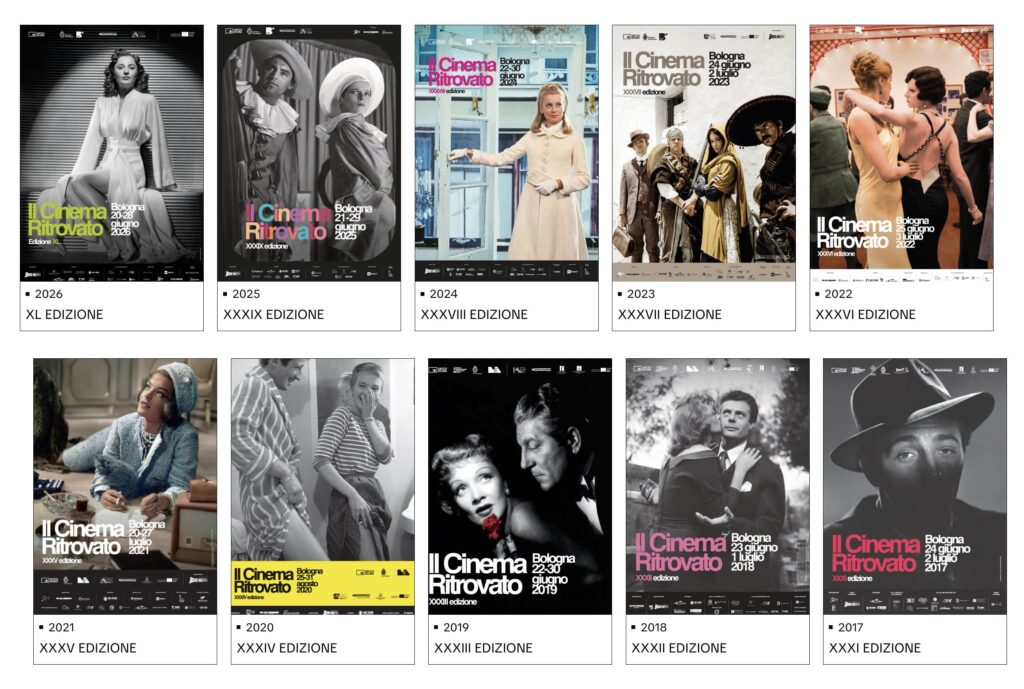
Edition History
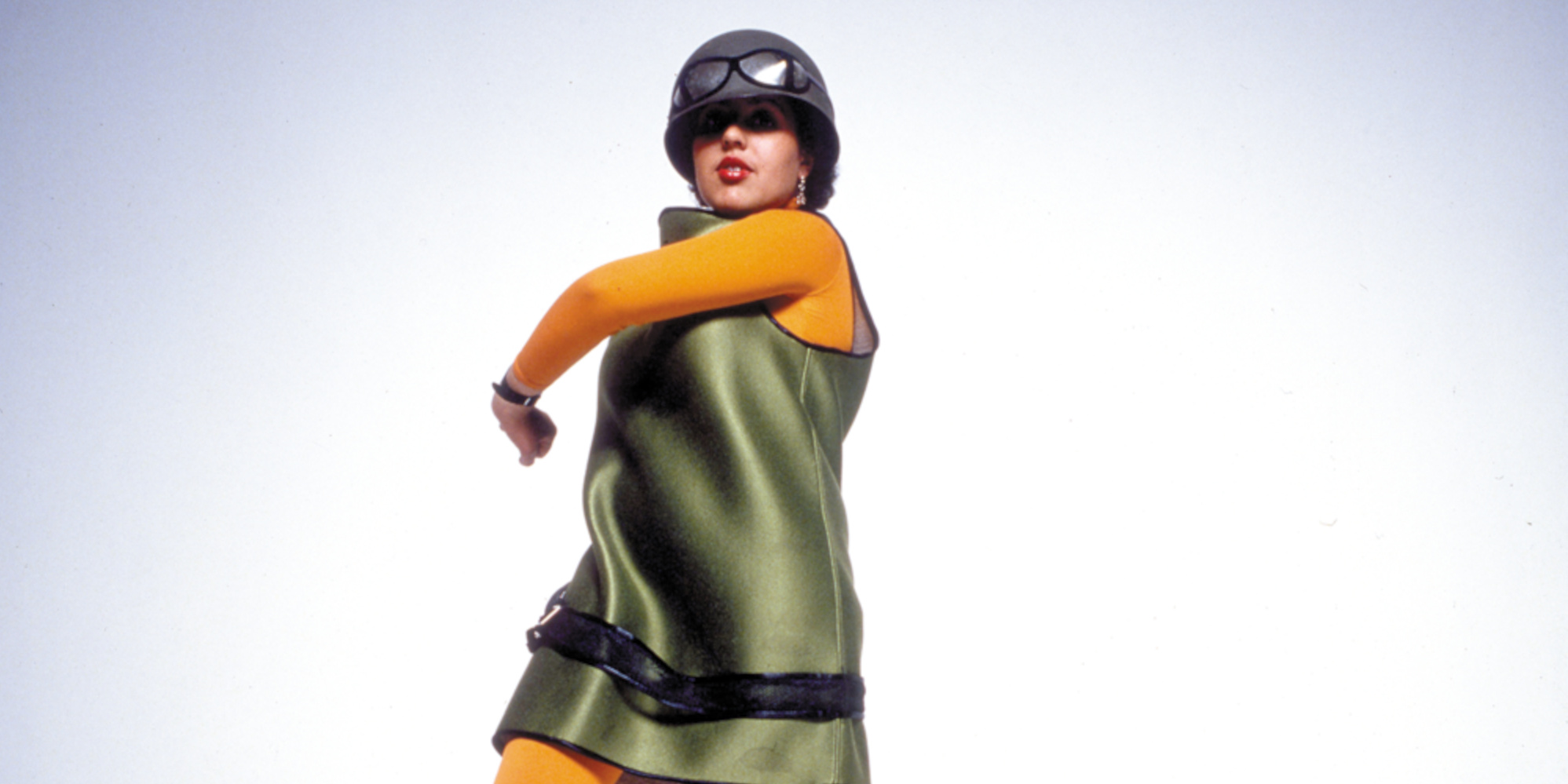
This year’s edition focuses on a genre closely associated with the 16mm format: music documentaries, including the popular subgenre of rockumentary. The breakthrough of Direct Cinema techniques and the heyday of music culture in the 1960s led to the production of films documenting musical performances and the fast-paced, hedonistic lifestyles of music stars and their entourages. As this was a time of cultural change, the majority of music documentaries about musicians, concerts, and festivals soon moved beyond music — politics and social commentary became integral elements of the genre. This selection reflects a desire to include a variety of musical genres, emphasizing their geographical, cultural, and aesthetic diversity to explore the social changes and struggles of the 1960s to the 1980s. The programme will include titles such as Festival (Murray Lerner, about the Newport Folk Festivals), Right On! (Herbert Danska, with The Last Poets), Wattstax (Mel Stuart, with Isaac Hayes, Albert King, Carla and Rufus Thomas), and The Decline of Western Civilization (Penelope Spheeris, with Black Flag, Circle Jerks, Germs and X).
Curated by Karl Wratschko
Curated by Karl Wratschko in collaboration with Cinémathèque16 and André Habib
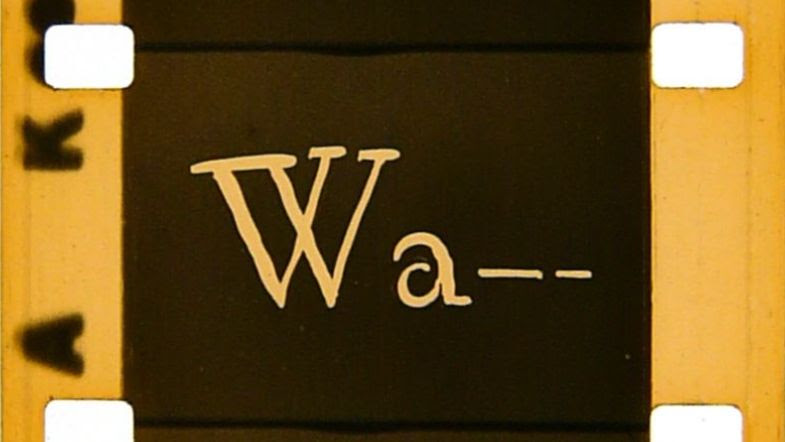
After celebrating 100 years of the 9.5mm format in last year’s programme, we continue this year with another anniversary. Exactly 100 years ago, Eastman Kodak introduced the 16mm format as a less expensive alternative to 35mm film. Initially developed for the amateur sector, this invention became the most successful and widespread small-gauge film format for professional film production. The areas in which the 16mm format was and is used are very diverse. For this reason, we decided to join forces with the independent film institution Cinémathèque16 from Paris and present a selection from its eclectic collection, which covers many aspects of this format. The selection of films consists of vintage prints from the 1920s to the 1970s including a tinted silent film (Lucretia Lombard, only available on 16mm), early advertisments, scopitones (a forerunner of the music video), home-movie versions of famous horror features, trailers of lost silent films and artistic gems in fiction and nonfiction filmmaking by Éric Rohmer and William Klein. Each of the films presented in this chapter is interesting from a content and material point of view. The medium is the message and the message is the medium.
The second chapter of this programme is dedicated to experimental filmmaking from Québec and Canada. Here we dedicate ourselves to an area with very diverse cinematic activities, which has had little presence at our festival so far. The selection offers the opportunity to discover the experimental works of filmmakers such as Joyce Wieland and Etienne O’Leary, who are each represented with an individual programme. Wieland’s films offer the opportunity to lose oneself in the pleasures of everyday life, follow her in her reflections on the violence inherent in camerawork and understand that political analysis and experimental filmmaking are not mutually exclusive. The rarely shown oeuvre of filmmaker O’Leary (he was only able to complete three films in his lifetime) can easily be described as an invitation to take a trip. The three psychedelic films he made in Paris enable us to (re)encounter the intense, poetic and shortlived bohemian lifestyle of the late 1960s. There is a definitely reason why O’Leary was called “Le Rimbaud du cinéma” by some of his devotees. The opening programme of this chapter unites a variety of experimental gems including amateur films, colour tests, queer cinema, a surrealist underground science-fiction film… Encounter different cinematic approaches from filmmakers such as Louise Bourque, Michel DeGagné, Robert Desrosiers, Michel Gélinas, Jean Lafleur, Yves Lafontaine and Omer Parent in works made between the 1940s and the 1990s.
Karl Wratschko
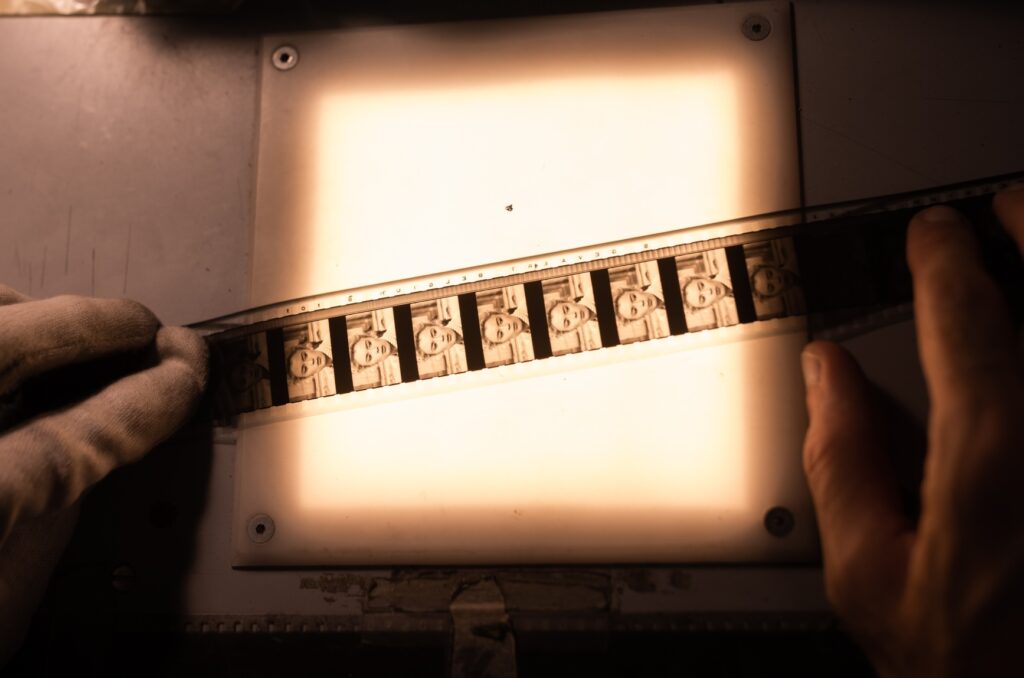
In 1923, long before becoming a progressively universal format of multiple developments, 16mm sought to bring treasured moments back to life in the home environment, in line with its slogan, “It happens again on the screen.” The first catalogue included a complete range of equipment, from the Ciné-Kodak camera to the Kodascope projector, with all the necessary accessories for filming and watching home movies. From the outset, 16mm heralded a safe, non-flammable film, which was simple to use for the amateur. In 1925, it was only natural to launch the Kodascope Library, an extensive collection of films available for rental to the public. This is how the cinema became part of the family home.
After a few years, 16mm would conquer the world and the films would no longer be restricted to home use. Indeed, the lightweight format and projection equipment made it possible to operate 16mm in non-commercial settings such as schools and churches, especially in rural areas, far from the big-city picture palaces. The postwar years proved revolutionary for the format: adopting the technical sophistication of 35mm, it won over theatres and became the preferred tool for secular education through film-club networks. At the same time, artists appropriated 16mm as a creative tool, for which it is still admired today, notably due to the impetus of the New Wave and experimental cinema.
Since 2017, Cinémathèque16 has endeavoured to rehabilitate the format in all its richness and historicity. The dive sity and singularity of its uses should not be overshadowed by the many damaged eighth-generation prints of short comedies. This programme attempts to draw a multifaceted portrait of 16mm, an ultimately little-known format. Nearly all the prints of the Cinémathèque16 collection have been meticulously prepared for screening on the appropriate equipment. Thus, 100 years later, the oldest original prints, some of them tinted, can once again be seen by an audience. An emphasis will also be placed on the collectors, the temporary guardians of this heritage, and their amateur practices.
The prints presented in the programme have been selected for their authenticity, their rare qualities and at times for their specific purposes, which will require a thorough contextualisation.
Benoît Carpentier and Naeje Soquer
Curated by Mariann Lewinsky and Karl Wratschko
This year we have divided this strand into two parts. In the first we head to Germany to present a very unusual film archive located in the University of Paderborn. It was established by Annette Brauerhoch in the early 2000s and devotes itself exclusively to the work of female experimental filmmakers from German-speaking countries. We are presenting a selection of 16mm prints dating from the 1960s until the 2000s. The three programmes will afford the opportunity to discover German underground and experimental films that in some cases sailed under the radar outside their country of production. Filmmakers such as Ute Aurand, Christine Noll Brinckmann, Elfi Mikesch, Pola Reuth and many others fought against the conservative and reactionary imagery in conventional film production. Their mission was to attack the stereotypical presentation of gender roles in mainstream cinema and to broaden the established view of female sexuality and aesthetics. Another offering this year is directly connected to these developments. It is the presentation of a restoration project carried out by the Kinothek Asta Nielsen in Frankfurt am Main and lead by its former managing director Karola Gramann. The queer punk Austrian underground feature Rote Ohren fetzen durch Asche (Flaming Ears), was directed by Ursula Pürrer, Dietmar Schipek and Ashley Hans Scheirl (she/he will represent Austria together with Jakob Lena Knebl at the Venice Biennale this year) on Super8 back in 1991. Thanks to the Kinothek Asta Nielsen it is now ready for the big screen again after a long and elaborate digital restoration work.
In the second part we celebrate the 100-year anniversary of the 9.5mm format. In 1922 Charles Pathé presented the iconic home movie system Pathé-Baby. The 9.5mm film was the most compact film format at that time and was used to distribute commercially made films. Later a camera was also introduced. At the festival we will present four sessions with home versions of significant films distributed on 9.5mm via the Pathéscope film catalogue. Lichtspiel / Kinemathek Bern will present two programmes compiled of vintage prints projected with a special 9.5mm projector. Two other programmes will be presented digitally by the Fondation Jérôme Seydoux-Pathé and INEDITS, who will also curate three short compilations of 9.5mm amateur films, which will allow us to travel through Italy and visit the Bologna of the past. Thus, we can all enjoy some of the highlights of the 9.5mm collections from European film archives.
Our knowledge of 9.5mm has been dramatically improved by The 9.5mm Vintage Film Encyclopaedia (2020), comprising 12,460 titles. If we were able to indicate the date of release on 9.5mm of the films in this catalogue, it is thanks to Patrick Moules’ research of many decades.
Karl Wratschko and Mariann Lewinsky
Curated by Karl Wratschko and Mariann Lewinsky
In the third instalment of this section we expand our view of small-gauge filmmaking. In the last two years we have solely presented short films, but small-gauge film material was also used for the production of feature-length films, which are going to be a fundamental part of this year’s programme. And we will also project for the first time in Super8mm, a format that rarely finds its way into a cinema.
The three small-gauge filmmakers of this year, Helga Fanderl, Annik Leroy and Trinh T. Minh-ha, all come from the same generation (born between 1947 and 1952). Nevertheless, their respective bodies of work are each characterised by a very strong individual signature. This year’s focus is on plurality: it shows us the versatility in which cinematic expression can manifest itself. What unites the three film artists is not a common cinematic approach or language, but their unconditional will to produce a stand-alone, very personal work. So this selection is a celebration of singularity and a reminder that autonomy is still possible in our world full of widely standardised film production.
The Super8-artist Helga Fanderl curated a programme of her own cinematic miniatures. Fanderl uses a shoot-and-cut technique in which the act of perceiving and filming is one and the same. Her camera eye captures often overlooked elements of our surrounding world in a phenomenologist, pure and genuine way. Vers la mer and In der Dämmerstunde
– Berlin are two feature-length films by Annik Leroy. Her meditative black-and-white films are shot in the mode of the flâneur and are driven by a critical approach to European history. Reassemblage is the first film by filmmaker and theorist Trinh T. Minh-ha. Her essayistic film questions the conventions of documentary filmmaking and the power of such films to manipulate the audience’s perspective. By doing so, this complex visual study of the life of women in rural Senegal pushes our expectations to the limit.
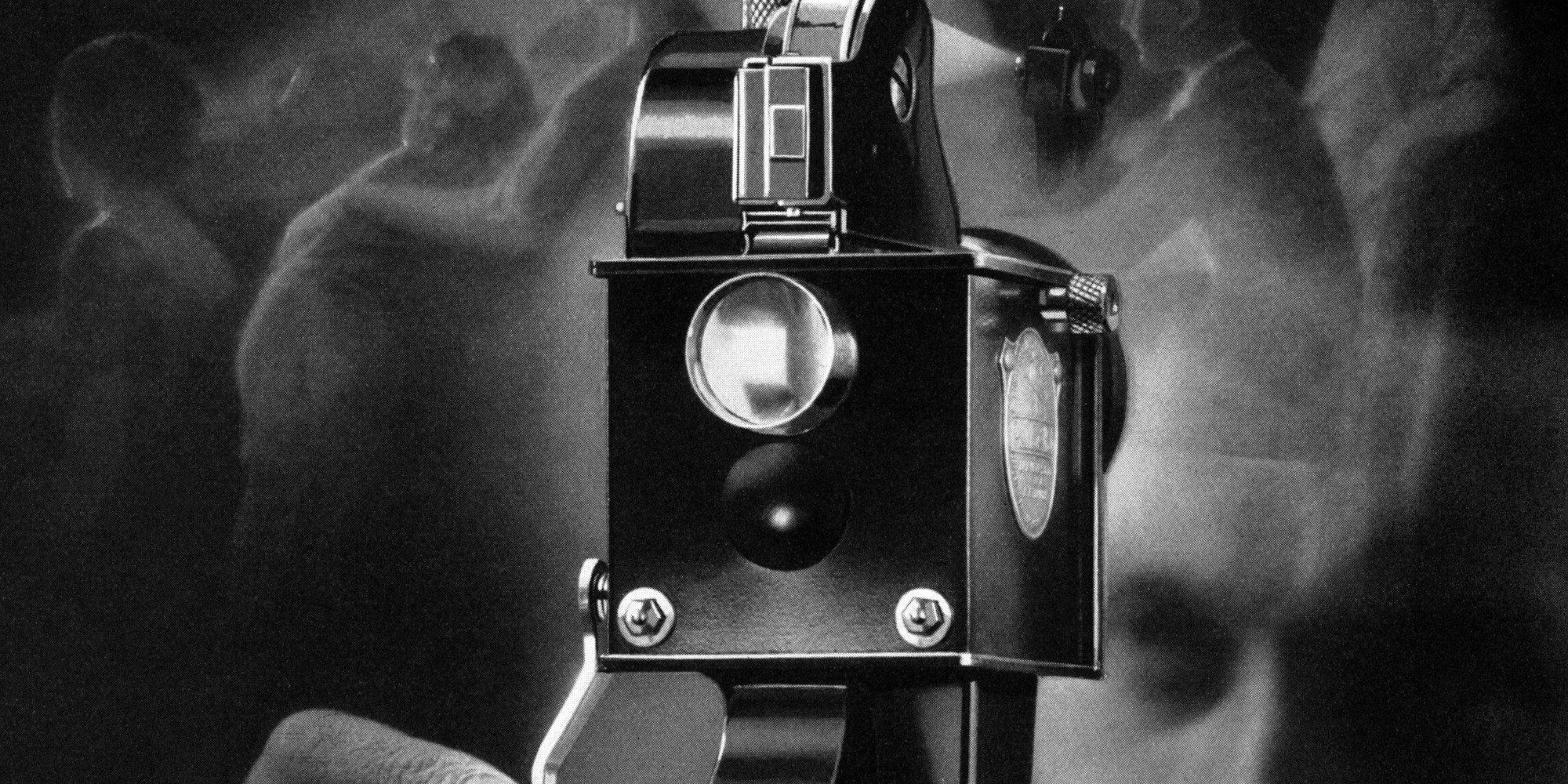
Last but not least: all gauges. In the years of early cinema, filmmakers often invented and built their own cameras and projection machines. This has never stopped. Every so often, a filmmaker, unsatisfied with the state of the art of cinema, will become an inventor. It happened not so long ago in Prague, where Czech filmmaker Jan Kulka constructed a wondrous projector, the Archeoscope. Unlike ordinary cinema, here the filmmaker is a part of the performance. Kulka will install his Archeoscope in the centre of a cinema of our festival and will project two programmes full of wonders – including the projection of lace, salt and bubble wrap.
Karl Wratschko and Mariann Lewinsky
Programme curated by Karl Wratschko and Mariann Lewinsky
Only the second year, and already the title of the section does not fit any more… Screenings were planned in Super8mm, 16mm, a 16mm blow-ups from Super8, a 35mm blow-up from Super8mm and even projections ‘without gauge’, which means with all possible gauges – up to about 80mm. Some of these events were eventually postponed to next year’s edition, but what remains is still an eclectic offering. The works of the three major visual artists we present are often described as experimental. A tricky classification. What is an experiment? Everything that does not comply to the rules of commercial cinema? These works are, simply and strictly, films. That is especially true for Peter Hutton, who consistently practised a form of essential cinema: capturing the world via the cinematic eye and offering the world images of an incredible clearness and purity. The Super8mm format was far more than a popular amateur format. It allowed filmmakers to work outside the heavy structures of commercial fi lm production (features such as Io sono un autarchico by Nanni Moretti were shot on this format). The films by Barbara Meter, all shot on Super8mm, flaunt wonderful colours and great beauty both in their original format and transfigured, in the blow-up. The works of this artist are characterised by her gaze on the elementary things of the world around us, easily overlooked in our daily life. A different case is Henri Plaat, who like Meter is from Holland and is much better known as a painter than a filmmaker. Plaat used two opposing modes of cinematography, on one hand shooting long travelogues in distant places, on the other creating collage-films at home in his workshop. We have focused on his short, unassuming, masterful and often hilarious collages. The screening of Images of Asian Music by Hutton last year at the festival left us with just one wish: to see the film again and to learn more about the director. So three more films from Hutton’s oeuvre are scheduled this year. In interviews, Hutton often mentioned the deep influence of early cinema on his filmmaking. When screening his work after a programme of Lumière views from 1899 the two film worlds connected magically and imparted a simple lesson: it is all about the art of seeing!
Karl Wratschko and Mariann Lewinsky
Programma curated by Mariann Lewinsky, Sarah Neely and Karl Wratschko
Film history would look completely different without small-gauge films. Much of independent filmmaking, amateur and experimental cinema simply would not exist. Contemporary artists still work with the unique potential of 8mm, Super8mm, 16mm and Super16mm, and the magical impact of Bella e perduta (Lost and Beautiful, 2015) by Pietro Marcello or Lazzaro felice (Happy as Lazzaro, 2018) by Alice Rohrwacher is partly due to the fact that they were shot on Super16mm. However nowadays, analogue small-gauge formats are often used just to record images before digitising them for editing and distribution. Even in the archival world small-gauge films are routinely digitised and shown digitally – see the (excellent) digital restoration of Echte Clichés by Eric de Kuyper in the Recovered and Restored section. To see 16mm film in a 16mm projection has become a rare experience, to put it mildly. We want to make that experience available to an audience not only interested in the content of a film but also having a notion of cinema as a visual art bound to its material and its form of presentation.
The films we present were made between the 1930s and the 2000s, and the larger part of them are by female filmmakers, who it seems had to work with the cheaper small-gauge film formats more often than their male colleagues. Three of the artists have strong connections to other art forms: Margaret Tait to poetry, Maria Lassnig to painting and Martha Colburn to music. Maria Lassnig and Martha Colburn come from different generations and have developed highly individual styles in animation film, but there are deep ties between their works through their shared involvement with feminism, sexuality and pop culture. Margaret Tait focused mainly on the people and places she was familiar with and her ‘film poems’ are characterised by breathtaking moments of intimacy. Here the unique potential of filmmaking with small-gauge cameras becomes evident.
Berlin 1936 by Jean Vivié, Pierre Boyer, Farbtest. Die rote Fahne by Gerd Conradt and Images of Asian Music (A Diary from Life 1973-74) by Peter Hutton represent three typical genres of 16mm film production: amateur film, student filmmaking and experimental cinema. They deal openly or implicitly with the political/ideological forces that dominated the 20th century: imperialism, fascism and communism.
Reality interfered with our project. Some films were not available in 16mm prints and Calypso by Margaret Tait turned out to have been originally created not on 16mm but out of 35mm found footage. However, in the section dedicated to Georges Franju two films will be screened in 16mm, En passant par la Lorraine and Theatre national populaire.
Mariann Levinsky and Karl Wratschko