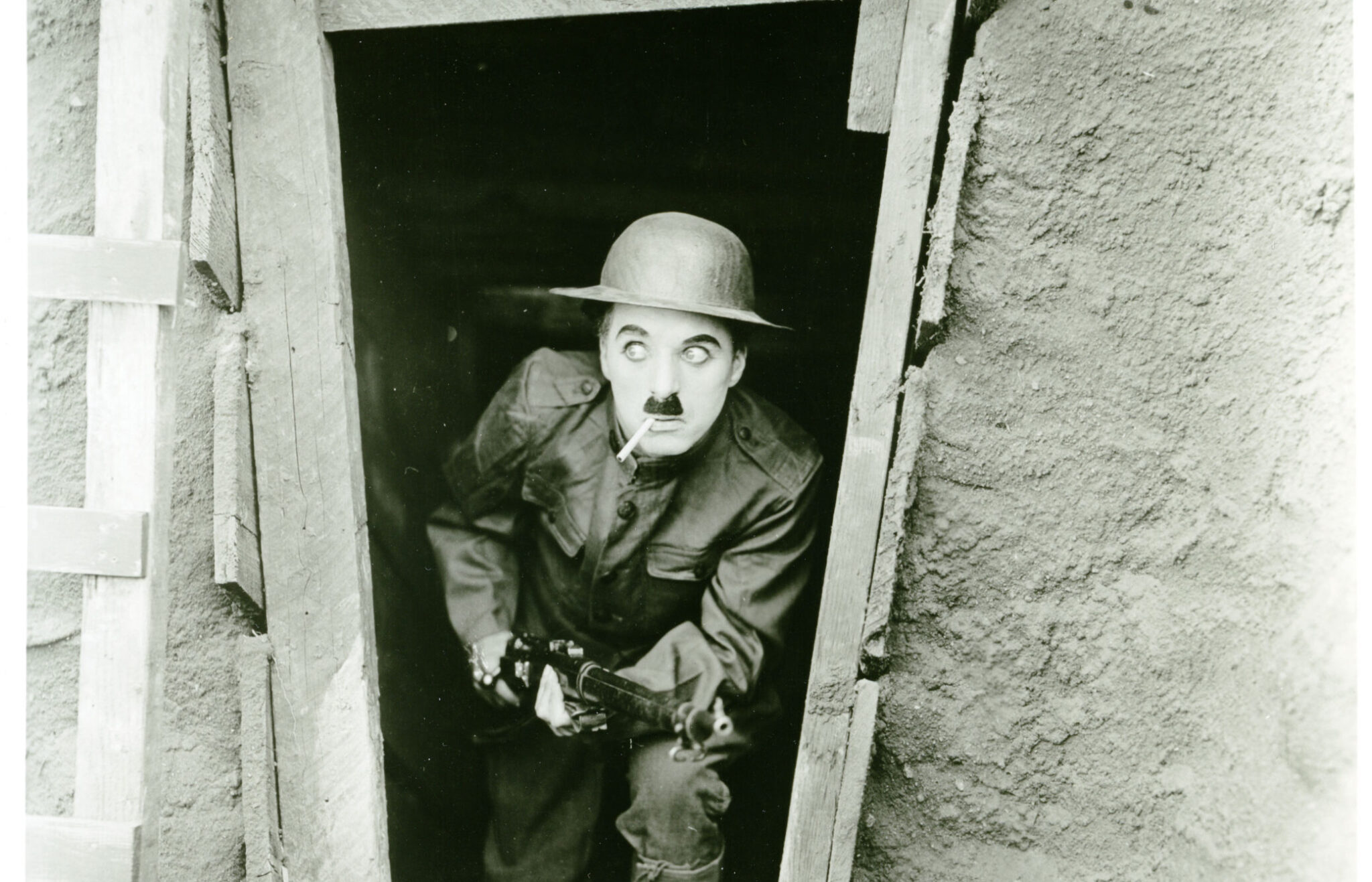
Saturday, 27 June: Shoulder Arms and A Dog’s Life
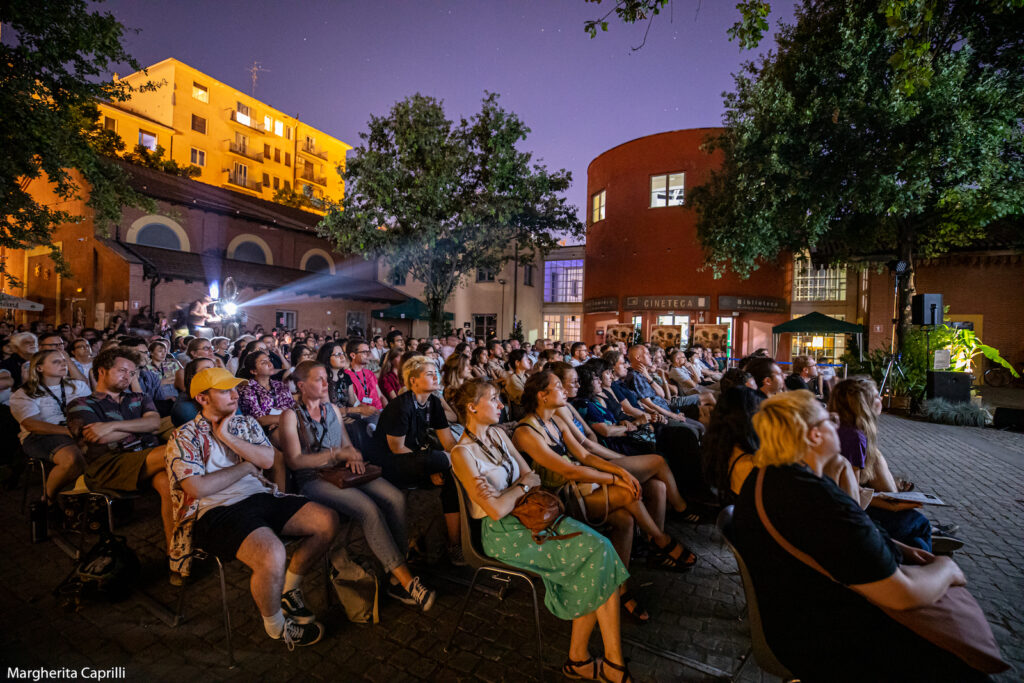
Two Chaplin classics in Piazza Maggiore with Orchestra Senzaspine: tomorrow, Saturday 27 June, at 9:45 pm, Timothy Brock – who painstakingly reconstructed Chaplin’s original scores – will conduct the orchestra for screenings of the 1918 classics A Dog’s Life and Shoulder Arms, restored by the Museum of Modern Art (MoMA) in collaboration with the Cineteca di Bologna, under the auspices of Association Chaplin and Roy Export S.A.S.
A Dog’s Life and Shoulder Arms occupy a special place in film history as the first works Chaplin made in his newly built Hollywood studios. For decades, audiences knew them primarily through The Chaplin Revue, the anthology assembled by Chaplin in 1959 (which also included The Pilgrim). At Il Cinema Ritrovato, they return in stunning restorations and in their original 1918 versions, before Chaplin re-edited them and added specially composed orchestral scores.
As MoMA curator Dave Kehr writes of A Dog’s Life: “The first film Chaplin made after signing his 1917 contract with First National—which crucially gave him ownership of his negatives—develops its three reels around a structural idea: the Tramp and a stray dog named Scraps occupy the same social position, both forced to survive on the margins of a city with no place for either of them. The comedy remains rooted in physical precision, but the film’s dynamics are organised around class conflict rather than anarchic chaos. Edna Purviance plays a cabaret singer whose own precarious existence deepens this parallel, and her scenes with Chaplin anticipate the emotional register he would later develop in The Kid. For decades, audiences knew the film mainly through the version reconstructed by Chaplin for The Chaplin Revue, assembled from discarded takes and alternate camera angles after the original negative had deteriorated. In that version, Chaplin altered the 1918 edit and added a newly composed orchestral score. MoMA’s reconstruction, based on surviving prints struck from the original negative, restores Chaplin’s preferred takes and the original intertitles, bringing the film as close as possible to what audiences saw in April 1918.”
Dave Kehr also writes about Shoulder Arms: “Released in October 1918, three weeks before the Armistice, Shoulder Arms was the first comedy to treat war as the subject of a feature-length burlesque. Chaplin’s colleagues warned him that such a choice would be suicidal at that particular moment—they were wrong. The film became his greatest commercial success to date and proved especially popular with soldiers returning from the front. Whereas wartime propaganda films demonised the enemy, Chaplin approached the conflict from the perspective of an ordinary soldier: an inexperienced American infantryman dealing with flooded bunks, mail call, and the grim tedium of trench life before disguising himself as a tree and somehow managing to capture the Kaiser. Sydney Chaplin appears in several roles, including a memorable performance as a German officer. For decades, the version seen by audiences had been reconstructed from alternate camera angles and second-choice takes assembled from deteriorated C and D negatives after the original A negative became unusable. MoMA’s restoration, based primarily on surviving prints struck from the original A negative, corrects the jerky motion caused by stretch printing for sound-era projection and restores the film to its original speed of 20 frames per second. The result reveals subtle but decisive differences: Chaplin’s performance acquires new emotional nuances, and the film’s rhythm finally reflects his original intentions rather than the compromises of an earlier reconstruction.”
Also on Saturday 27 June, Il Cinema Ritrovato welcomes Golden Lion-winning filmmaker Lav Diaz (in Bologna as a tutor for IFA – International Filmmaking Academy) for a public conversation at 5:45 pm at Cinema Modernissimo, followed at 7:00 pm by writer Francesco Piccolo, who will discuss Totò on the occasion of his new Einaudi book What Are the Clouds? Totò’s Final Years, inspired by Totò’s last collaboration with Pier Paolo Pasolini.
Image © Roy Export Company Ltd.