[MOVIE]
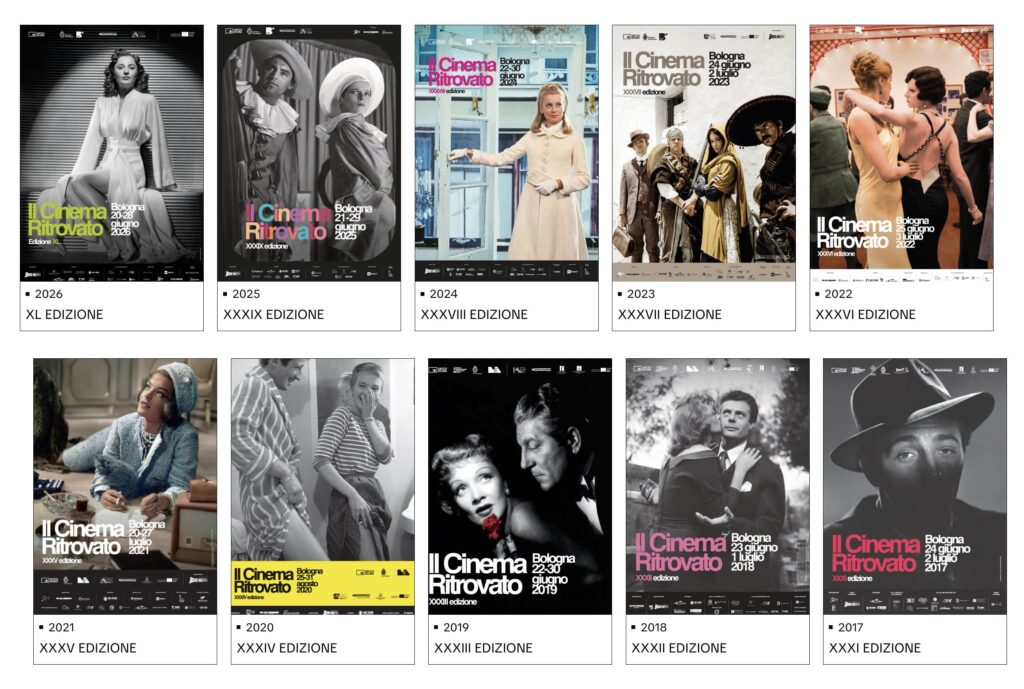
Edition History
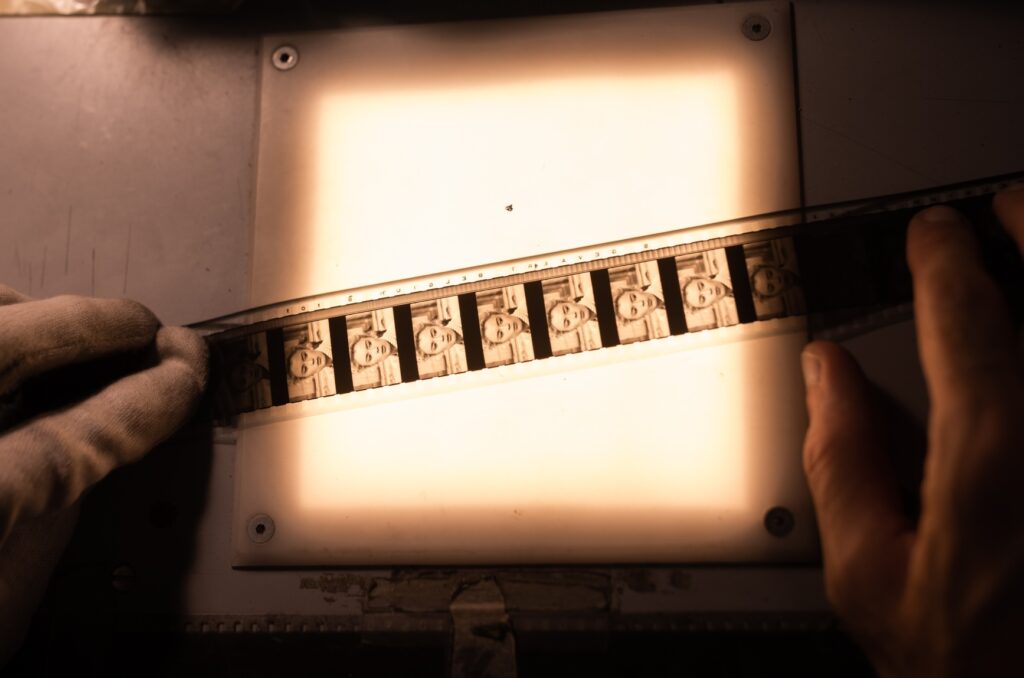
Following the invention of Kinemacolor in 1906, and before Kinemacolor was first shown publicly in May 1908 (though it only became known as Kinemacolor in February 1909), numerous test films were made by its inventor George Albert Smith. A small number of these survive, thanks to film collector Graham Head who was a near neighbour of the long-lived Smith in Hove, England. This example was designed to demonstrate the versatility of the system in capturing a range of colours, in this case different Scottish tartan cloths. The woman is believed to be Smith’s daughter Dorothy. The film was never issued commercially.
Luke McKernan

Let us imagine the film production of the years 1900-1910 as a sheet of paper, divided horizontally into about twelve irregular bands representing the different séries de production (nowadays we would call them genres). This would permit us to show graphically when the various production series began or ended, how they broadened or narrowed depending on their quantitative proportion of total production, when which of them was in a phase of dynamic change (red), continuing in cool consistency (blue) or in decline (pale blue). Up to and in 1908 the bands of the scènes à trucs et transformations would have glowed bright red, because this carnivalesque genre of visual surprise was continually exhausting its effects and under constant pressure to innovate. In 1908, object animations, cartoons and miraculously unharmed dismembered and reshaped bodies were all the rage. Inventions in animation were immediately applied to other genres; by 1908, the miniaturised figure photography so popular in 1907 in the scènes à trucs and féeries, was already serving (in dramatic and comic pictures) to convey the interior images of the mind, (Le Plus beau jour de la vie, Dans le sous-marin), thereby solving a genuine technical problem, for, as Théophile Pathé aptly noted, it is ‘impossible to film a dream – it is inaccessible to the human eye’.
In 1908, féeries were in the pale blue phase. To be sure, there were still some splendid numbers such as the Papillons japonais, mostly remakes. And what had worked well in the fairy-tale films (e.g., Barbe-bleue) in 1907, bringing the genre close to the successful historical costume drama, namely the switch from the studio stage to outdoor settings, led to diffuse incoherence in the féeries of 1908 (L’étang). Remakes such as (Excursion dans la lune) and (La rose et l’abeille) (not on the programme) seem weaker than the original versions, but they point the way to particularly successful films from earlier years. Rescued by Rover, the British international hit of 1905, was followed in 1908 by The Dog Outwits the Kidnappers, a humorous sequel featuring the same cast.
Mariann Lewinsky