[MOVIE]
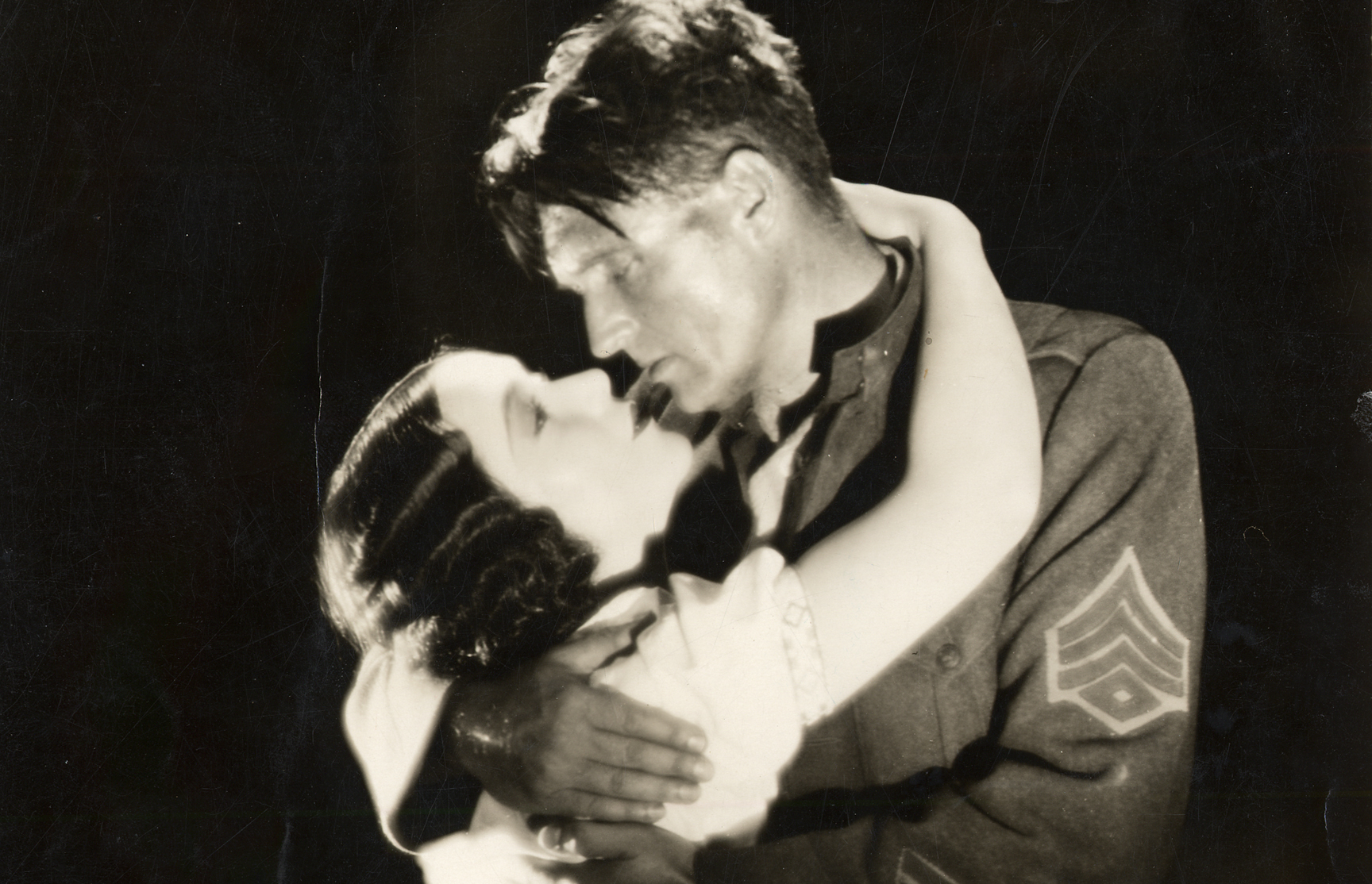
dalla piece omonima (1924) di Laurence Stallings e Maxwell Anderson. Scen.: James T. O’Donohoe. F.: Barney McGill, Jack Marta, John Smith. M.: Rose Smith. Mus.: Erno Rapee. Int.: Victor McLaglen (capitano Flagg), Edmund Lowe (sergente Quirt), Dolores del Rio (Charmaine de la Cognac), William V. Mong (Cognac Pete), Phyllis Haver (Shanghai Mabel), Elena Jurado (Carmen), Leslie Fenton (tenente Moore), Barry Norton (soldato Kenneth Lewisohn), Sammy Cohen (soldato Lipinsky). Prod.: Fox Film Corporation. DCP. D.: 123’. Bn e Col. (from a tinted and hand-coloured nitrate print).
Edition History
“Stop the blood!” cries the young soldier and devoted mama’s boy: the blood that should – yet cannot – be stopped is both that of the wound killing him and that of the slaughter called the First World War. The final psychotic scream of another devoted son (“Ma, I’m top of the world!”) would become one of the highest peaks of Raoul Walsh’s cinematic oeuvre, when in White Heat the gangster James Cagney climbs the gas tank, ready to blow himself up together with his gigantic Oedipus complex. Here, within the rhetoric-tinged antimilitarism of 1920s Hollywood, Victor McLaglen can ask, with prophetic intuition, what sort of civilisation needs to reinvent itself in the massacre of a generation every 30 years. What Price Glory, with its sinister views of expendable bodies and its powerful backward tracking shots through almost Kubrickian trenches, is Walsh’s first true war film – yet war occupies only a minor part of it. The fighting scenes are incisions, fractures, wounds carved into a filmic body whose contours and clichés belong to masculine dramedies (amorous rivalry between comradesin- arms, as in Flesh and the Devil or Only Angels Have Wings). What matters most here are those 40 square metres of French countryside crossed by swaying processions of geese, the tavern with the moustachioed innkeeper, the blouses slipping from shoulder to breasts and the wool stockings slowly unrolling on shapely legs. The film is deeply sexualised, and Dolores del Río says it plainly: the love of the heart is one thing, but love entire (“he does have all my love”) is another one altogether. Thus, once again, the big Irish bull McLaglen needs to learn to live with it. Walsh has some 30 films behind him and a whole life ahead of him, but his uniform will stay the same: a voice, an energy and a sense of humour that knows how to keep cinema in motion (“Cinema is movement. And I made it move”), with increasing confidence and flashes of genius. Not against, but from within the great Hollywood formula.
Paola Cristalli

Restored in 4K in 2025 by MoMA and The Film Foundation in collaboration with George Eastman Museum and Academy Film Archive at Cineric laboratory, from incomplete original prints and the silent and Movietone versions negatives. Funding provided by the Hobson/Lucas Family Foundation
“Stop the blood!” screams the youngest soldier – a mother’s boy with the soul of a poet. The unstoppable blood he is referring to is the blood pouring from his wound, as well as the blood from the ongoing massacre of the First World War. The final – and psychotic – scream from another mother’s boy (“Ma, I’m top of the world!”) will be one of the high points of Walsh’s cinematic oeuvre, when in White Heat James Cagney jumps on the gasometer – ready to blow himself up along with the rest of the world and his own over-sized Oedipus complex. Here, in the sincere and soft-toned antimilitary rhetoric of 1920s Hollywood, everything is simpler: and Victor McLaglen can wonder, with chilling prophetic intuition, what kind of civilization finds the need to wipe out a generation of young men every thirty years. What Price Glory, which was released a year after the commercially successful The Big Parade (King Vidor for Thalberg/MGM), is Walsh’s first real war movie, after a couple of patriotic melodramas in the late 1910s. War in his eyes is made of close-ups of bolts on a convoy of tanks, is the sinister light on a row of bayonets and expendable bodies, and powerful travellings in almost Kubrickesque trenches.
The fighting, however, takes up minor screen time: the war scenes are incisions, fractures, wounds (which sometimes never heal) in a filmic body that has all the solid contours and clichés of a masculine comedy (love rivalries between fellow soldiers, as in Flesh and the Devil by Clarence Brown, which, being a drama, didn’t mask too much its homosexual undertones, or in A Girl in Every Port and, many years later, Only Angels Have Wings by Hawks…). The core of What Price Glory seems to be in those forty square meters of French countryside with its wavering procession of geese, the tavern with the mustachioed owner, and the female characters who enter most scenes with a close-up shot of their fleshy posteriors. It is a highly sensual film, with blouses slipping off shoulders and wool stockings on shapy legs and garters very slowly rolled up (an idea of eroticism très campagnard): as Dolores Del Rio says loud and clear, love of the heart is one thing, but the whole of her love (“he does have all my love”) is quite another entirely. And so, once again, the Irish ‘wild bull’ Victor McLaglen needs to learn to live with it. Raoul Walsh has some thirty films behind and a whole life ahead of him, and his uniform already seems to fit perfectly: a voice, an energy and a sense of humour that know how to move cinema (“Cinema is movement. And I made it move”), with increasing confidence and flashes of genius. Not going against, but moving within the Hollywood formula.
(Paola Cristalli)
Preserved by The Museum of Modern Art with funding provided by The Film Foundation