[MOVIE]
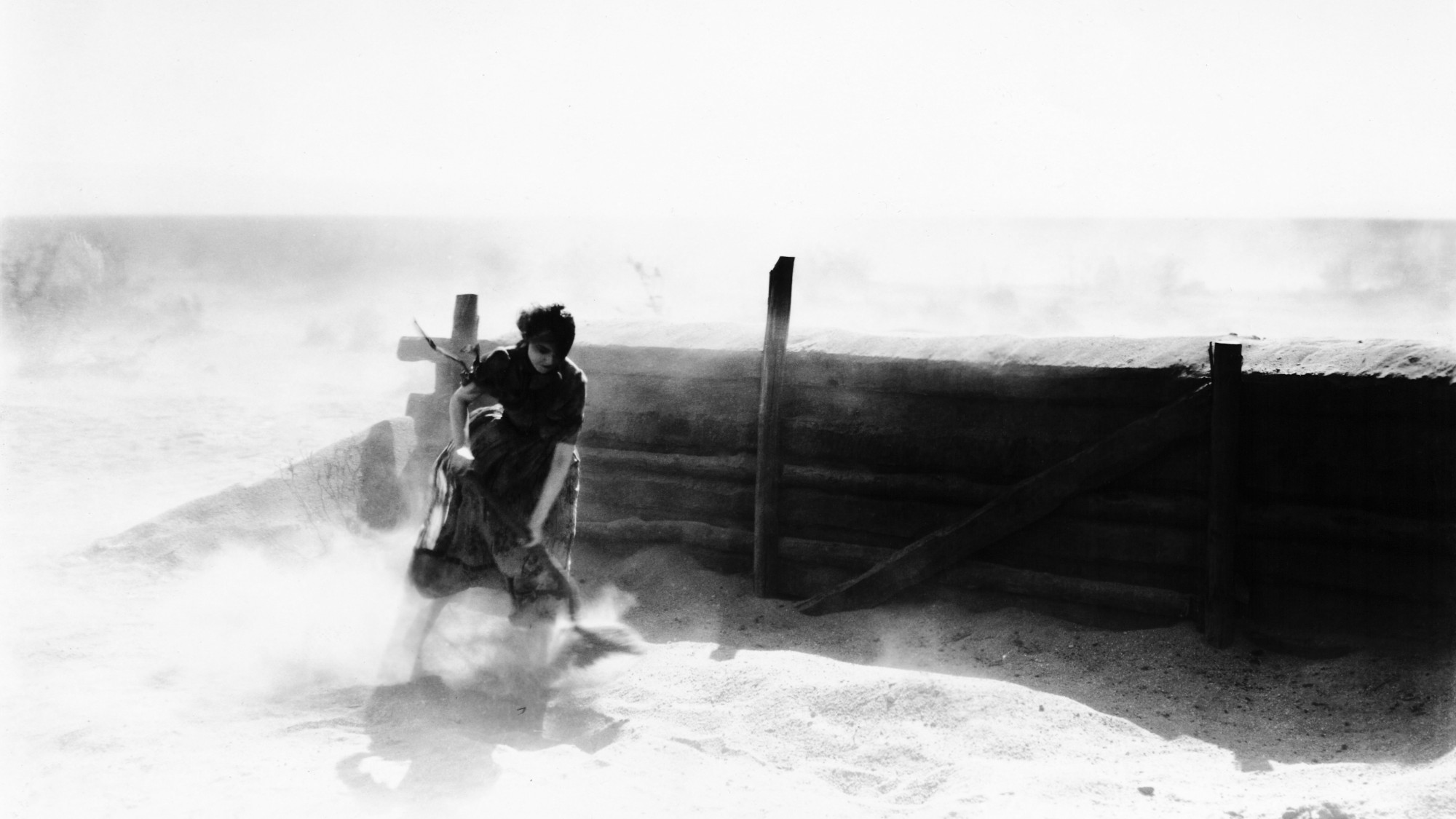
T. it.: Il vento. Sog.: dal romanzo omonimo (1925) di Dorothy Scarborough. Scen.: Frances Marion. F.: John Arnold. M.: Conrad A. Nervig. Scgf.: Cedric Gibbons, Edward Withers. Int.: Lillian Gish (Letty), Lars Hanson (Lige), Montagu Love (Roddy), Dorothy Cumming (Cora), Edward Earle (Beverly), William Orlamond (Sourdough), Laon Ramon, Carmen Johnson, Billy Kent Schaefer (figli di Cora). Prod.: Metro-GoldwynMayer. DCP. D.: 72’. Bn.
Edition History
From his first, pioneering work in Sweden, Victor Sjöström was concerned with the intersection of landscape and psychology, with the way the natural world both shaped the substance of his characters’ thoughts and feelings, and reflected those thoughts and feelings in its metaphoric grandeur. The ocean of Ingeborg Holm (1913) suggests both the depths and the tumult of its main character’s descent into madness; the mountains of The Outlaw and His Wife (1918) embody both the spiritual, transcendent plane of the central couple’s love for each other, as well as the brute physicality of the social constraints that his lovers will never quite escape. Sjöström largely left his interest in landscape behind in Sweden when he came to America in 1923, with the spectacular and singular exception of The Wind. The setting is the desert of western Texas, a land of high temperatures, low rainfall and no shade, into which a frail young woman from the east (Lillian Gish, in one of the great performances of silent film) has been thrust against her will, totally unprepared for the desolation – physical, social, psychological – that awaits her. The assault is total and unrelenting, like the raw wind that never ceases to blow across the lunar landscape (the exteriors were shot, under difficult conditions, in the Mojave Desert of southern California).
Just as the ghostly vehicle of The Phantom Carriage, Sjöström’s Swedish masterpiece of 1921, becomes the image of death, so Sjöström places a symbol in the desert sky – a wild horse that becomes the face of the wind, irrational and unstoppable, and also of the emotional pressures growing on Gish’s Letty, driving her relentlessly toward a once-unthinkable act.
MoMA’s digital restoration is based on two 35mm prints acquired from MGM in the 1930s. Although the film was shot silent, it was released with a synchronized score and sound effects with a frame rate of 24 fps, which this restoration respects.
Dave Kehr
Carl Davis’s score to The Wind
Carl Davis (1936-2023) is owed a great deal of credit. He was an excellent composer who, along with his colleagues Kevin Brownlow and David Gill, forged a path to modern silent-film scoring that we still follow today. The music to Victor Sjöström’s The Wind is among his greatest scores.
Written for string orchestra and percussion in 1983, it has a relentless and penetrating impact that only these instruments can convey. With a vast list of assorted percussion, it gives you the tangible sensation of that sandy grit in your ears that’s impossible to get rid of.
One of the wonderful traits that a Davis score has is its pure musicality. He was quite concerned that his scores felt more musical and less cinematic in its construction, which I took on board in my own compositions. And what comes with that is more flexibility in interpretation, tempo and expression, just as pure absolute music lends itself to be. They are extremely descriptive, but his scores are constructed in such a way that the music has the impulsiveness, spontaneity and freeness that is the pure definition of what silent-film music is supposed to be: instinctive musical reactions to the characters on screen. Davis’s scores always sound like he’s watching the film for the first time with you.
As good as Davis’s comedy scores are, I am a big fan of his dramatic scores above all else. His understanding of how drama works on a score page is a very rare quality. I recently conducted his score to Clarence Brown’s Flesh and the Devil, a piece rarely performed these days, and I was amazed at the sophistication and skill he put into the development of his thematic material. They evolved as the characters evolved, never outpacing the film. The Wind, written a year later, upheld those same principles. But this score takes on a simpler harmonic language, yet more brutal and relentless. It’s the desperation in the Lillian Gish character that he is writing for, and from that point of view the harmonic clashes grow as the character becomes more isolated and the situation more dire. There is very little musical sympathy for the man in this score, and rightly so.
Timothy Brock

Restored in 4K in 2023 by MoMA at Image Protection Services laboratory from two 35mm prints acquired from MGM in 1936 struck from the original negative. Funding provided by The Celeste Bartos Fund for Film Preservation
Born in Springfield (Ohio) on October 14th, 1896, Lillian Gish boasts of one of longest careers of any film diva. Her first film was in 1912, and the last (Whales of August, by Lindsay Anderson) in 1987. She began her career working in theater at the dawn of the century, together with her sister Dorothy. In 1903 she was already a dancer in a show by Sarah Bernhardt. In 1913 she became the favorite actress of Griffith, whom she had met when she went to visit her childhood friend Mary Pickford at Biograph. Leading actress in Birth of a Nation (1915), Broken Blossoms (1919) and Orphans of the Storm (1921, together with her sister) among others, she concluded the first part of her career under the prestigious direction of Victor Sjöström, whom we will discuss later.
With the advent of sound, Ms. Gish chose to retire from film, returning to theater where she met with great success in Hamlet, and Crime and Punishment. After the second world war, she went back to cinema in a series of character roles, among which the mother in Duel in the Sun, the elderly manager of a psychiatric clinic in The Cobweb by Minnelli, the lady farmer who saves the children from Mitchum in Night of the Hunter, and the dying mother in A Wedding by Altman.
I had signed a two years contract, promising to make six pictures. The Wind was my fourth. I had chosen it. It was mine. The third film, Annie Laurie, was not a success. I didn’t ask to make it, and I certainly had no control over any part of it. The Wind was mine. I chose it. I was willing to fight for it.
Suddenly, Mr. Thalberg said: “We don’t know what to do about you. Your work is very artistic, your choice of material is artistic, and you are a very dedicated artist, but we think you should be talked about more”.
I thought he was going to ask me to appear with the film, something I occasionally did for Mr. Griffith. But I was wrong. He wanted me to have a scandal! I couldn’t believe what I had just heard! I didn’t know what he was talking about! I was still taking care of my mother, who still needed my help. Dorothy was in England. It was in the newspapers. Where was there time for a scandal?
Before I could say no, Mr. Thalberg smiled and said he would arrange one for me. Nothing special. Just something for the magazines. Something to knock me off my pedestal. I didn’t know what pedestal he was talking about. I spoke to everyone on the set. I made friends with the crew ever since I was in picture. (…)
I rose from my seat, and I told Mr. Thalberg very politely that I had to discuss this with my mother before I made my decision.
(Lillian Gish in S. Oderman, Lillian Gish. A Life on Stage and Screen, Jefferson and London, Mc Farland, 2000)

Print made in 1983 by MGM, copied from a nitrate positive with original intertitles