[MOVIE]
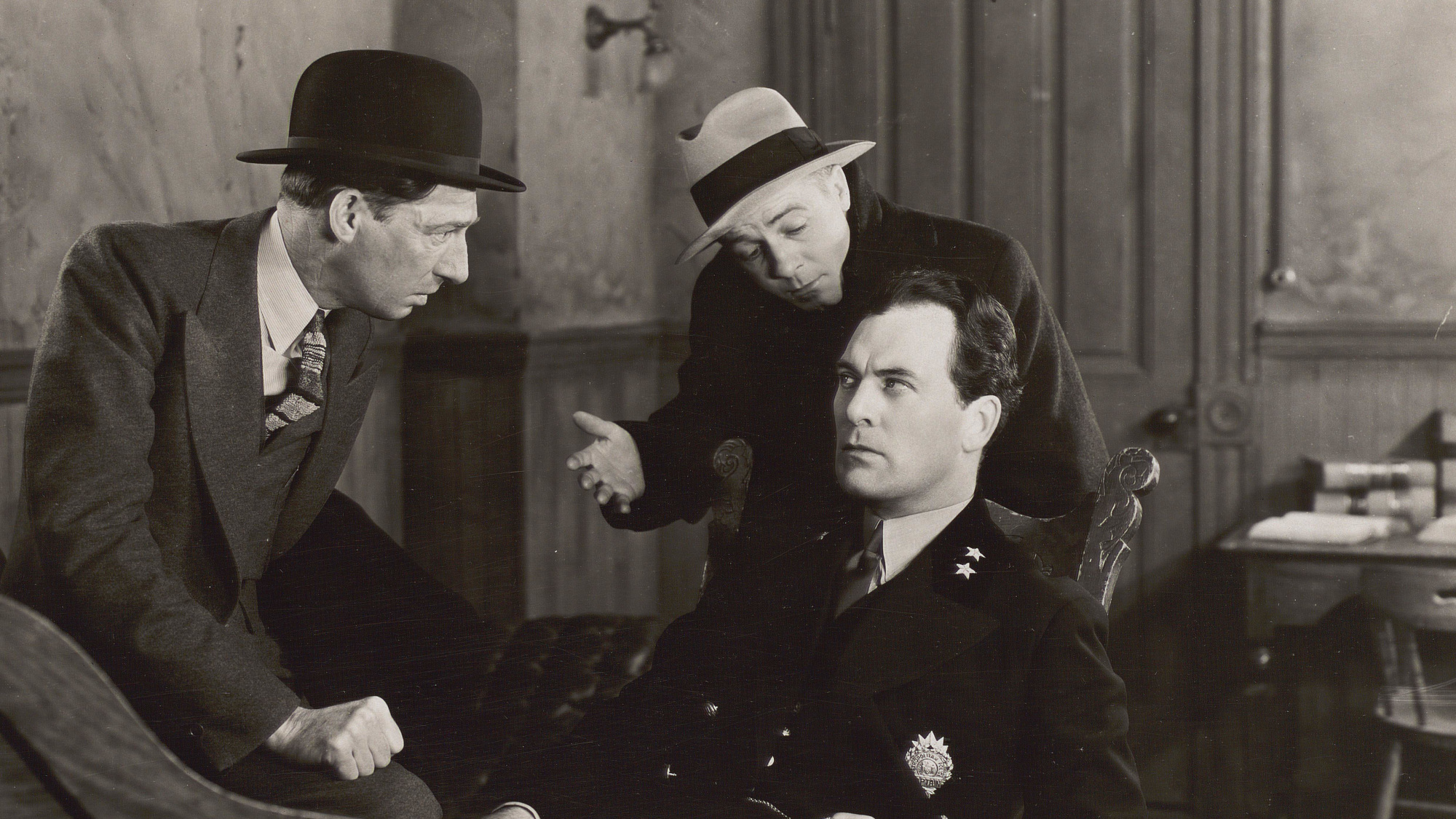
Sog.: from the pièce of the same name (1927) by Bartlett Cormack. Scen.: Bartlett Cormack, Tom Miranda. F.: Tony Gaudio. M.: Eddie Adams. Scgf.: Julian Fleming. Int.: Thomas Meighan (captain McQuigg), Louis Wolheim (Nick Scarsi), Marie Prevost (Helen Hayes), G. Pat Collins (agent Johnson), Henry Sedley (Spike Corcoran), George Stone (Joe Scarsi), Sam DeGrasse (district attorney Welch), Skeets Gallagher (reporter Miller), Lee Moran (reporter Pratt). Prod.: Howard Hughes per The Caddo Company DCP. D.: 84’. Bn.
Edition History
This “most important gangster picture of the silent era” (Kevin Brownlow) and a precursor to the gangster cycle of the 1930s, The Racket, masterfully shot by Italian-American cinematographer Tony Gaudio, establishes one of the most precise visual styles imaginable for crime film.
The eventful and busy plot involves Captain McQuigg, a tough cop and an early, roaring twenties incarnation of Dirty Harry, trying to bring peace to an unnamed but clearly Chicago-inspired city that has become a stage for violent gang wars. Despite obstacles posed by corrupt city officials, McQuigg makes it his mission to go after the bootlegger baron, Nick Scarsi.
The film was adapted from a play by Bart Cormack, one of the first underworld stories to emerge from Chicago. The actor Thomas Meighan saw a performance of it in Los Angeles (starring Edward G. Robinson!) and pitched it to Milestone, who liked the idea and, in return, gave Meighan the leading role.
Kevin Brownlow writes that the film’s significance was not due to it being unusually well-directed, but because “at long last a film dealt head-on with the link between gangsters, police, and politicians – a link, incidentally, which was so thoroughly American it went back to Colonial times.” Modelled on William Hale Thompson, a corrupt Chicago mayor who received a quarter of a million dollars in campaign funds from Al Capone, the character of Nick Scarsi – played by Louis Wolheim – also channels Capone himself. Wolheim, who looks as though he has come straight from the skids, was, in fact, a mathematics teacher whose passion for sports gave him his signature broken nose.
Foreseeably, the film was banned in Chicago but was extremely well-received elsewhere and consolidated the reputation of its producer, Howard Hughes, who, in 1951, ordered a remake directed by John Cromwell. However, Milestone’s original version, with its gritty, uncompromising vision of corruption and crime, remains untouchable.
Ehsan Khoshbakht

By courtesy of Flicker Alley.
Restored in 2016 by Academy Film Archive,
from elements provided by The Howard Hughes Corporation
and by University of Nevada College of Fine Arts’ Department of Film.
During the time that gangster Al Capone controlled Chicago, “Chicago Daily News” reporter Bartlett Cormack electrified Broadway with his play The Racket, presenting a thinly disguised portrait of a
city government and police force firmly in the pocket of a mobster.
Naturally, no matter how big a hit in New York, no staging was allowed in Chicago, so the theatre production traveled on to Los Angeles. Two results came from the move: the actor playing the gangster, Edward G. Robinson, was courted by the studios (Warner Brothers would eventually get him for their own gangster mo- vies) and the 23-year old aviator turned movie producer Howard Hughes would buy the property for one of his first films. Hughes put Lewis Milestone in charge of direction and Milestone cast Louis Wolheim, a brutish-looking former mathematics instructor, in place of Robinson as the gangster. To get a touch of authenticity, Milestone turned to some local bootleggers and racketeers for bit parts. This was said to have backfired, according to “Motion Picture Classic” magazine, when the gangsters thought the movie did too good a job portraying their nefarious business and leveled death threats at Hughes, Milestone and the lead actors. Hughes remade the movie in 1951 with Robert Ryan in the gangster role but the original has remained locked up in his personal vault, unseen until now.
Brian Cady

New 2004 digital edition produced by Flicker Alley, LLC ) for Turner Classic Movies from 35mm materials housed as part of the Howard Hughes Collection at the University of Nevada, Las Vegas. New orchestral score by Robert Israel