[MOVIE]
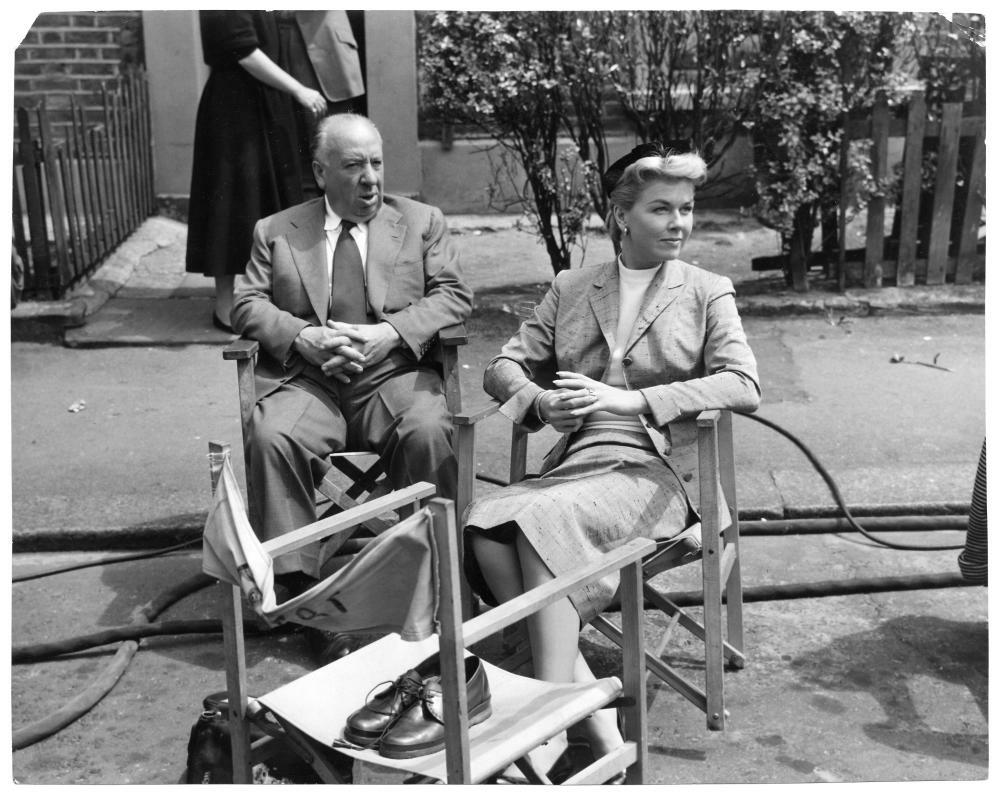
R.: Alfred Hitchcock. S.: da una storia di Charles Bennett e D.B. Wyndham-Lewis. Sc.: John Michael Hayes. F.: Robert Burks. Scgf.: Hal Pereira In.: James Stewart (dottor Ben McKenna), Doris Day (Jo, sua moglie), Daniel Gélin (Louis Bernard), Brenda de Banzie (signora Drayton), Bernard Miles (suo marito), Ralph Truman (l’ispettore Buchanan). P.: Paramount. D.: 119’. 35mm.
Edition History
Perspecta Sound was the sound system that Paramount designed to meet the competition of the new sound diffusion systems released with the large screen formats. When 20th Century-Fox launched CinemaScope, for example, it was accompanied by a 4-track magnetic stereo system plus an optical track called MagOptical while Todd-AO tested an even more sophisticated 6- track system. Compared to these, Perspecta did not produce an authentic stereophonic sound. Instead, it channelled sound from a single optical track recorded on the film, to three loudspeakers situated behind the screen using sub-acoustic (and therefore inaudible), lowfrequency sounds. The loudspeakers were calibrated for frequencies of 30, 35 and 40 Hertz (the audibility threshold is around 63 Hz). Moving the point at which dialogues, music and effects were heard gave the impression that the sound was moving around the screen. Hitchcock’s name is generally connected with traditional effects such as models and scrims, but the English director often used new techniques too. Perspecta Sound allowed Hitchcock to construct the climax, set in the Albert Hall, to great effect. In a sequence with almost no dialogue, it is the music that builds and holds the suspense. The powerful, full-bodied sound of the London Symphony Orchestra (conducted personally by Bernard Herrmann) punctuates Doris Day’s dramatic search, as she gets nearer and nearer to the fateful clash of cymbals that announce the assassination attempt. The Man Who Knew Too Much was mixed by Gene Garvin (1904-1992), one of the most important sound technicians at Paramount at the time. Garvin had already worked with Perspecta Sound in Strategic Air Command by Anthony Mann and The Bridges at Toko-Ri by Mark Robson,
both released in 1955.
Federico Magni
This evening will be dedicated to two aspects of film restoration. On one hand the problem of sound restoration, on the other to the issue of preserving and restoring the apparatuses of film history. So.The Man Who Knew Too Much will be screened thanks to the activity of collecting and restoring sound apparatures of Jean Pierre Vercheure, who made possible the use of a Perspecta Sound system, which was the stereophonic sound system used for this film. It will be a great bet: to be able to see and hear the film as it used to be at the time of this release, with a type of sound which is now completely forgotten and which cannot be reproduced without the restored apparatuses. Then, another dream: how to reproduce the colours of Technicolor, again, a matter of machine sand tecnology which disappeared.