[MOVIE]
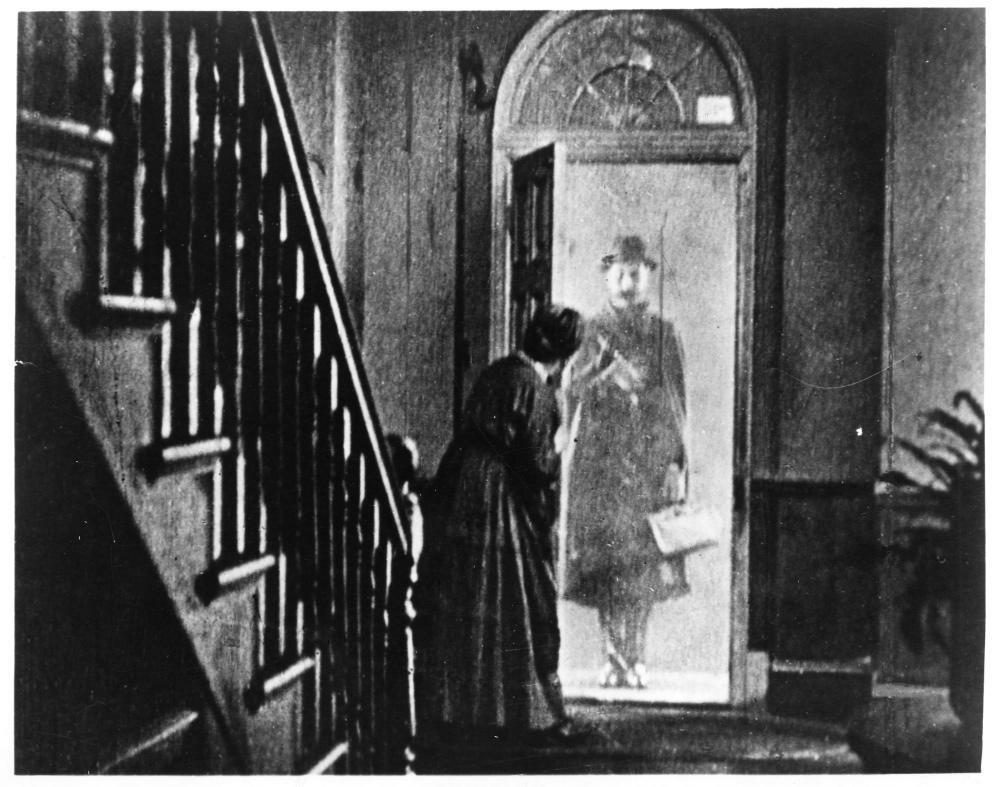
R.: Alfred Hitchcock. S.: dal romanzo omonimo di Marie Adelaide Belloc-Lowndes. Sc.: Alfred Hitchcock e Eliot Stannard. F.: Gaetano Ventimiglia e Hal Young. Scgf.: Wilfred Arnold e Bertram Evans. M.: Ivor Montagu. In.: Ivor Novello (Jonathan Drew), June (Daisy Bunting), Marie Ault (Mrs. Bunting), Arthur Chesney (Mr. Bunting), Malcom Keen (fidanzato di Daisy). P.: Michael Balcom per Gainsborough.
L.: 98’ a 18 f/s.
Edition History
“The Lodger was the first true ‘Hitchcock’ movie”.
Alfred Hitchcock
The Lodger: A Story of the London Fog was Hitchcock’s first thriller, and his first critical and commercial success. Made shortly after Hitchcock’s return from Germany the film shows the extent to which he was inspired by the German studio system’s developments in the use of dramatic lighting.
The Lodger was a bestselling novel by Marie Belloc Lowndes, first published in 1913, loosely based on the Jack the Ripper murders. Hitchcock knew the book – and was a lifelong fan of crime fiction – and it gave him the opportunity to feature what was to become a favorite theme – the hunted man. The casting of the matinee idol Ivor Novello as the mysterious lodger who falls under suspicion also heralded another favorite device: casting against type to play off audience expectations. June Tripp, the young actress who starred as the landlady’s daughter, Daisy, was the second of a long series of actresses who were either blonde or became blonde for Hitchcock – the first was Virginia Valli, star of The Pleasure Garden. Joe, Daisy’s policeman fiancé, jokes, “I’m keen on golden hair myself, same as the Avenger is”. It soon became clear that Hitchcock had similar tastes. The film is also distinctive for its bold use of visual devices, such as the glass floor through which we can see the lodger anxiously pacing. Allegedly because of a shortage of extras, Hitchcock made his first cameo appearance and can be glimpsed both in the newsroom and as a bystander in a crowd scene.
The Lodger was a great success, and quickly established Hitchcock as a name director. But the film was almost not released at all. After a private industry screening, distributor C.M. Woolf, somewhat jealous of Hitchcock and distrustful of ‘art’, told the director, “Your picture is so dreadful, that we’re just going to put it on the shelf and forget about it”. In the end the film was released, thanks to the championing of Gainsborough boss Michael Balcon and Ivor Montagu. A few rough sequences were reshot but, more importantly, Montagu reduced the number of title cards by three quarters, and added designs by artist E. McKnight Kauffer. This was the version which was shown to the press in September 1926, to be described in glowing terms by trade journal “Bioscope”: “It is possible that this film is the finest British production ever made”.
As the negative no longer exists, the source material for the restoration was a number of nitrate prints, held at the BFI National Archive since the 1940s. The access to Ivor Montagu’s hand corrected list of edited intertitles showed that the film’s continuity had survived extremely well. The Lodger was tinted and toned on its original release, the differing colours used to dramatic effect. Particular attention was paid to the night time sequences set in thick fog which are toned blue and tinted amber.
Bryony Dixon

Restored by BFI National Archive in association with ITV Studios Global Entertainment, Network Releasing and Park Circus Films. Funding provided by The Hollywood Foreign Press Association, The Film Foundation, Simon W. Hessel con British Board of Film Classification, Deluxe 142, Shivendra Singh Dungarpur, Ian & Beth Mill.
It is finally possible to see the colours of a silent Hitchcock! The National Film&Television Archive in collaboration with Soho Images has restored the original colours utilising the techniques of imbibition and toning of the time. The results which we were able to admire some months ago in London on a test of three hundred metres were splendid, this evening’s projection will allow us to see them in their completeness.
“Beginning with a simple plot I have always been animated by the desire to present my ideas for the first time in a purely visual form. I shot fifteen minutes of a late winter evening in London. It is five twenty and the first shot of the film is the face of a blond girl who is screaming. Here’s how I photographed her. I took a pane of glass. I put the girl’s head on the glass, I then spread her hair so that it covered the shot, then I lit it from below so as to emphasise her blond hair. At this point there is a break, and I pass to a luminous sign which displays publicity for a music magazine ‘This evening: Goldilocks’. The sign reflects on the water. The girl from before has drowned; she is pulled out and laid on the street…[…]. In the clubs, the people become aware of the event which is then announced on the radio and heard by the listeners… This man only kills women. Invariably blondes… The news is broadcast on all the media, the evening paper is printed and sold on the streets… What is happening in the city? The blondes are terrified… The brunettes joke about it… Women talk about it to their hairdressers… Some blondes want black curls to put under their hats… I think that psychologically the idea of the handcuffs takes us far… Being tied to something… We are in the reign of fetishism”.
Alfred Hitchcock