[MOVIE]
Edition History
When wheelchair-using pianist Francis Ingram is found dead, his entourage comes under suspicion: could it have been his nurse Julie, or his secretary Cummins, or perennial hanger-on Bruce, secretly in love with Julie? When Ingram’s last will and testament makes Julie his sole heir, his family gets ideas of its own, including bringing up an (as-yet unwritten) ‘earlier’ testament. Meanwhile, Cummins starts to worry ever more about his library as whoever inherits the house will also get possession of these treasures. By the time of TheBeastwithFiveFingers, Peter Lorre’s type had been cast in iron: everything on the farther side of sane and decent. For all the crafty screenwriting by the great genre moralist Curt Siodmak, the big question in The Beast with the Five Fingers was never: “who killed Francis Ingram?” but always: “How would Lorre play the culprit Hilary Cummins, and how would everybody else look in comparison?” In this case not all of Cummins’s madness was expressed by Lorre’s horror film speciality: the wounded soul with somnambulist grace – some excellently executed special effects plus formidably stylish direction courtesy of Robert Florey added a few layers to this particularly outré performance. With hindsight, it’s difficult not to see Lorre’s own troubles at the time in this anguish-laden assault on the viewers’ nerves: Warner had severed its ties with him, leaving Lorre adrift in a moment when his career was slowing down; also, his well-known friendship with Bertolt Brecht as well as his leftwing political convictions made living and working in Hollywood ever more risky.
Olaf Möller

Courtesy of Park Circus
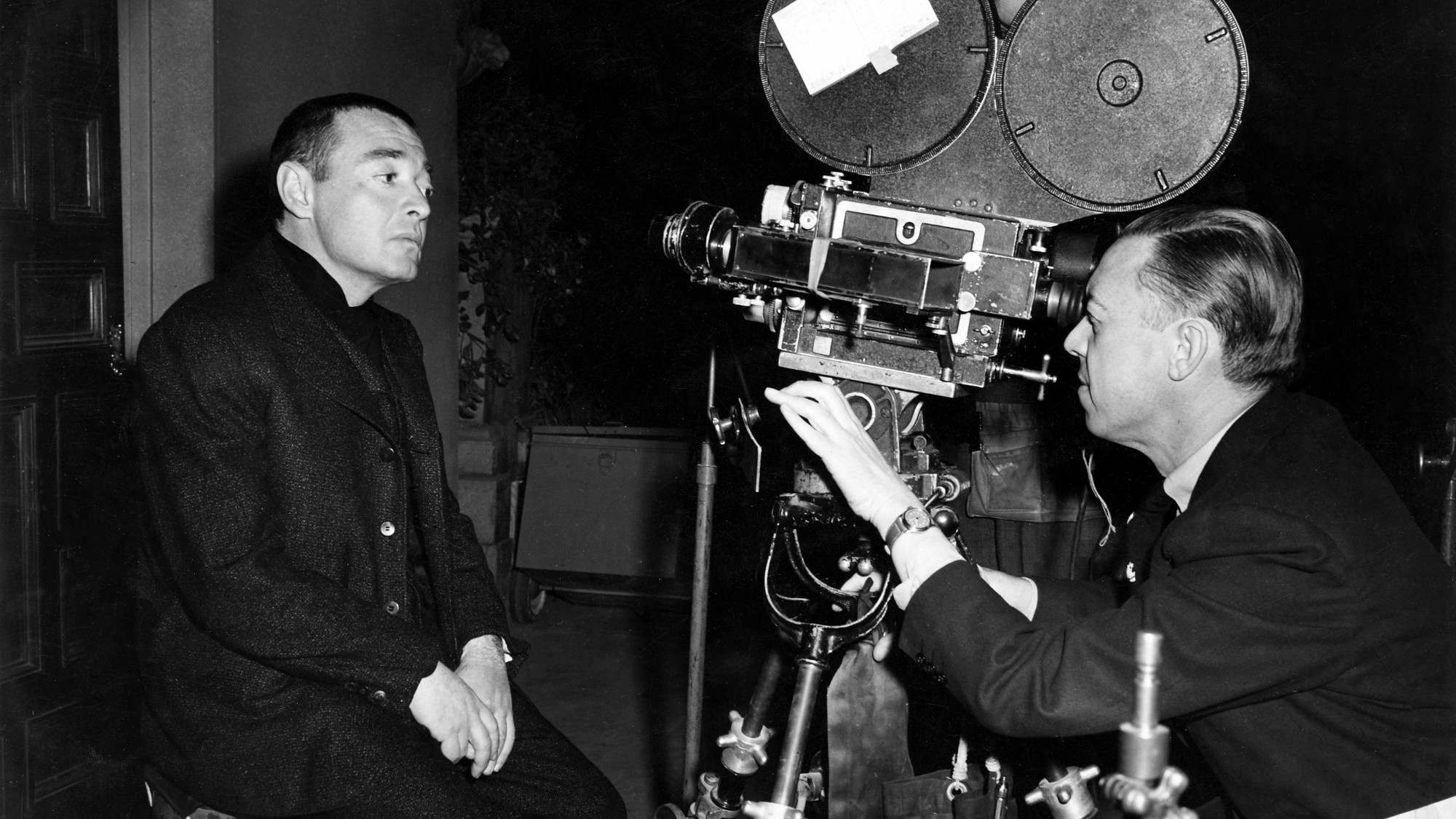
Florey decided that the only way he could possibly make something out of the story was to “shoot it as seen through the eyes of Hilary Cummins” [Peter Lorre] He designed and photographed the sets in an expressionistic style and edited the film accordingly, “as I conceived my adaptation of Frankenstein, and wrote and directed Murders in the Rue Morgue at Universal in 1931”. Florey discussed the idea with Lorre. Interested in his conception, he accompanied Florey to the producer’s office. William Jacobs dismissed the project as “commercially unthinkable”. “A glimpse of what The Beast with Five Fingers might have been”, said the director “remains in the sequence in which Hilary, alone in the library, sees, then struggles with, the cut-off hand. He is terrified as the hand comes at him again and again until it becomes apparent that there is a bizarre connection between the hand and the crazed astrologer who nails the hand to his desk – it escapes and Hilary chases it. This sequence and a seried of quick flashes cutting to inserts of objects and shadows in the room and flashing back to distorted angles of Hilary’s face and close shots of the severed hand crawling – weird sound effects and strange music being recorded later – stident sound when a string is snapped from a mandolin hanging on the wall – each motion of the hand synchronized with a jarring shrill sound – the picture would have been a succes if entirely directed as I visualized”.
Stephen Youngkin, The Lost One. A Life of Peter Lorre, The University Press of Kentucky, 2005