[MOVIE]
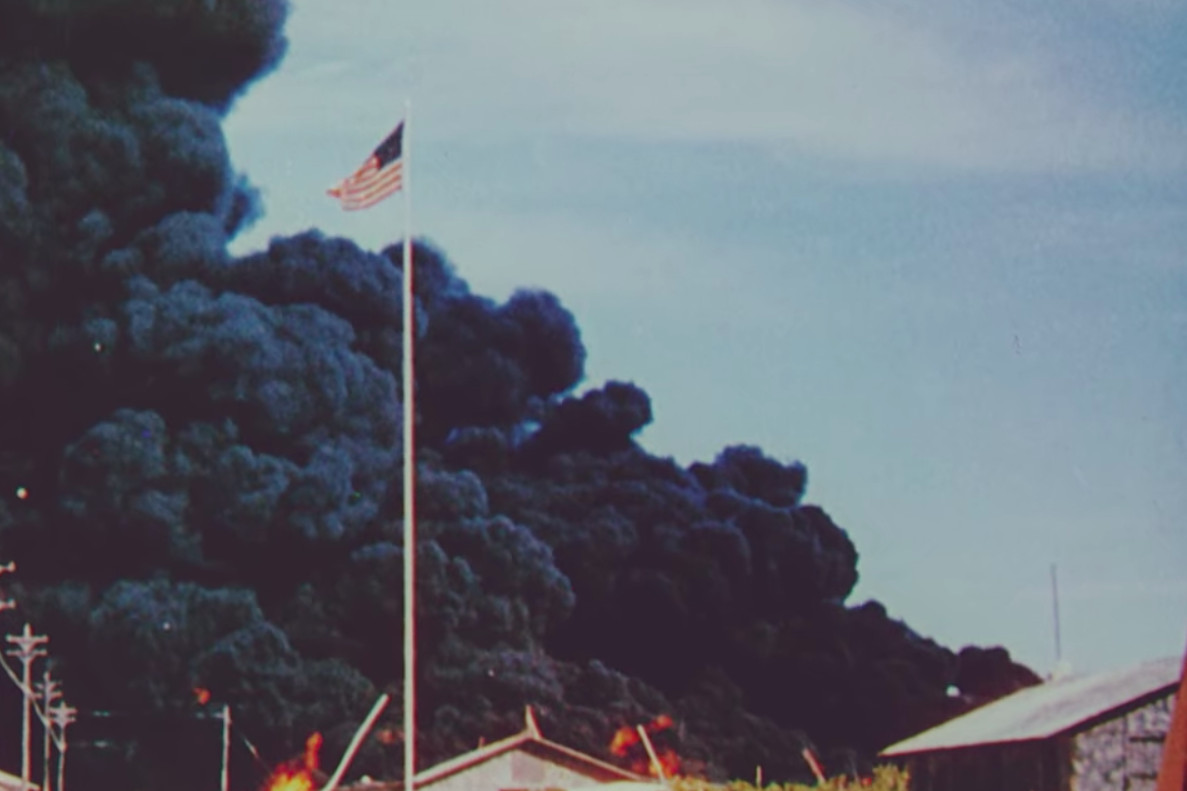
Scen.: John Ford, Dudley Nichols, James Kevin McGuinness. F.: Joseph H. August. M.: John Ford, Robert Parrish. Mus.: Alfred Newman. Int.: Donald Crisp, Henry Fonda, Jane Darwell, Irving Pichel (voci narranti), Logan Ramsey, James Roosevelt, Jimmie Thach (se stessi). Prod.: John Ford per United States Navy. DCP. D.: 18’. Col.
Edition History
Fonda’s voice is one of many in The Battle of Midway. The polyphonic nature of this short documentary extends to its range of forms, tonalities, and emotions: soldiers’ faces up-close and airplanes tumbling across a decentred visual field; “Red River Valley” and fearful hints of “something behind that sunset”; American triumph and American coffins; depth-of-field staging and framelines jerking into full view, scarring the film’s body as an eternal reminder that “this really happened”. The coda (requested by President Roosevelt) feels like a voice from the future: broad strokes of dripping colour over the count of Japanese losses, done in the style of Jean-Luc Godard circa 1967-1968. The battle of Midway was a turning point in the Pacific War, and Ford’s filming of it has come to be seen as a wedge in his career. For Tag Gallagher, Ford’s postwar work shows “the difference, perhaps, between a man who films his ideas and one who films his experience”. A similar observation may apply to those in front of the camera. On 24 August 1942, 10 weeks after the battle of Midway and three weeks before the film’s release, Henry Fonda volunteered for military service.
Alexander Howarth
But The Battle of Midway was a film virtually lacking any formal precedent, one for which Ford had to invent something “new”. And it was for Ford an occasion when critical reaction mattered little, an occasion aimed at a broad audience, an occasion when the reaction of the masses to this deeply personal essay on “war, and peace, and all-of-us” mattered terribily. Rarely is an artist given so vast a subject to address, and rarely do his thoughts receive the interested attention of so vast an audience. To this aim The Battle of Midway is directly manipulative, it seeks a deeper level of consciousness through a fuller exploitation of multi-media art. To be sure, Ford did not abandon staginess altogether, but he would never stand so far back from his material after The Battle of Midway as he did before. This is the deepening of feeling, provoked by exposition to the War, which James Agee referred to. It is the difference, perhaps, between a man who films his ideas and one who films his experience.
Tad Gallagher, Film Comment, September-October 1975