[MOVIE]
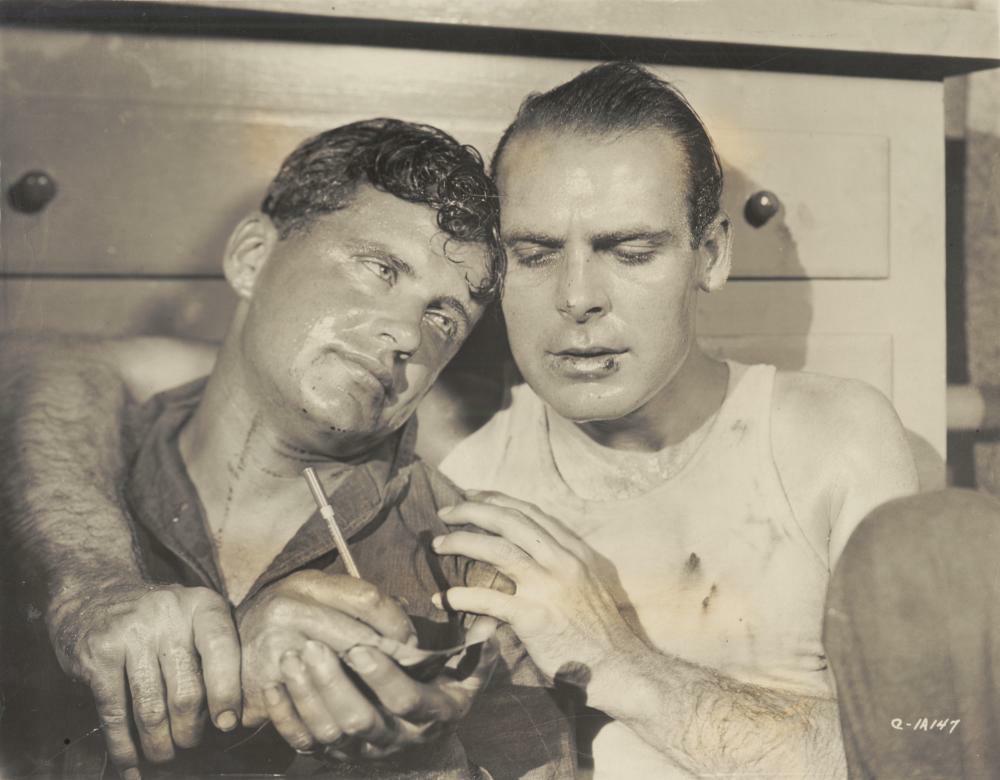
Supervisione: Irvin Willat. S.: Norman Springer. Adattamento: Winifred Dunn. M.: Arthur Roberts. F.: Joe Walker. In.: Jack Holt (Jack Dorgan), Ralph Graves (Bob Mason), Clarence Burton (il comandante), Arthur Rankin, Dorothy Revier. P.: Columbia. 35mm.
Edition History
Because of its public stock sale and the increased profits from its pictures (particularly Capra’s), Columbia had enough cash on hand in the summer of 1928 to take a gamble. Though the penny-pinching Harry Cohn was nervous about the idea, Jack Cohn persuaded his partners to go head-to-head with the major studios by making an A picture. (…) The movie was Submarine, an adventure story suggested by two actual disasters involving Navy submarines. The Navy, which had come under heavy criticism for losing the two subs, was eager to give Columbia full cooperation in presenting a heroic view of its rescue efforts (…). On August 30, Submarine opened in New York at a first-run Broadway theater, the Embassy. The biggest moneymaker in the young company’s history, it was also a critical success, decisively rehabilitating Capra’s reputation from the lingering effects of the Langdon debacle and establishing him as a versatile and important director. “Frank R. Capra’s direction is especially clever,” wrote Mordaunt Hall in “The New York Times”, “for not only has he attended to the action of the story, but he has also obtained from his players infinitely better characterization than one is apt to see on the screen, especially in a melodrama”. (…) Submarine also was Columbia’s, and Capra’s, first tentative venture into sound. The industry had been in a stateof barely controlled panic in the months following Warner Bros.’ unexpectedly successful premiere of the part-talking, part-singing The Jazz Singer, with Al Jolson, on October 6, 1927, shortly before Capra came to Columbia. (…) Capra was convinced that sound was “an enormous step forward. I wasn’t at home in silent films; I thought it was very strange to stop and put a title on the screen and then come back to the action. It was a very contrived and very mechanical way of doing things. When I got to working with sound, I thought, my, what a wonderful tool has been added. I don’t think I could have gone very far in silent pictures – at least not so far as I did with sound”.
Joseph McBride, Frank Capra: The Catastrophe of Success, Simon & Schuster, New York 1992 (revised edition, St Martin’s Griffin, New York 2000)

Submarine was shot as a silent film, but distributed with a soundtrack with sound effects and noises. This copy, which was restored by the Nederlands Filmmuseum, will be presented with a musical accompaniment that includes a live performance of sound effects on the “Pandemonium”. Columbia and U.S. Navy got together in a big way on this one, with the result that Columbia obtained at small cost a good box-office picture and the Navy got across valuable propaganda for itself. The picture refers specifically to the illfated S-44, rammed and sunk by a cruiser during maneuvers a few years ago in California waters. […] Without entering the controversial aspects of the tragedies, Submarine presents to the public the navy’s side. Use of the S-44 was not entirely good judgement, either as story-telling or as propaganda. The S-44 did not end happily and heroically in real life, as in the film. […] Submarine is a strong and stirring picture. […] Man’s fight with the forces of nature is always dramatic and the frantic efforts of the Navy to get an air line down to the slowly-asphixiating crew of the S-44 makes natural drama. The undersea photography is excellent with no suggestions of laboratory faking to break the thread of illusion. Submarine has novelty, suspense and the imprint, valid or not, of authenticity. (Variety, 9/5/1928