[MOVIE]
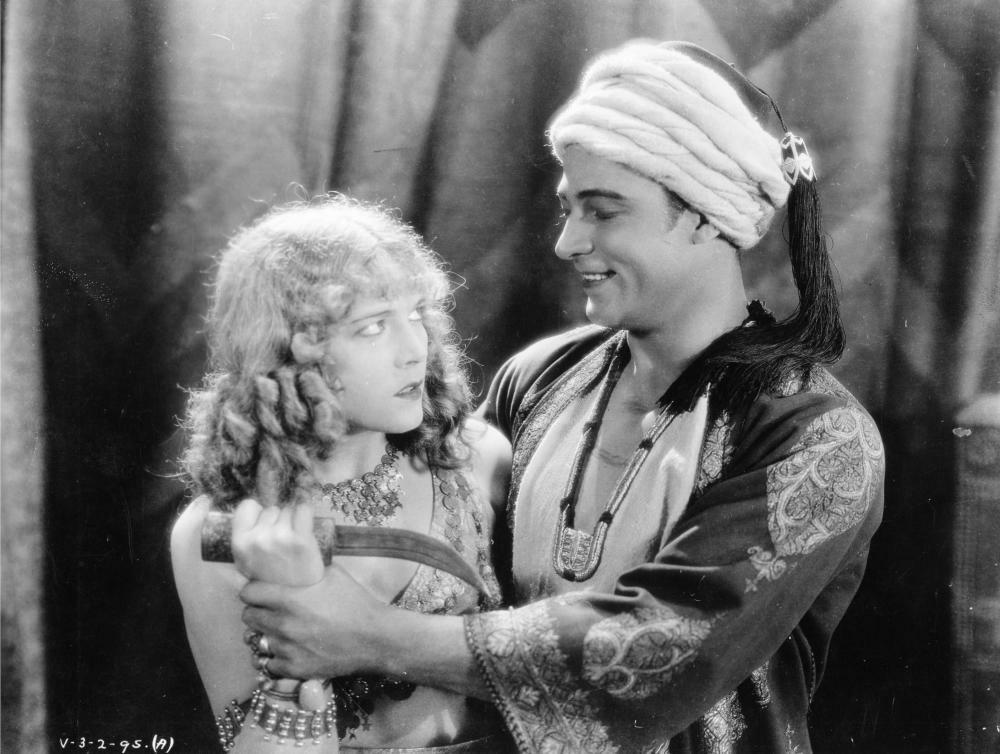
R.: George Fitzmaurice. S.: dal romanzo The Sons of the Sheik di Edith Maude Hull. Sc.: Frances Marion, Fred De Gresac. F.: George Barnes. Scgf.: William Cameron Menzies. In.: Rudolph Valentino (Ahmed e lo sceicco), Wilma Banky (Yasmin), George Fawcett (André), Montague Love (Ghabah), Bull Montana (Alì), Karl Dane (Ramadan), Bynsky Hyman (il borsaiolo), Agnes Ayres (moglie dello sceicco), Edward Connelly (uno zuavo), Charles Requa (Pierre), William Donovan (S’rir). P.: Feature Productions. D.: United Artists. L.: 1888 m. , D.: 74’ a 22 f/s
“Valentino is sheikh once again. The director who leads him this time is George Fitzmaurice, who he wanted at the time of Blood and Sand. The screenplay, which from adventurous tension leans towards erotic variations, is by Frances Marion, another powerful and able Hollywood woman writing in the Twenties. The imagination is still that of a women’s soft-core novel (the starting text, on the other hand, was the follow-up to the first Sheikh, again written by Edith Hull); the orientalist setting clearly shows that the years have passed and that Hollywood has learned to represent exoticism in a more toned-down manner, suggestive, almost abstract, though continuing to contaminate it happily with models from other genres (here, the western). Captured by desert bandits, Valentino turns into a sort of chained Prometheus, flogged, lacerated and half-naked, body definitively unmasked, the object of voyeuristic and sadistic visions. This is nothing, in reality, but the long lead-up to another, perverse amorous ritual, the one which will allow Valentino to show later, to the woman lying at his feet, his tortured body; but it is anyway interesting to see how in this latest uncovering, Valentino resembles himself ever less, and indeed any actor of his generation, including the Douglas Fairbanks who, shortly after in another scene, he imitates, launching himself from a ledge towards a chandelier”. […]
Paola Cristalli, Rodolfo Valentino: lo schermo della passione, Ancona, Transeuropa, 1996