[MOVIE]
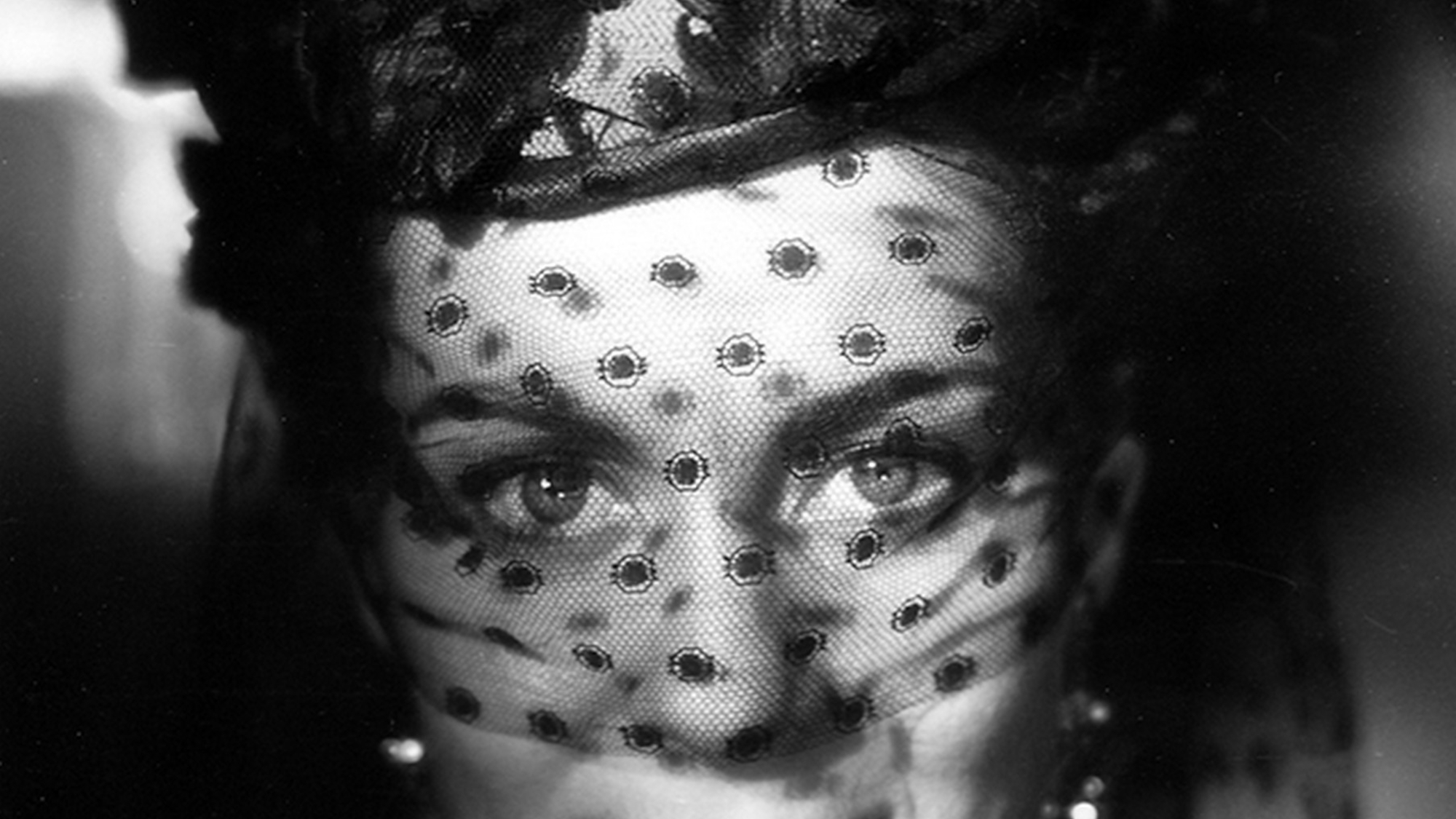
Sog.: Luchino Visconti e Suso Cecchi d’Amico, dal racconto omonimo di Camillo Boito; Scen.: Suso Cecchi d’Amico, Luchino Visconti, Carlo Alianello, Giorgio Bassani, Giorgio Prosperi; Coll. dial.: Tennessee Williams, Paul Bowles; F.: (Technicolor) G. R. Aldò, Robert Krasker; Mo.: Mario Serandrei; Scgf.: Ottavio Scotti; Co.: Marcel Escoffier, Piero Tosi; Mu.: Sinfonia n. 7 in mi maggiore di Anton Bruckner, Il Trovatore di Giuseppe Verdi, Orchestra Sinfonica della RAI diretta da Franco Ferrara; Su.: Vittorio Trentino, Aldo Calpini; Int.: Alida Valli (contessa Livia Serpieri), Farley Granger (tenente Franz Mahler), Heinz Moog (conte Serpieri), Massimo Girotti (marchese Roberto Ussoni), Cristoforo De Hartungen (generale Hauptmann), Rina Morelli (Laura, la governante), Christian Marquand (ufficiale boemo), Marcella Mariani (Clara, la prostituta), Sergio Fantoni (Luca, un patriota), Goliarda Sapienza (patriota), Tino Bianchi (capitano Meucci), Ernst Nadherny (comandante della piazza di Verona), Tonio Selwart (colonnello Kleist), Marianna Leibl (moglie del generale Hauptmann); Prod.: Renato Gualino per Lux Film; Pri. pro.: 30 dicembre 1954 35 mm. D.: 123’.
Edition History
The idea of making a quasi-historical film would not have convinced me completely, had I not seen the possibility of telling – within an exceptional climate such as that of the war, of any war – a love story, a violent and passionate story … We Italians have shown, in the films of these past years, that we can compete with the cinemas of other countries that are much better equipped technically, thanks to the qualities of realism, spontaneity and the so-called “open air” – filming beyond the artificial restrictions of the studios and entrusting ourselves to the authenticity of life. It is true that our best films have generally dealt with real events of everyday life today – or of events so recent and so dramatic that they have often been mistaken for news reports. Nevertheless, I believe that the principal characteristics of this cinema are not the faces of people plucked from Italian streets and piazzas, from everyday life in Italy, but rather something more essential: that is, the ability to look at human passions without the slightest trace of conventionality, or the constraints of rhetorical formulas. I believe that this search for truth, this method of investigation, can be applied in the same way to any human adventure, any event centred on human passions. This is why, in accepting to make this film, which is set during the last war for Italian liberation from the Austrian occupation of 1866, I looked above all to what interested me – the passionate drama between two human beings who should theoretically be enemies, since they belong to opposing camps. I wanted to peer into their depths, follow their psychological movements in their wavering between good and evil, with absolute fearlessness and sincerity. My aim was to turn all of this into a representation of two different races, two conflicting worlds. The main thing I was aiming for was that this story should be just as current, truthful and compelling as if it were taking place under our very eyes – between a lieutenant in an enemy army, and a woman from an occupied country.
Luchino Visconti, Luchino Visconti. Epistolario 1920-1961, edited by Caterina d’Amico de Carvalho and Alessandra Favino, Edizioni Cineteca di Bologna, Bologna 2024




Comitato Italia 150
Restored by StudioCanal, CSC – Cineteca Nazionale and Cineteca di Bologna in collaboration with Giuseppe Rotunno, Piero Tosi and Suso Cecchi d’Amico at L’Immagine Ritrovata laboratory. Starting from Giuseppe Rotunno’s work, who started the restoration of the film in 1994, the Technicolor printing negatives, provided by Cristaldi Film, have been recovered: the original colours, which were partially damaged, have been digitally reconstructed. Funded by GUCCI, The Film Foundation and Comitato Italia 150
I have always been attracted to Stendhal. I’d have liked to make The Charterhouse of Parma – that was my ideal. If cuts hadn’t been made in my film and if it had been edited as I wished, then it really would have been truly about Fabrice at the battle of Waterloo. Of Fabrice passing behind the battle. And Countess Serpieri modelled on the Duchess of Sanseverina. (…) I gave it a historical slant right from the outset. I even wanted to call it Custoza, naming it after a famous Italian defeat. But there was a cry of indignation: from Lux, the minister, the censors… (Even Senso was rejected in the beginning: the clapperboard bore the name Uragano d’Estate during filming). Hence the battle originally took on much greater importance. I had intended to outline a general background of Italian history and to use this as a context to Countess Serpieri’s personal affairs. However, when it came down to it, this was nothing more than the portrait of a certain class. What interested me was to give an account of a wrong and disastrous war pursued by a single class. The ending was also originally entirely different from the one you see now. I filmed it at night, in a street in Rome’s Trastevere, precisely the one where Livia runs and screams in the second version. But the first did not finish with Franz’s death. Livia could be seen passing among groups of drunken soldiers, and the final sequence showed a small, very young – just 16 years old – Austrian soldier blind drunk. He was leaning against a wall, singing a victory song, the same that could be heard in the town. Then he broke off to sob and sob and sob, shouting: “Long live Austria!” Gualino, old Gualino – my producer, a lovely man – came to watch the filming and he kept whispering in my ear: “It’s risky, very risky.” Perhaps, but that ending attracted me so much more. Franz was left to his own business, nobody took any notice of Franz! Who cared if he died or not! He was ignored after the scene in his room, where he revealed how repulsive he was. Placing him before the firing squad would have been pointless. And so we were left with her running to report him and fleeing along the street. As she weaved among prostitutes, becoming a sort of prostitute herself, going from one soldier to the next.”
Luchino Visconti, Entretien avec Luchino Visconti, edited by Jacques Doniol-Valcroze and Jean Domarchi, “Cahiers du Cinéma”, no. 93, March 1959
Restoration funded by Studiocanal, Centro Sperimentale di Cinematografia-Cineteca Nazionale, Cineteca
di Bologna-L’Immagine Ritrovata, in collaboration with GUCCI, The Film Foundation and Comitato
Italia 150 and carried out thanks to the joined work of Cineteca Nazionale, Cineteca del Comune di Bologna and three great artists as Giuseppe Rotunno, Piero Tosi and Suso Cecchi D’Amico. Starting from the work already done by Giuseppe Rotunno, who started the restoration of the film in 1994, the Technicolor printing
negatives, held by Cristaldi Film, have been recovered: a digital reconstruction of colour occured, as the original mater
Camillo Boito’s short story (1883) provided Visconti with the material for his best film and one of the masterpieces of Italian cinema (…) The story of Senso tells of two people submerged in their love, which they themselves see as sad and shameful, and which leads to their reciprocal destruction. Each is for the other both prison and executioner. Their entire affair develops alongside History, in which their inaction, their passivity and a kind of social curse obstruct them from taking part. They are impotent but lucid representatives of a world which ispassing away. In them the positive is dead: this is why it is difficult to respond to their intent of melodrama or opera. Obviously opera is the dominant aesthetic reference which accompanies their trajectory, yet it serves as a requiem whose icy and funereal lyricism does not consent to show the least pity in their regard. Visconti views his characters with cold detachment. He shows them in long undynamic scenes abounding in two-shots, and which place between them and the spectator the maximum distance that the mise en scène allows. On an aesthetic level, the success of the film, (despite the difficulties and the obstacles that Visconti encountered) is close to perfection. The two main actors are unforgettable, and Alida Valli develops with profound coherence the role she played in Piccolo mondo antico and those of Isa Miranda in the era of calligrafismo. The same perfection characterises the film’s intimate scenes and the “pictures of war”. The latter figure among the most beautiful of a genre which the cinema, at that time, hesitated to treat in colour. (…)
Jacques Lourcelles, Dictionnaire du cinéma, Laffont, Paris 1992


Restoration funded by Studiocanal, Centro Sperimentale di Cinematografia-Cineteca Nazionale, Cineteca di Bologna-L’Immagine Ritrovata, in collaboration with GUCCI, The Film Foundation and Comitato Italia 150 and realized thanks to the joined work of Cineteca Nazionale, Cineteca del Comune di Bologna and the advice of Giuseppe Rotunno and Piero Tosi. Starting from the work already done by Giuseppe Rotunno, who began the restoration of the film in 1994, the Technicolor printing negatives, held by Cristaldi Film, here recovered: digital reconstruction of colour due to shrinkage and color decay