[MOVIE]
Edition History
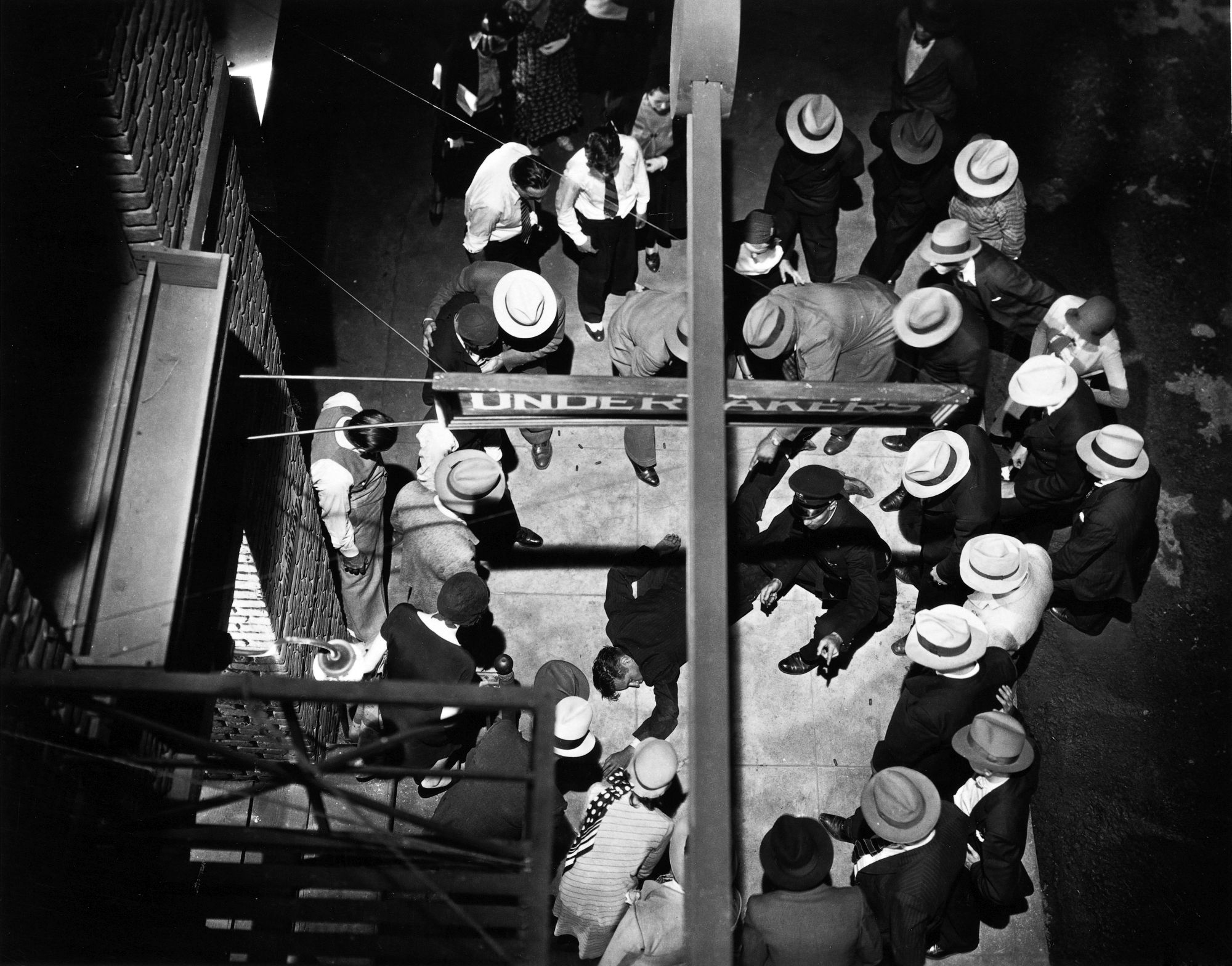
“The masterpiece of Hollywood in action, [the Hawks film] doesn’t commemorate anything; it speaks, it screeches, it shoots”. Talking pictures had only been around a few years, and so “the rat-a-tat-tat of the submachine guns and the staccato of the pistols of Scarface is a language you don’t forget”. As Tino Ranieri wrote (whose words we borrowed in the previous quotes), the epic story of Tony Camonte is something that goes far beyond the supposed biography of Al Capone. It is the film that sets the standards of a genre and at the same time establishes the myth, a journey into the “dark hinterland of the American underworld” (Ranieri again), but at the same time a heartless parable of the story of American success. Sure, the whole Italian ethics of family honor and the possessive relationship with his sister Cesca refer to the story of the Italian Renaissance and to the two illegitimate children of Pope Alexander VI, the incestuous love which so shocked the defenders of the Hays Code (as well as the Massachusetts Grand Council of the Order Sons of Italy in America, which wanted to boycott the film in all the state’s cities). And many of Camonte’s exploits seem to be literary quotations from the exploits of Al Capone and his peers: the death which opens the film (like that of ‘Big Jim’ Colosimo), the murder in the hospital (inspired by ‘Legs’ Diamond), the killing in the florist’s (like Dean O’Banion), and the siege of the gangster’s bunker (just like the capture of Francis ‘Two Gun’ Crowley). Not to mention the Saint Valentine’s Day Massacre. But the real driving force of the film is the unstoppable Americanization of Tony Camonte, the gradual loss of his accent, the metamorphosis of his clothes, where the flashy striped shirts and square shouldered suits are replaced by tie pins and silk suits, and a smoking jacket in the final scenes. More than anything, Scarface is the story of a man who knew how to get to the top of society. And maybe it is for this reason that while “Il Giornale d’Italia” railed against the film (banned under Fascism), Benito Mussolini asked to see a copy of the film, possibly because he recognized, in the aria of the sextet of Lucia di Lammermoor, which comes back at many decisive moments in the film, what Cammarano had written for Donizetti: “Who restrains me in such a moment?”.
Paolo Mereghetti

Restored in 4K in 2017 from a 35mm duplicate safety negative
A great many of the gangsters I met were pretty childish. I get awfully sick and tired of a lot of the gangster stuff that I see where everybody is growling at somebody and being the toughest guy in the world. These fellows were not that way. They were just like kids. We had fun doing it. When we conceived the idea that these fellows were childish, it helped us do some scenes. For instance, Ben Hecht wrote Muni a scene when I told him I thought we ought to make a good scene out of when Capone discovered a machine gun. Ben said, “What do you mean?” I said, “Well, can’t you write a scene like a kid finding a new toy?” “Oh yeah.” And he wrote a marvellous line.
Howard Hawks, in Joseph McBride, Hawks on Hawks, University of California Press, Berkeley and Los Angeles, 1992
It’s important to remember that Howard Hawks is a moralist. Far from sympathizing with his characters, he treats them with utter disdain. To him, Tony Camonte is a brute and a degenerate. He deliberately directed Paul Muni to make him look like a monkey, his arms hanging loosely and slightly curved. (…) The most striking scene in the movie is unquestionably Boris Karloff’s death. He squats down to throw a ball in a game of ninepins and doesn’t get up; a rifle shot prostrates him. The camera follows the ball he’s thrown as it knocks down all the pins except one that keeps spinning until it finally falls over, the exact symbol of Karloff himself. (…) This isn’t literature. It may be dance or poetry. It is certainly cinema.
François Truffaut, I film della mia vita, Marsilio, Venezia 1978