[MOVIE]
Edition History
The patriotic myth presented in the film was one example of a very widespread production of such myths, to which many other neo-realist films and texts, as well as memoirs and historical records of the resistance, contributed. They all responded to a strong collective need to erase parts of the past, commemorate other parts, and produce a good memory of the war capable of expelling painful or traumatic memories […].
A film like Roma città aperta fits within this description of rhetoric in a number of ways. Its style is deliberately unadorned. It seeks to move its audience, to make them abhor evil and persuade them of the truth of what it narrates and the justice of a cause[…].
It also produced an account, of considerable historical value, of what it was like to live in the city under occupation and of how space and power interacted within it.
David Forgacs, Rome Open City (Roma città aperta), BFI, London 2000
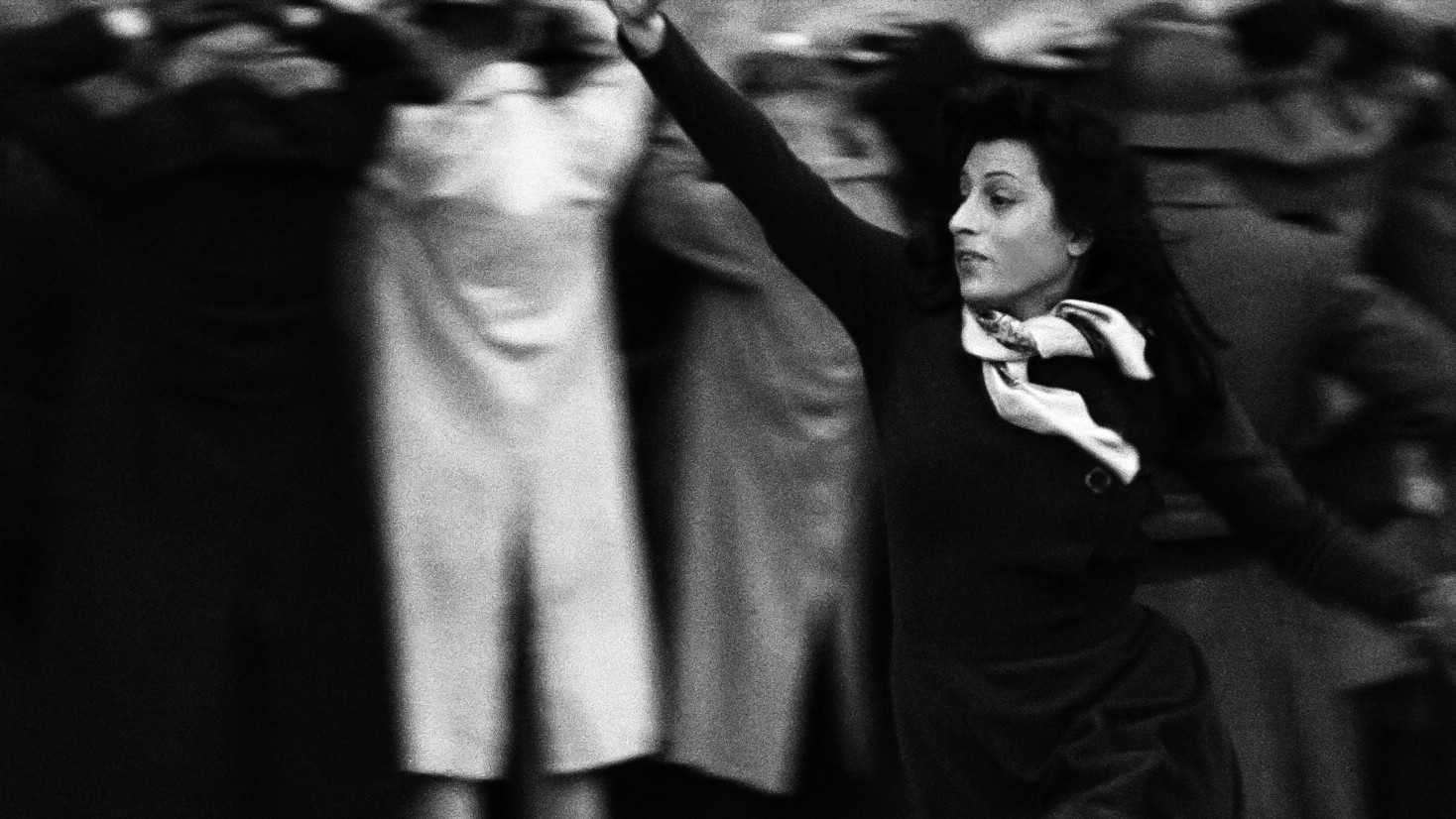
The truth about Anna Magnani as a creative artist can be traced in the characteristics of all personal and subjective stories, which, according to Roland Barthes, exist “in the signs of a personal story” and often take the form of “intimacy and signs of complicity”. In this case, between the actress and the audience’s gaze. This complicity can also be explained in terms of what the actress’s gestures add to the story of her character as it is described in the screenplay. The clearest example would be the way that Pina strokes her belly while confessing to being pregnant before her marriage to Francesco in Roma città aperta. The screenplay suggests that the dialogue should be accompanied by a gesture indicating shame; Anna Magnani’s hand gestures, on the other hand, endow this Catholic war widow with a sense of joy and desire typical of a woman in love. Such subtle shadings are essential to appreciate the story’s human and emotional range and, as a result, the sense of loss in the second half of the film after the character’s death. They are also significant for an analysis of the star’s acting style. This style does not depend solely on aesthetic or dramatic codes, but also on an ideological program. While the gesture constitutes a natural action performed by a character constructed in the screenplay according to a precise socio-cultural code, Anna Magnani’s performance becomes political, overwhelming and transformative.
Marga Carnicé Mur, La politica dell’attrice, in Effetto Magnani, edited by Giulia Carluccio, Federica Mazzocchi, Giulia Muggeo and Maria Paola Pierini, Cue Press, Imola 2022

courtesy of Istituto Luce – Cinecittà. Restored in 2013 by Cineteca di Bologna, CSC – Cineteca Nazionale, Coproduction Office e Istituto Luce – Cinecittà at L’Immagine Ritrovata laboratory, from the original negatives preserved by Cineteca Nazionale
Rossellini spent the neo-realistic period (which was not only in film) making its history, in other words defining its strong points, the general ideas that influenced and moved it. In doing so, he started from the appearance of this history, which is primarily cinema as the most advanced expressive medium of the era […], the medium that had itself already put the notion of art into crisis. Rossellini went on to use cinema as a realistic ‘specialization’. This was not so much an a priori choice as much as it was the result of the use of a particular technology against the established rules, which can be reassumed in the ideology of show business and which are defined in stardom, the literary pretence and the ‘theatrical’ relationship with the public. Cinema went out into the street; it became ‘realistic’, once it had eliminated a series of divisions in its technical specificity […]. The title Roma città aperta, reveals an unusual openness: the common people (not the bourgeoisie, who stay hidden in their offices) live out in the open, in the city. The reason that the film is the story of a block of flats, is because it shows a microcosm which represents (like an open air stage) the whole city. In Rossellini’s view, in 1945, our homes had already become the streets, they were not inside the flats anymore: our private lives, love lives, involving others, develop out in the open; the secrecy of the partisan struggle is a new practice, which passes over the rooftops and is not hidden in the bottoms of the cellars, and which links in very complex network what the enemy is struggling to perceive, with his older cultural coordinates (but the Nazis were better than the Fascists: see the scene where the major Bergmann “reads” the city from his office, through its daily photos; his is however, an unproductive knowledge). With the war behind him, Rossellini was living in the space of modernity. The centre, centralization and surroundings have been fought for and beaten, at the end of the film the children have inherited an experience of decentralizarion and Saint Peter’s dome is not something to be aimed for anymore, it is the backdrop for an ‘open’ journey, because you have to keep our cultural heritage in mind, which for Rossellini is Catholic.
Adriano Aprà. Rossellini oltre il neorealismo, in Il neorealismo cinematografico italiano, edited by Lino Miccichè, Marsilio, Venezia 1975
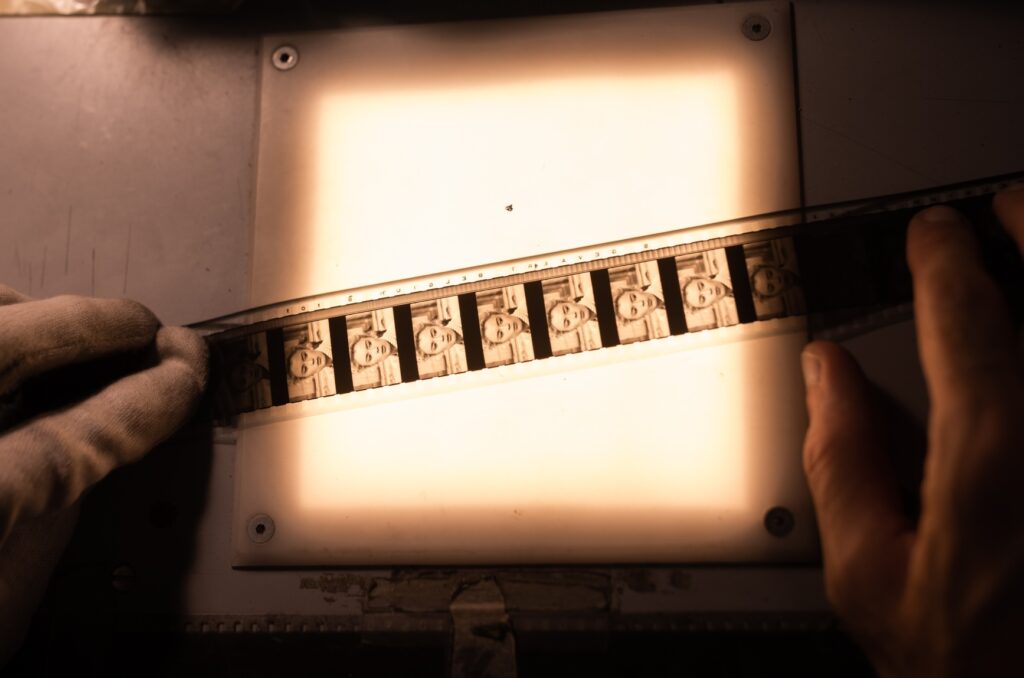
Restored by Fondazione Cineteca di Bologna, CSC – Cineteca Nazionale, Coproduction Office e Istituto Luce Cinecittà at l’Immagine Ritrovata Laboratory in 2013.
The digital restoration was based on the original negatives preserved by Cineteca Nazionale. The image was scanned at 4K resolution