[MOVIE]
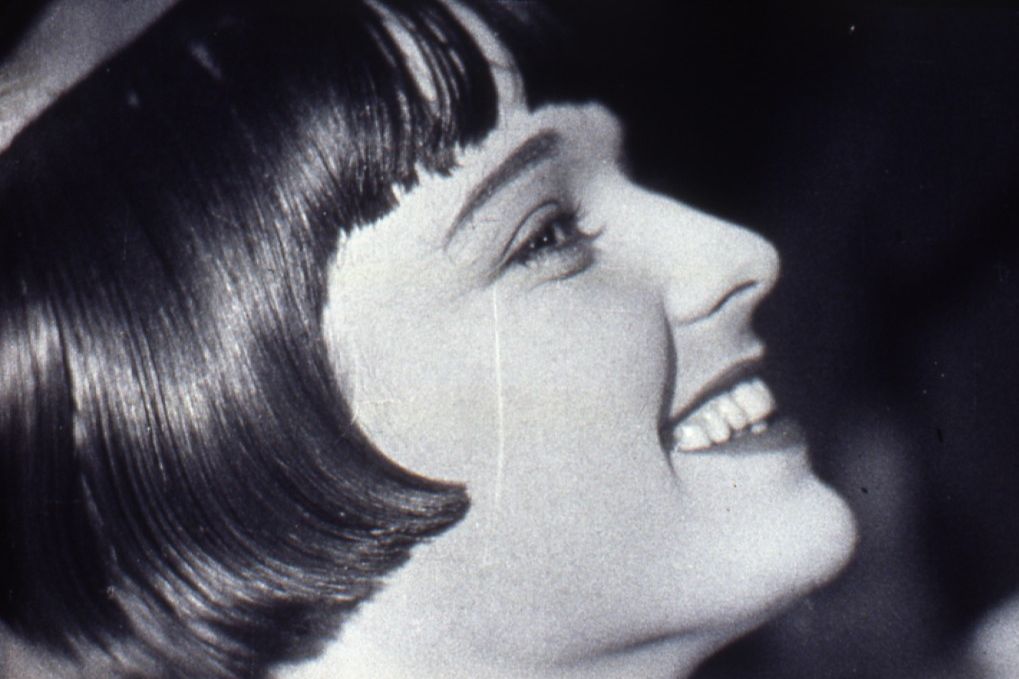
Sog.: Augusto Genina, René Clair, Bernard Zimmer, Alessandro De Stefani. Scen.: René Clair, Georg W. Pabst. F.: Rudolf Maté, Louis Née. M.: Edmond T. Gréville. Scgf.: Robert Gys. Mus.: Wolfgang Zeller, René Sylviano, Horace Shepherd. Int.: Louise Brooks (Lucienne Garnier), Georges Charlia (André), Jean Bradin (Adolphe de Grabovsky), Augusto Bandini (Antonin), André Nicolle (segretario di redazione), Yves Glad (maragià), Gaston Jacquet (duca de la Tour Chalgrin), Alex Bernard (fotografo), Marc Zilboulsky (manager). Prod.: Sofar. DCP. D.: 113’. Bn.
Edition History
Prix de beauté represents a truly successful mix of the tenants of neorealism and elaborate fantasy (note the names of the screenwriters). Despite unrefined post recording and overacting by Georges Charlia, in standard silent movie fashion, the film is a masterpiece. The ever present documentary style, evident in the scenes of weekend beach resorts and the printer’s work, clashes with two departures from the world of film: Genina’s expert directing on one hand, and the attraction that film holds over the pretty girls uncomfortable in their social milieu on the other. The film emphasizes this with its dirtiness and coarseness (skillfully captured by the camera) that seem to affect the very core of the heroine’s being. The temptation to leave this squalid universe, which is more unhealthy than vulgar (and this is the real subtlety of the film), proves too strong for her. The first suicide attempt is prompted by curiosity; the second by an unbearable contrast between two lifestyles. Death is the end product of this choice. Her lover from the beach ends up shooting her during the projection of the screen tests that would launch Lucienne as the new star. There is nothing more beautiful than the dead face of Louise Brooks illuminated by the flickering lights of the projector as the screen tests end with her singing: “Je n’ai qu’un amour, c’est toi…”. A superb ending that closes an exceptional film, above and beyond the legendary and justifiable attraction that the actress may have exerted over the director. Genina asserts himself not only as a precursor to the Italian school, but also as an immensely talented film author. The most remarkable aspect of his work is his ability to integrate all the elements of a screenplay, fashionably, yet treating them with simplicity: the character of the boyfriend as naive and pleasant; the dangers that threaten the aspiring star in the corrupt environment of cinema, which makes genuine love appear more reassuring and pure by contrast. But no, this is not the case! Genina proves it with his stark style: love and jealousy go hand in hand, gnawing away at the banality of day-to-day, which is no longer sublimated by feelings. The extraordinary beauty of light and the skill and intelligence with which it is used add other noteworthy elements, placing this movie among the most important works of the first years of talkies even though it is a silent film!
Paul Vecchiali, L’Encinéclopédie. Cinéastes ‘français’ des années 1930 et leur œuvre, Éditions de l’Œil, Montreuil 2010
Restored by Cineteca di Bologna. The DCP was created from the dupe negative of the 35mm restoration realised in 1998 by Cineteca di Bologna, Cinémathèque française and Fondazione Cineteca Italiana. This restoration was constructed from a print of the silent version preserved at the Fondazione Cineteca Italiana and a vintage print of the French sound version preserved at the Cinémathèque française.
JE N’AI QU’UN AMOUR, C’EST TOI…
Prix de beauté represents a truly successful mix of the tenants of neorealism and elaborate fantasy (note the names of the screenwriters). Despite unrefined post recording and overacting by Georges Charlia, in standard silent movie fashion, the film is a masterpiece. The ever present documentary style, evident in the scenes of weekend beach resorts and the printer’s work, clashes with two departures from the world of film: Genina’s expert directing on one hand, and the attraction that film holds over the pretty girls uncomfortable in their social milieu on the other. The film emphasizes this with its dirtiness and coarseness (skillfully captured by the camera) that seem to affect the very core of the heroine’s being. The temptation to leave this squalid universe, which is more unhealthy than vulgar (and this is the real subtlety of the film), proves too strong for her. The first suicide attempt is prompted by curiosity; the second by an unbearable contrast between two lifestyles. Death is the end product of this choice. Her lover from the beach ends up shooting her during the projection of the screen tests that would launch Lucienne as the new star. There is nothing more beautiful than the dead face of Louise Brooks illuminated by the flickering lights of the projector as the screen tests end with her singing: “Je n’ai qu’un amour, c’est toi…” A superb ending that closes an exceptional film, above and beyond the legendary and justifiable attraction that the actress may have exerted over the director. Genina asserts himself not only as a precursor to the Italian school, but also as an immensely talented film author. The most remarkable aspect of his work is his ability to integrate all the elements of a screenplay, fashionably, yet treating them with simplicity: the character of the boyfriend as naïve and pleasant; the dangers that threaten the aspiring star in the corrupt environment of cinema, which makes genuine love appear more reassuring and pure by contrast. But no, this is not the case! Genina proves it with his stark style: love and jealousy go hand in hand, gnawing away at the banality of day-to-day, which is no longer sublimated by feelings. The extraordinary beauty of light and the skill and intelligence with which it is used add other noteworthy elements, placing this movie among the most important works of the first years of talkies even though it is a silent film!
Paul Vecchiali, L’Encinéclopédie. Cinéastes “français” des années 1930 et leur œuvre, Éditions de l’œil, Montreuil, 2010
DEAR GUIDO…
Louise Brooks is one of those figures of cinema who fed the cultural imagination. The most original and bewitching of her avatars is undoubtedly the character Valentina, created by the imaginative pen of artist Guido Crepax in 1965. The panels of Valentina, the heroine of an internationally successful comics series, were also the reason for an exchange of letters between the star and the artist during the last years of her life. Their correspondence was recently published in Valentina come Louise Brooks. Il libro nascosto, Fandango Libri 2012, the catalog of the exhibition curated by Vincenzo Mollica Valentina Movie (Rome, Palazzo Incontro, May 30-September 30, 2012). Special thanks to Fandango Libri for kindly authorizing the publication of the letter reproduced here, and to Giovanni Ferrara for his kindest collaboration.
7 January 1976
Dear Guido,
thanks for the beautiful book and the comic strips. (But you didn’t tell me what that hyper-active slipper in the book meant). I send you Image with the photo from the Dixie Dugan comic strip because it illustrates a unique fact. So far as I know no American actress has been the inspiration for one strip, and certainly never for two strips. Also John Striebel drew the syndicated Dixie from 1926 till 1966. And you began Valentina in 1965, just as if you were picking me up where John left off when he died. Could Valentina be the lost Louise Brooks? Dixie Dugan was not. She was clever and intelligent and always knew how to take care of herself in a world she understood perfectly. Ortega y Gasset wrote that “We are all lost”, it is only when we confess it that we find ourselves and live true. But I knew I was lost when I was a little girl and my mother could not understand why I wept alone. Making films in New York was alright because I learned so much and discovered Tolstoj and Anna Karenina. Then I was sent to Hollywood in 1927 to make films. Nobody could understand why I hated that terrible destructive place which seemed a marvelous paradise to all others. “What’s the matter with you, Louise? You’ve gor everything. What do you want?”. To me it was like a terrible dream I have–I am lost in the corridors of a big hotel and I cannot find my room. People walk past me as of they can not see or hear me. So I first ran away from Hollywood and I have been running away ever since. And now at 69 I have given up hope of ever finding myself. My life has been nothing. But looking back, there was one time in Paris in 1929, when I was filming Prix de beauté and lived at peace with myself. I think that was because I did not speak French. Being lost was perfectly natural among those people with whom I could exchange no thoughts and feelings.
What does Valentina have to say to all this? Love
Louise
Remember when the prodigal son returned the father said, “He was lost, and is found”. It was the father who found the lost son. Somehow I have missed being found.
THE NEW SCORE
What if the composers Hanns Eisler and Jaques Ibert got into a nice little fistfight? This was my first thought before starting the score to Prix de beauté. Two seemingly opposite directions were before me, and instead of settling on one and I decided to simply let these two thoughts slug it out. On the surface, the coloring and ornamentation are strictly a Franco-file display, but the meat of the structure itself has a pure Teutonic-robustness, and with no unnecessary frivolity. I simply imagined the screenwriters Pabst and Claire in the same room, and took it from there.
Upon my first viewing of the silent Prix de beauté I was amazed by how many impressive things I had missed the first time I saw it as a sound film. The broad use of the Loudspeaker as a narrator, the mechanisms of the printing presses, the grotesqueness of the carnival, all which pointed the way for me, musically. For example, I had written a series of percussive melodic phrases for the trombone that, with the help of an old and rare mute from America called a “solo-tone mute”, mimics the megaphone whenever the Loud- speaker appears on screen.
The original score for the 1930 sound version, written masterfully by Wolfgang Zeller, was useful to me only in so much as the use of the song Je n’ai qu’un amour, c’est toi! The song is elemental to the story, of course, yet makes an appearance only at the very beginning and at the very end. My approach was to treat the song as straight forward as possible, orchestrating it according to the 1930 period practices, only to subvert it in the finale as Andrea finds his way to into the screening room. The score was commissioned by the Orchestre National de Lyon in 2011.
Timothy Brock
Per gentile concessione di Railly Film
As many other films – Hitchcock’s Blackmail is the most famous example – also Prix de beauté was produced exactly when the transition from the “silents” to the “Talkies” took place. Until now, we only knew the film in its sound version, with post-synchronised music, effects and dialogues, although by seeing the film it was evident that it had been originally conceived as a silent. Fortunately, a print found at the Cineteca Italiana in Milano made possible the reconstruction of the original silent version. This silent version was produced by using the same negative that produced the sound version; the only differences are in the three scenes that had been re-shot in order to have some synchronised dialogues; these scenes appear in this version as they were originally shot. However, the final scene is conserved only in its sound version. This silent version contributes to recreate the original pace of the film, restitutes the original composition of the images (before the frame was cropped to accomodate the soundtrack), and shows the outstanding photographic quality of the original negative.
“Shot as a silent film at the end of 1929 and totally post-synchronised with a dialogue in four languages (French, English, German and Italian), musical score and sounds, Prix de Beauté is a pioneer example of an absolutely exceptional dubbing for its time. In the years marking the passing from silent to sound cinema, while the norm was to post-synchronise the last silents with music and many sound effects, which called for a somewhat imprecise synchronism, it was instead rather strange that production company would make such an effort in dubbing the dialogue, for technical as well as ideological reasons. […]
Genina’s directing and Louise Brooks’s acting seem – although paradoxically – to be highlighted more in the silent version: devoid of its sound arrangement, Prix de Beauté shows itself for what it truly is, a late product of silent tradition.
Then we are amazed in discovering the partly documentarist or social approach by which the camera observes the public and participants in the beauty contest, or the attention paid to objects and reactions of the protagonist (the childish wonder by which Lucienne takes stock of her comfortable train compartment, the likewise childlike pride by which she shows her fiancé her new wardrobe and luxurious apartment, the dreariness of a petty bourgeois ménage depicted by modest furnishings and humble domestic objects scattered around the poor dwelling of the couple), and again – mostly – the merciless look by which at times Genina’s camera shows the imperfections and sagging in the body of a 24-year-old star, already heading towards a rapid and premature ending of her career, as well as dangerously adrift in her life, were we to believe the director’s own recollection: ‘She just drank away champagne and cognac. Her drunkenness started at four in the morning and ended in the early evening, but then she would start drinking again till four, at which time she was brought another champagne bottle. She was always sleeping. In the morning, when she was fetched and brought to the studio, she had to be carried as she continues to sleep. At the studio she was placed in an armchair for her make up, and still she was asleep. She woke up only for the takes; then she went on drinking and sleeping: she loved the barman!’
(Alberto Boschi, Prix de beauté, Cinegrafie, n. 12, 1998)