[MOVIE]
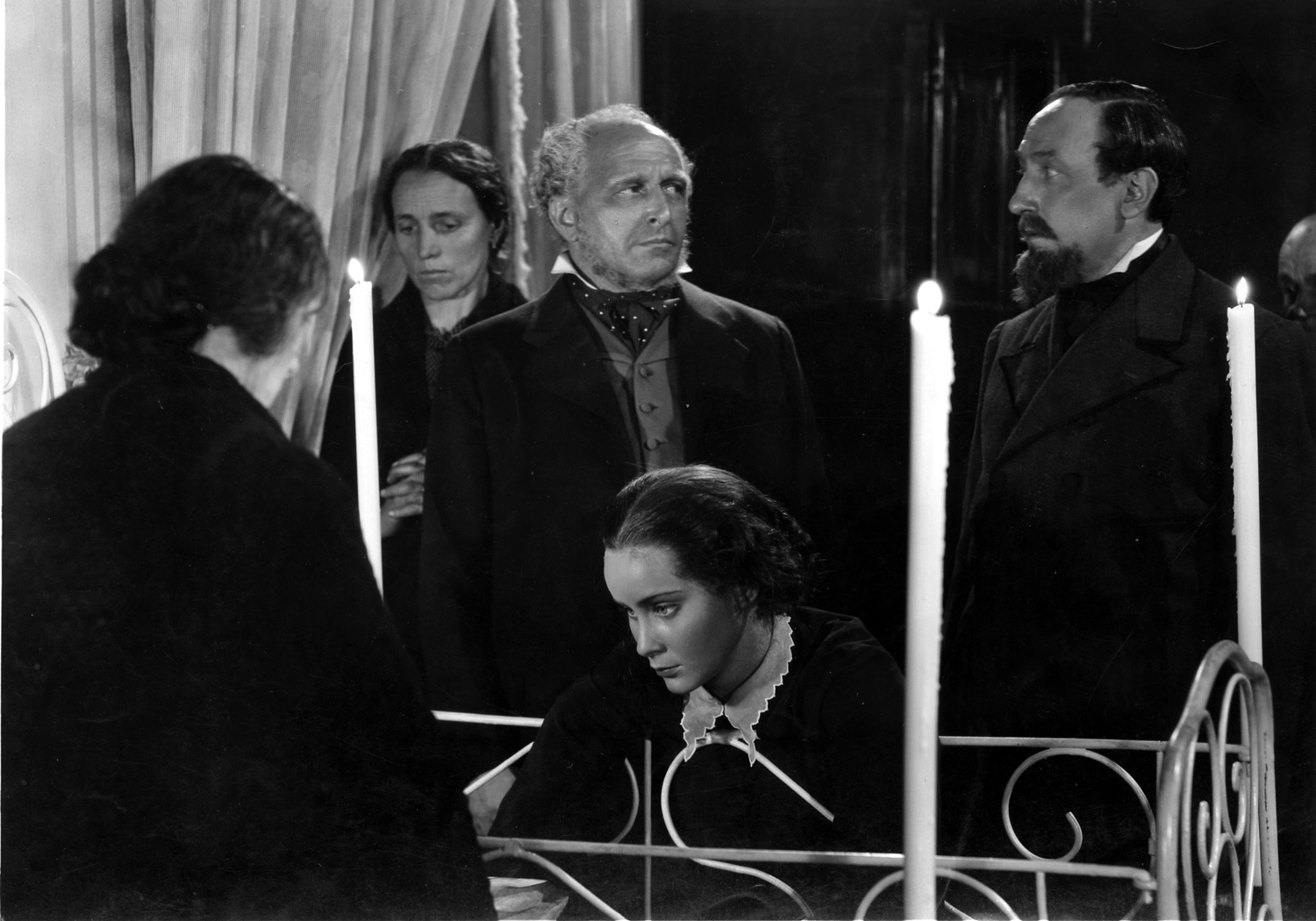
Scen.: Mario Bonfantini, Emilio Cecchi, Alberto Lattuada, Mario Soldati, Dal Romanzo Omonimo Di Antonio Fogazzaro; F.: Carlo Montuori, Arturo Gallea; M.: Gisa Radicchi Levi; Scgf.: Gastone Medin, Ascanio Coccé; Cost.: Maria De Matteis, Gino C. Sensani; Mu.: Enzo Masetti; Ass.R.: Alberto Lattuada; Int.: Alida Valli (Luisa Rigey), Massimo Serato (Franco Maironi), Ada Dondini (Marchesa Orsola Maironi), Mariù Pascoli (Ombretta), Annibale Betrone (Zio Piero), Giacinto Molteni (Professor Beniamino Gilardoni), Elvira Bonecchi (Signora Barborin), Enzo Biliotti (Signor Pasotti), Renato Cialente (Cavalier Greisberg), Adele Garavaglia (Teresa Rigey), Carlo Tamberlani (Don Costa), Gianni Barrella (Curato Di Puria), Nino Marchetti (Pedraglio), Giorgio Costantini (Avvocato Di Varenna), Jone Morino (Donna Eugenia), Anna Carena (Carlotta), Domenico Viglione Borghese (Dino); Prod.: Carlo Ponti Per Ata; 35mm. D.: 106’ A 24 F/S. Bn.
Edition History
Following Camerini’s Una romantica avventura, Piccolo mondo antico was the film that launched the series of 19th century literary adaptations, in which Alberto Lattuada and Renato Castellani would also make their debuts. The film was a clandestine form of opposition to Fascism, and the members of the troupe, from Soldati on down, were watched by the police who feared that they would take advantage of shooting on Lake Lugano to escape to Switzerland. At the height of the Rome-Berlin axis, Soldati provocatively chose to narrate the anti- Austrian struggle; he also peppered the film with the melodious Lombard dialect, in opposition to the regime’s cultural policy.
In order to adapt Antonio Fogazzaro’s Risorgimento-era novel, the director made use of his knowledge of 19th century Italian painting and displayed an extraordinary vocation as a landscape artist. As Giuseppe De Santis, at the time still a young critic, wrote: “For the first time our cinema offers a landscape that is not rarefied or tackily pictorial, but actually responds to the characters’ humanity, both as an emotional element and as an indicator of their sentiments”. Yet the film transcends pictorialism and landscapes. The dynamic force of its best sequences (the death of Ombretta, Franco’s dawn departure) lies elsewhere: in an emotional and moral intensity incarnated by the female protagonist. The film, which was a great success, launched Alida Valli as a dramatic actress, making her the most potent filmic image of 19th century Italy – a strong and tenacious woman with a strong sense of ethics and a hint of Jansenism. Finally, as is often the case with Soldati, the film acquires added colour thanks to its unforgettable character actors: the deceitful mother Ada Dondini, Enzo Biliotti, Giacinto Molteni and Renato Cialente. The strength of the film comes from a gaze that almost seems to diverge from the narration, concentrating on details of place and on minor characters, before coming to life thanks to the female protagonist.

Alida Valli won the National Cinematographic Prize for the best actress of the year with this film and celebrated a turning point in her career, previously marked by light roles.
I knew whom Fogazzaro was but I had never read anything of his because he was one of my mother’s favourite authors. She was a very authoritarian woman, my mother, and not reading her books was a form of rebellion for me. Anyway I had to make up my mind: it was six thirty in the afternoon when I signed the contract, I went home and by the morning I had finished reading the book, happy to have read such a beautiful book. Dandi the producer helped me a great deal, as far as the actors were concerned. I wanted Zareschi whilst he suggested Alida Valli, who I though would not work. But after the screen tests and as soon as we started, I realised that Dandi was right and that she would be perfect.
Mario Soldati, in L’avventurosa storia del cinema italiano raccontata dai suoi protagonisti. 1935-1959, edited by Franca Faldini and Goffredo Fofi, Milano 1979
What is success? The tedious and banal fact that people recognise you in the street? That the papers talk about you? All I know is that in my first year of work, 1937, I shot five films and that at each new contract they increased my pay. They all said that my name drew the crowds and they offered me contract after contract. I accepted them without thinking too much about what they wanted from me. At sixteen I had practically become the head of the family and the idea of being able to assure my mother a safe existence excited me. I discovered the pleasure of making cinema only later when that crazy Soldati called me to act in Piccolo mondo antico.
Alida Valli, in L’avventurosa storia del cinema italiano raccontata dai suoi protagonisti. 1935-1959, edited by Franca Faldini and Goffredo Fofi, Milano 1979