[MOVIE]
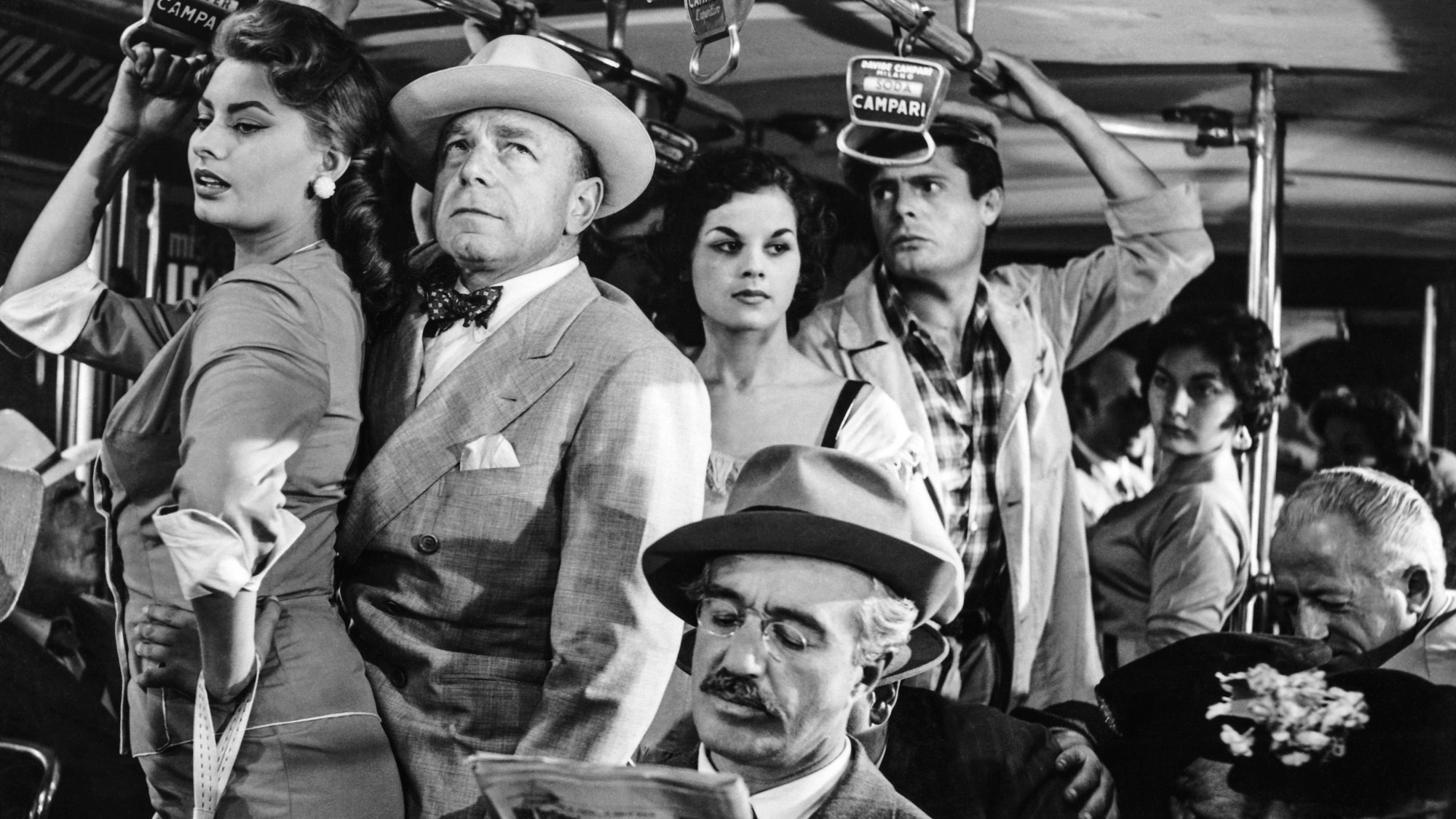
Sog.: dal racconto Il fanatico (1954) di Alberto Moravia. Scen.: Suso Cecchi d’Amico, Alessandro Continenza, Ennio Flaiano. F.: Aldo Giordani. M.: Mario Serandrei. Scgf.: Mario Chiari. Mus.: Alessandro Cicognini. Int.: Marcello Mastroianni (Paolo), Sophia Loren (Lina), Vittorio De Sica (il padre di Lina), Umberto Melnati (Michele), Margherita Bagni (Elsa), Michael Simone (Totò), Giorgio Sanna (Peppino), Mario Scaccia (Carletto), Wanda Benedetti (Valeria). Prod.: Documento Film. DCP. D.: 95’. Bn.
Edition History
Alessandro Blasetti, a great director whose eclectic career spans half a century of cinema, gave Sophia Loren her first major role in a feature film, right after she appeared in an episode of the anthology film L’oro di Napoli. It was yet another brilliant role as a strongwilled and seductive woman capable of standing up to men. Inspired by an Alberto Moravia story, the film is a typical sentimental excursion into ‘pink neorealism’ set in a working-class Italy on its way towards new consumerism. With the aid of accomplices, Loren tries to steal the car of a naive taxi driver. Seduced by her charm, the taxi driver takes her to the police station, but she gets away and he then sets out in search of her gang. “Beauty is not a curse, it is a gift from heaven, which must be used wisely; the protagonist of Peccato che sia una canaglia, the working-class successor of high-society fortune hunters of the past, knows how to manage and juggle men – even if, mind you, none of her cheating tricks ever seriously compromise her purity of heart.” (Vittorio Spinazzola, Cinema e pubblico, Bompiani, Milan 1974). It was also the first encounter between a couple that would become wildly successful in the decades to come: Sophia Loren and Marcello Mastroianni (who appears here in his first comedy role). But we cannot forget, as in so many titles of the time, an extraordinary Vittorio De Sica in the role of the girl’s father, an old-school thief.
Emiliano Morreale
Summer, 1954
Dear Blasetti,
In order to study properly the milieu of thieves like Stroppiani, we ended up in Livorno, where you can buy stolen tartan blankets very cheaply. We bought one for you, contributing just a few lire each, certain in the knowledge that such a blanket would be a lifesaver in the winter months in your castle in Fregene. We have almost finished the work. Everything is good.
Suso Cecchi d’Amico
Sandro Continenza
Ennio Flaiano
Original typed note, Alessandro Blasetti Archive, Cineteca di Bologna
Studio Cine
courtesy of Compass Film
1954, the year of the release of this film, was the same year Pane, amore e gelosia was released, which was preceded the year before by Pane, amore e fantasia. The pairing of De Sica and Lollobrigida, begun by Blasetti in Il processo di Frine, had already broken box office records in Italy, but the critics were not particularly kind to Blasetti, who was accused of “going commercial” nor to De Sica. In June of 1955, Nino Ghelli wrote in the pages of “Bianco e Nero”: “By now those zavattiniani old-timers are utterly predictable, going ape over the ticking of a clock […], and the second and third rate sweethearts are by now unmistakably De Sican with their little winks, shrill voices, and oddball hairdos…”. Apart from the obvious cynicism, one gathers that De Sica had become such a powerful figure and performer that he had a major influence on the film itself, as much as the hand of Zavattini is unmistakable. It’s a given that De Sica brought his considerable experience as a director to the set where he was just an actor, but it’s also true that in Peccato che sia una canaglia he plays the role of a gentleman thief with impeccable grace and skill. He himself was quoted as saying in the supplement to the magazine “Tutto” in January of 1955: “I’m particularly close to Blasetti. More than anyone else he was the one able to dig under the surface and then dust me off to find the actor”. The kudos to Blasetti didn’t end here. The idea for the movie was inspired by a novella by Moravia, Il fanatico, which was initially discarded in the selection of stories for the second ‘Zibaldone’, Tempi nostri (1954), the first time the director would work with Sophia Loren, who he would then want back to play Lina, the conniving and beautiful thief. The script, written by Blasetti with Suso Cecchi D’Amico, Alessandro Continenza and Ennio Flaiano, powerfully reasserts the importance of screen writing, and constructs a simple story, full of humor, about the “innocent roguishness of family of rascals” as Mino Doletti wrote in “Il tempo”, with his enthusiastic review of the comedy when it aired on TV in 1968. Uniting the team of De Sica-Loren-Mastroianni, Blasetti once again sees into the future, interpreting the signs of his times and disclosing new directions for Italian cinema.
Thanks to Anna Fiaccarini and Alice Carraro. Special thanks to Mara Blasetti